A Mother's Heartbreak: How Slow Speech Revealed a Fatal Brain Tumor in Her 8-Year-Old Son
In January 2024, Louise Pearce noticed her eight-year-old son Thomas speaking more slowly than usual. His sentences were clear but took an unusually long time to articulate. Initially, their GP in Poole attributed this to blocked ears, suggesting olive oil and wax suction. However, when Thomas's right hand began shaking while playing with LEGO three weeks later, Louise's concerns deepened, leading her to call 111 for urgent advice.
This call resulted in a referral for an MRI scan. Two weeks later, during February half-term, Louise received a panicked phone call from her husband Gary at the hospital. "Louise, you've got to come back. They've found something on the scan," he said. Driving from their home in Bournemouth, Louise felt terrified as she rushed to the hospital, leaving their middle son Charlie with her eldest, Josh.
The Devastating Diagnosis
At the hospital, the family received the worst possible news. Thomas had malignant brain tumors located in his basal ganglia, both thalami, left temporal lobe, frontal lobe, and upper brain stem. The doctor explained bluntly, "I won't beat around the bush. It's high grade, it's aggressive." Samples were sent to Great Ormond Street Hospital for further testing, but hope for surgery or clinical trials quickly faded.

Two weeks after the initial discovery, the consultant delivered a grim prognosis: "Thomas has a year at most. We can give him some radiotherapy, which may buy you a bit more time, but our advice is to do nice things while you can." This blunt delivery stayed with Louise, who emphasized that while medical teams deal with such cases daily, they must remember this is someone's child.
Research on The Brain Tumour Charity website revealed the harsh statistics: about 40 children in the UK are diagnosed with diffuse midline glioma annually, with only 10% surviving two years or more. Brain tumors remain the biggest cancer killer of children and individuals under 40.
Making Memories Amidst the Pain
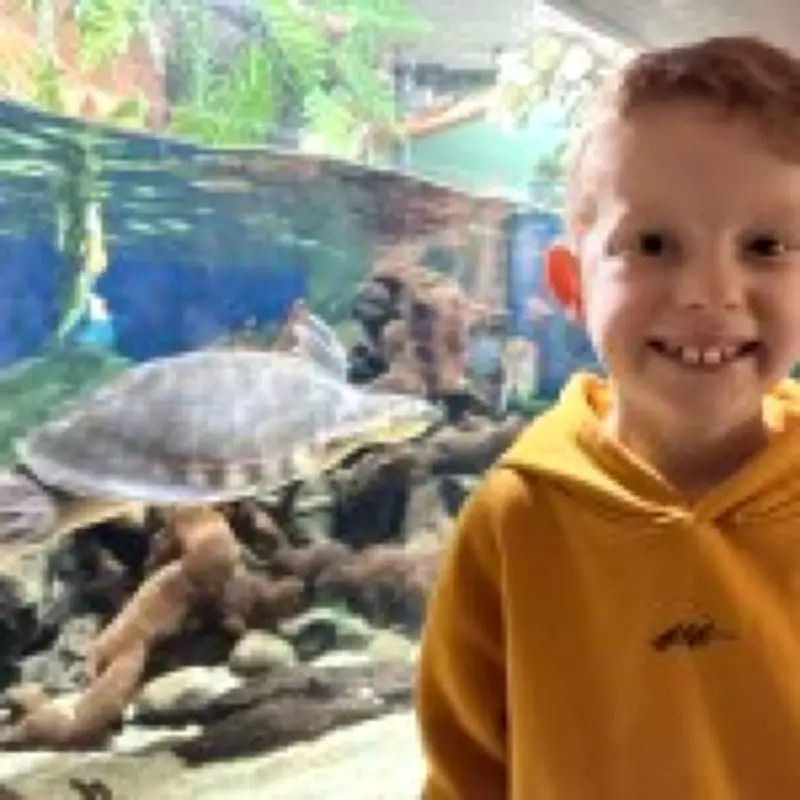
Louise took leave from her job as a mortgage advisor to support Thomas through 30 rounds of radiotherapy at University College London over six weeks. Following medical advice to "do nice things," the family embarked on a series of outings. Thomas, an animal lover, visited London Zoo, Sea Life, the Oceanarium in Bournemouth, Marwell Zoo, Paulton's Park, and Paignton Zoo.
From April onward, Thomas used a wheelchair due to fatigue, but they still managed trips to Madame Tussauds, Tower Bridge, The London Eye, Center Parcs, Alton Towers, Butlins, and Hamleys. At Alton Towers, his wheelchair granted special ride access, and he even held a starfish at the aquarium. However, challenges persisted: Thomas struggled with a feeding tube, missed school and friends, lost his hair, and faced terrifying anaphylactic shock during a platelet transfusion.
Amidst the hardship, positive moments emerged. Inspired by YouTube, Thomas set up a lemonade stand outside their home, raising £1,000 for the homeless and funding family trips. His efforts earned local newspaper coverage, making him feel "famous." In September 2024, thanks to Make-A-Wish UK, he fed giraffes at Port Lympne Safari Park, though back pain hinted at his declining health.
The Final Weeks and Legacy
An MRI scan on September 12, 2024, revealed the tumor had spread down Thomas's spine and brain stem. With no further treatment options, the hospital halted all interventions. Thomas lived for another nine weeks, passing away peacefully at home on November 16, 2024, with pain under control and surrounded by family in the lounge, supported by hospital care and Julia's House hospice.
Louise reflects on the importance of choice in end-of-life care, noting that being at home allowed his brothers to visit freely. She praises the NHS for excellent palliative care but stresses the need for greater awareness of pediatric brain tumors. "Thomas was so brave," she says, hoping his story inspires research toward a cure to prevent other families from enduring similar heartbreak.
This article, originally published in March 2025, underscores the critical need for early detection and compassionate communication in pediatric oncology, as families navigate unimaginable challenges with courage and love.