Blind and Partially Sighted Londoners Call for Enhanced Support Amid Safety Concerns
Blind and partially sighted residents in London have described navigating the city as "scarily unsafe" due to inadequate support and training. More than 48,000 people have signed a petition demanding government action to improve vision rehabilitation services, which teach essential skills like using a white cane.
Personal Struggles Highlight Systemic Gaps
Charmaine Ashpole, a Brent resident who lost much of her sight and hearing after contracting meningitis in 2018, emphasized the critical need for proper training. "Different tactile ways of doing things to enable you to live your life well is very, very possible, but you do need that support to give you the confidence and the skills," she told the Local Democracy Reporting Service.
Ashpole pointed out that living in a "very visual world" often excludes those with sight loss from everyday conversations and activities. She also criticized the condition of pavements in her borough, noting that uneven slabs can snag white canes, causing damage and physical strain. "I know for a fact that if a paving slab projects 20mm or less they won't repair it... it causes stress on your shoulders, you don't want to go out," she said.

Massive Petition and Cane Walk Protest
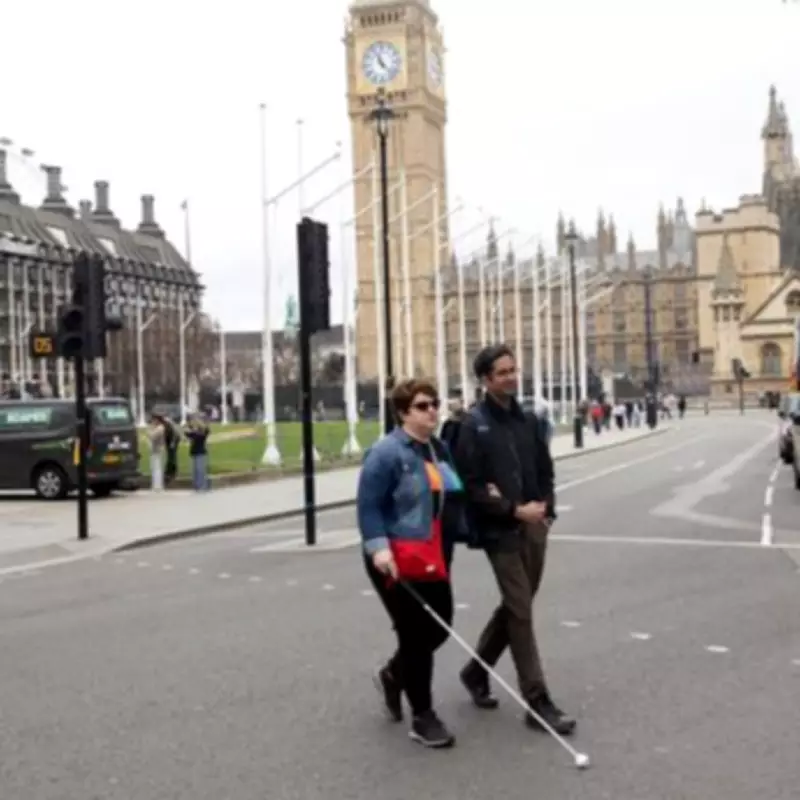
Last week, Ashpole joined other blind and partially sighted individuals in a cane walk from Parliament Square to the Department of Health and Social Care on Victoria Street. The group delivered the petition with over 48,000 signatures, calling for an end to the "postcode lottery" of support for vision rehabilitation.
Frankie Brady, from Enfield, who lives with albinism affecting his eyesight, shared his experience of isolation before receiving rehabilitation support. "I was very isolated to be honest because I didn't have anyone that really saw the world through my eyes," he said. Brady admitted to being scared to use his cane initially due to lack of confidence, but now utilizes various aids to navigate daily life.
Research Exposes Patchy Support Across England
Research by the Royal National Institute of Blind People (RNIB) reveals that support services across England are inconsistent. Many people wait more than a year for an initial assessment by local authorities, leading to isolation and reduced quality of life.
A Freedom of Information request by RNIB showed that in the 2023-2024 financial year, 20% of local authorities had wait times exceeding one year for assessments. Additionally, 85% of councils failed to complete assessments within the recommended 28 days, and 38 authorities reported assessments not always conducted by qualified specialists.
Eleanor Thompson, Director of Policy, Campaigns and Social Action at RNIB, stated, "No one should have to wait for vital support after sight loss." She emphasized the need for proper guidelines and quality standards to transform vision rehabilitation into a regulated profession.
Local and Government Responses
Brent Council, which recently announced a £27 million investment to make streets "cleaner, greener and safer," expressed commitment to high-quality support for residents with sight loss. A spokesperson highlighted their Sensory Service team, which aims to contact residents within 48 hours and has recruited an additional Vision Rehabilitation Specialist to improve capacity.
The council also inspects highways proactively and works with partners to enhance accessibility in transport and public realm schemes.
A spokesperson for the Department of Health and Social Care acknowledged the importance of support, stating, "Everyone who has lost or is losing their sight deserves the best possible support to help them live independently." They referenced ongoing efforts to improve eye care services through a 10-Year Health Plan.
The campaign underscores the urgent need for consistent, timely vision rehabilitation services to ensure blind and partially sighted Londoners can live confidently and safely in the city.