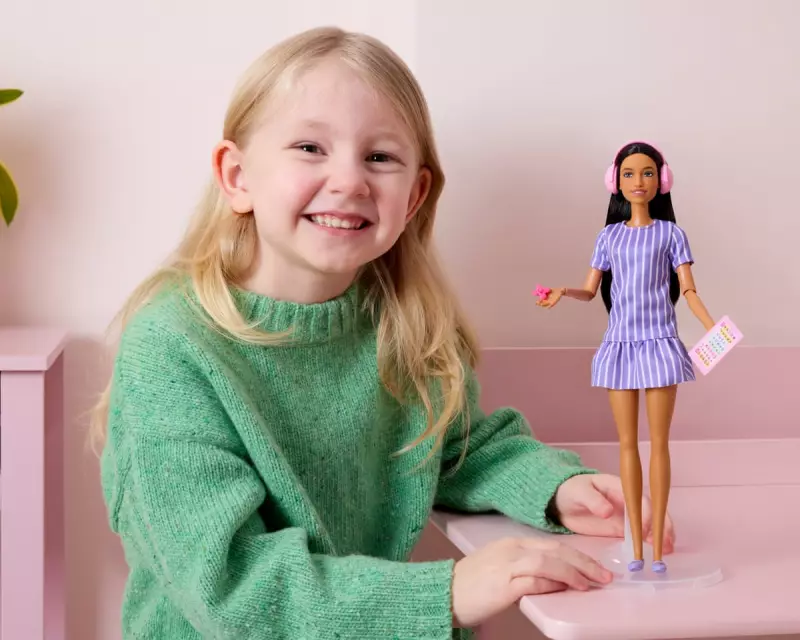
In a significant move for representation in the toy industry, Mattel has unveiled its first-ever autistic Barbie doll. Launched on Monday, this new addition to the Barbie Fashionistas line follows the recent introduction of a doll with type 1 diabetes and forms part of the company's stated commitment to diversity and inclusion.
Designed with and for the Autistic Community
The doll was created in close partnership with the US-based charity, the Autistic Self Advocacy Network. Its design aims to reflect some of the ways autistic children may experience and interact with the world, acknowledging that autism is a spectrum and characteristics vary widely between individuals. More than one in a hundred children is believed to be autistic, according to the World Health Organization.
Key design features include eyes that gaze slightly to the side, representing how some autistic people may avoid direct eye contact. The doll has fully articulated elbows and wrists, allowing for poses that mimic stimming or hand-flapping—repetitive movements that can help some autistic people process sensory information or express emotion.

Sensory-Friendly Accessories and Fashion
The doll comes equipped with several thoughtful accessories intended to reduce sensory overload and aid communication. She wears a pair of pink noise-cancelling headphones and has a pink fidget spinner on her finger, tools used by some to manage stress. She also carries a pink tablet displaying symbol-based augmentative and alternative communication (AAC) buttons on its screen.
Her outfit is designed with sensory sensitivities in mind. She wears a loose-fitting, short-sleeved purple pinstripe A-line dress with a flowy skirt to minimise fabric contact with the skin. Completing the look are flat-soled purple shoes, chosen to promote stability and ease of movement.
A Broader Push for Inclusion in the Toy Box
While the first Barbie debuted in 1959, it was not until 2019 that Mattel introduced dolls with visible disabilities. The range has since expanded to include dolls who are blind, use wheelchairs, have Down syndrome, prosthetic limbs, vitiligo, and hearing aids. There are also Ken dolls with prosthetic legs, wheelchairs, and hearing aids.
Jamie Cygielman, Global Head of Dolls at Mattel, stated that the autistic Barbie represents the latest expansion of the brand's mission. "Barbie has always striven to reflect the world kids see and the possibilities they imagine," she said, adding that the doll helps expand what inclusion looks like "in the toy aisle and beyond."
Reaction from autism advocates has been largely positive. Jolanta Lasota, Chief Executive of Ambitious about Autism, welcomed the doll's potential to normalise supports like ear defenders and stim toys, which some children are reluctant to use for fear of standing out. She also noted that, with girls three times less likely to be diagnosed than boys, the toy helps shine a light on the often-overlooked experiences of autistic girls.
Author and neurodiversity advocate Ellie Middleton, who received a late diagnosis, highlighted the power of such representation. She expressed hope that the doll challenges misconceptions and shows young girls "that it is OK to be autistic, it is OK to be different, and it is OK to wear those differences with pride."
Mattel is not the first company to create autistic dolls; brands like Lottie also offer them, and Lego sells minifigures with non-visible disabilities. However, given Barbie's iconic status, this launch is seen as a major step towards normalising neurodiversity and fostering a more inclusive play experience for all children.