A Devastating Misdiagnosis: From Criminology Student to Psychiatric Patient
Lucy May Dawson never intended to become a model. At 20, she was immersed in criminology studies at the University of Leicester, aspiring to a career in victim support. In 2016, her life derailed when a relentless, blinding headache struck, persisting for months without relief.
As hallucinations emerged and her behavior grew increasingly erratic, her parents urgently took her to hospital. Doctors, however, attributed her symptoms to a severe mental breakdown. Under the Mental Health Act, Lucy was sectioned and confined to a psychiatric ward for three and a half agonizing months.
The Trauma of Electroconvulsive Therapy and Paralysis
"Something had taken over, leaving a childlike, hallucinating, and confused version of me," recalls Lucy, now 30, from her home in Lincoln. "My brain was so diseased it couldn't process the trauma. I had no control or capacity—I was profoundly ill."

During her hospitalization, Lucy underwent electroconvulsive therapy (ECT). The procedure induced a seizure that violently threw her from her bed onto a radiator pipe, severely burning her sciatic nerve. This injury permanently paralyzed her left leg below the knee, necessitating an orthotic device.
Upon discharge, Lucy received the correct diagnosis: autoimmune encephalitis, a rare and potentially fatal brain inflammation causing permanent damage. The revelation was crushing—she never required ECT or sectioning. The misdiagnosis had inflicted irreversible harm, leaving her with an acquired brain injury and a lifelong disability.
Navigating a New Reality: Recovery and Discrimination
"After hospital, I was utterly lost—barely awake, unable to recognize family, speak, walk, read, or write," Lucy describes. For months, she grappled with relearning basic functions while abandoning her studies. "I grieved my entire former life and faced the harsh barriers disabled people encounter daily."
Although the hospital trust later apologized, Lucy spiraled into deep depression, struggling with employment and independence. "Navigating disability benefits was dehumanizing and demoralizing," she shares. Unable to complete her degree initially—"I couldn't finish a sentence, let alone a dissertation"—she took a job at a department store perfume counter. There, she was forbidden from sitting on a stool during shifts and told to hide her crutches for being "untidy."
Public discrimination compounded her challenges, including beratement for using priority bus seats and criticism for parking in blue badge zones. Prompted by her sister Hannah, Lucy began blogging on "Lucy in the Sky with Encephalitis," raising awareness about the condition and the discrimination she faced.
Social Media Advocacy and the Scope Awards Nomination
Expanding to Instagram, Lucy documented intrusive public interactions, from unsolicited health advice involving yoga, crystals, turmeric, or exorcisms, to crude sexual advances fetishizing her disability. "Men ask if the stick comes into the bedroom or say I'm perfect because I can't run away," she reveals, leading her to swear off dating.
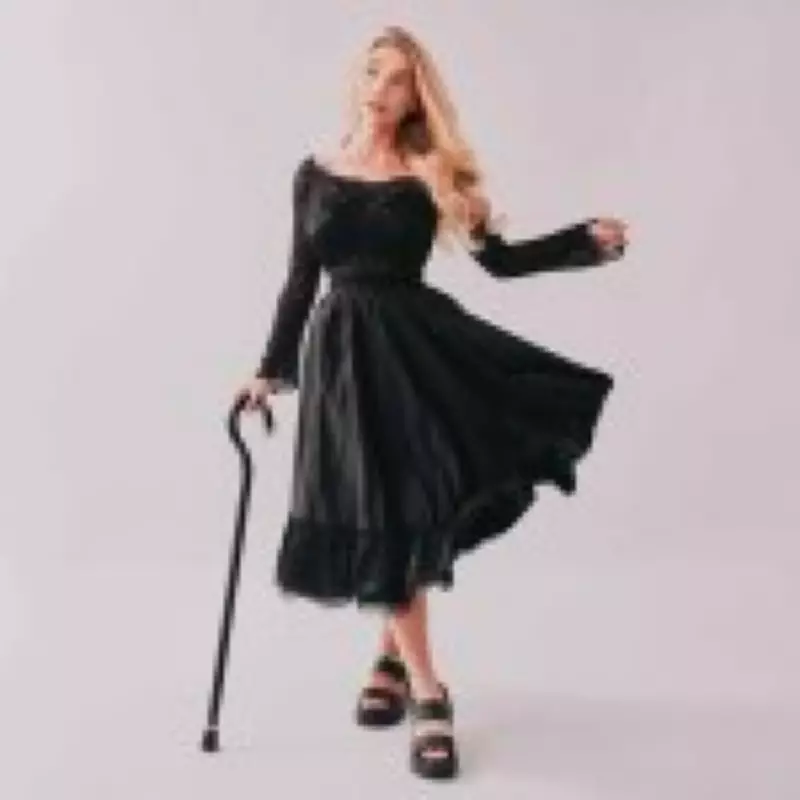
Instead, Lucy focuses on fashion and her three cats, amassing nearly a million followers across Instagram and TikTok. She models corsets, vintage dresses, and 27 walking sticks, promoting joyful living with disability. "I know I look like a Barbie doll, and some don't take me seriously, but it's vital to show disability with pride and humor," she asserts.
Her advocacy earned a nomination for Social Media Influencer of the Year at the 2026 Scope Awards, where Metro is the official media partner. Hosted by Ade Adepitan at London's Kia Oval, the ceremony honors disabled individuals and organizations driving change.
Finding Purpose in Pain: Saving Lives Through Awareness
Lucy later completed her degree and now works as a model, influencer, and disability advocate. The nomination validates her mission for accurate representation. "Disabled people are often portrayed as burdens, objects of pity, or inspiration porn—rarely as the creative, funny individuals we are," she notes.

Most fulfilling are messages from followers crediting her with saving lives by recognizing encephalitis symptoms doctors missed. "I'm one of the luckiest unlucky people," Lucy reflects. "If my posts help one person get a correct diagnosis, that gives meaning to my suffering. I was given a second chance many with this illness don't get."