The Hidden Crisis of Britain's Sandwich Carers
Britain faces a silent epidemic affecting millions of families across the nation. The term "sandwich carers" describes those caught between caring for their children and elderly relatives, creating a perfect storm of emotional, physical and financial pressure that remains largely invisible to wider society.
A Day in the Life of a Sandwich Carer
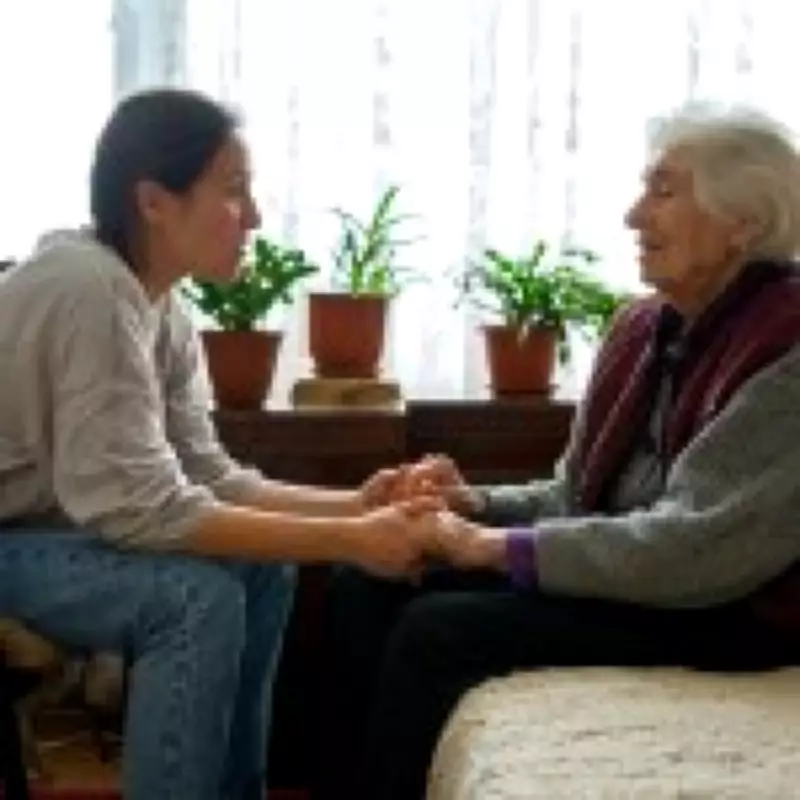
Vic Lyons, 51, embodies this dual role perfectly. By day, she works as a senior Admiral Nurse specialising in dementia care, supporting families through the complex challenges of cognitive decline. By night, she returns to her Hertfordshire home where she and her husband Andrew, 53, care for Andrew's 89-year-old mother Margaret, diagnosed with dementia in January 2024.
'At work, I support families going through dementia and, at home, I'm in the thick of it,' Vic explains. 'The irony isn't lost on me - I spend my days advising others about care strategies, then come home to implement them myself.'

Their daily routine reveals the relentless nature of sandwich care. Mornings involve getting Margaret dressed and their two sons, aged 15 and 12, to school. Evenings are consumed with managing Margaret's confusion while helping with homework. Weekends disappear into housework, bills and medication reviews.
The Emotional and Practical Toll
Margaret's advanced dementia means her memory span sometimes lasts mere seconds. She can no longer make herself a drink and frequently forgets family members' identities. 'She gets anxious when she's by herself,' Vic shares. 'It takes all of us, including the boys, to care for her properly.'
The family's experience highlights how even professionals with care expertise struggle when facing these challenges personally. 'I know how hard it is for families because of my job - and yet the reality is so much harder than I ever thought it would be,' Vic admits.
A Nation in Denial About Care Planning
New research commissioned by Age Space, the UK's leading online hub for families supporting elderly relatives, reveals alarming statistics about Britain's approach to care planning. A national survey shows:
- 62% of UK adults aged 45+ have never discussed later-life care with parents or partners
- Only 6% have a clear plan for how they or their parents will be supported as they age
- 94% of people don't discuss care until forced to by circumstances
Vic's family followed this pattern, only beginning serious conversations when Margaret displayed worrying symptoms. 'People don't know where to start,' Vic observes. 'The topic is wrapped up in fear - fear of cost, fear of losing independence, fear of aging.'
The Financial Strain of Sandwich Care
While Margaret has savings to cover day centre costs where she receives specialist dementia support during weekdays, the family faces significant financial pressure. They plan to remortgage their house to fund an extension, anticipating that Margaret will soon need round-the-clock care.
'Her condition is fast deteriorating,' Vic says sadly. 'We've pressed the button on building an extension to our house next year. For her welfare, we see no other choice than for her to move in with us.'
The Impact on Family Dynamics
Perhaps most poignantly, Vic worries about the emotional impact on their teenage sons. 'When Margaret's distressed, they can feel a bit scared and unsure how to react,' she explains. 'She sometimes thinks Andrew is her husband and I'm the other woman - it's hard for the boys to hear this.'
Family moments have changed fundamentally. 'I want them to feel they can invite friends around and be normal noisy teenagers,' Vic says. 'On special occasions such as Christmas Day, I worry she'll get upset and I don't want the boys to carry that memory.'
The Personal Sacrifices of Caregiving
The personal toll on sandwich carers often goes unacknowledged. 'You're caring for everyone except yourself,' Vic admits. 'We get an hour watching TV at night if we're lucky. I haven't been to the gym in a year, and holidays look impossible for us now.'

Last year's attempt at a holiday to Portugal ended with Margaret developing a UTI that led to delirium and hospitalisation. 'We spent our holiday speaking to doctors and worried sick about her,' Vic recalls.
Breaking Britain's Care Silence
To address what campaigners call a 'dangerous national silence' around care planning, Age Space has launched the Prepare to Care campaign, fronted by broadcaster Janet Ellis. The initiative urges families to have earlier conversations about care, ideally years before decisions are forced by crisis.
Vic believes the silence stems from widespread misunderstanding about what care involves. 'People imagine caring is popping in to make a cup of tea,' she says. 'But it's navigating memory loss, safety worries, emotional distress and guilt. And most people have no idea how much support they will need until they're already drowning.'
With an estimated 2.4 million sandwich carers across the UK, this hidden crisis represents one of Britain's most pressing social challenges. As families like Vic's demonstrate, the combination of professional expertise and personal experience still leaves them struggling against a system that fails to support those caring for multiple generations simultaneously.