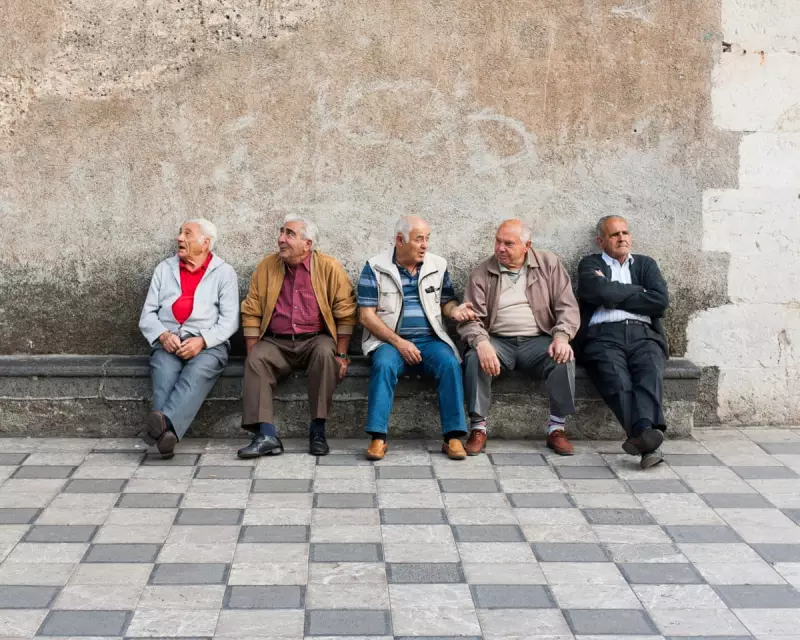
Italy is experiencing an unprecedented surge in its centenarian population, with new figures revealing more than 23,500 residents have now celebrated their 100th birthday - a number that has more than doubled since 2009.
Record-Breaking Longevity Figures
According to the latest data from Istat, Italy's national statistics agency, the country now hosts 23,548 residents aged 100 or over, marking a significant increase from 21,211 recorded in 2024. This year alone witnessed another 2,000 Italians reaching the milestone century mark, continuing a remarkable upward trend that shows no signs of slowing.
The statistics reveal a striking gender disparity, with women dominating the longevity landscape. Among those celebrating their 100th birthday this year, 82.6% are women. This female predominance becomes even more pronounced among the oldest age groups, with women leading both in the semi-supercentenarian category (aged 105 and over, numbering 724) and among the nation's 19 supercentenarians who have surpassed 110 years.

Italy's Ageing Champions
The southern Campania region boasts Italy's oldest resident, Lucia Laura Sangenito, who is set to celebrate her 115th birthday on 22nd November. This remarkable achievement positions her as Italy's oldest woman and the third oldest in Europe, trailing only behind Britain's Ethel Caterham (116) and France's Marie-Rose Tessier (115).
Italy has a proud history of longevity record-holders. Emma Morano from the northern Piedmont region held the title of world's oldest person for 11 months until her death in 2017 at 117 years young. More recently, Vitantonio Lovallo marked his 111th birthday, securing his position as Italy's oldest living man.
The Blue Zone Phenomenon
Certain Italian regions stand out for their exceptional concentration of centenarians. The southern region of Molise leads the nation in relative terms for centenarian residents, followed by the Aosta Valley and Liguria.
Sardinia has gained international recognition for its remarkable ageing population, with a cluster of villages identified in 2004 among the world's seven "blue zones" - regions where people regularly live exceptionally long lives. Perdasdefogu, a remote town nestled in south-eastern Sardinia's rugged mountains, has earned two Guinness World Records for its centenarian population.
The town first entered the record books in 2012 when the nine Melis siblings achieved a combined age of 818 years. In 2021, Perdasdefogu secured another record for having the world's highest concentration of centenarians, with eight residents aged 100 or above among its population of just 1,778 people.
Secrets to Italian Longevity
Experts attribute Italy's remarkable longevity statistics to several key factors. The Mediterranean diet, rich in olive oil, fresh vegetables, and whole grains, has long been considered a cornerstone of Italian health. This nutritional approach combines with strong social connections and a healthcare system generally regarded as effective.
What's particularly striking about Italy's centenarians is their continued vitality and engagement with life. Anna Possi, who turns 101 on 16th November, continues to work as Italy's oldest barista in her establishment overlooking Lake Maggiore. She told reporters last year she plans to "keep going so long as my health permits."
Similarly impressive is the case of Candida Uderzo, who had her driving licence renewed at age 100 in 2022. She's among at least four centenarians in recent years deemed fit to drive, including Luciano Gulmini, who renewed his permit earlier this year shortly after celebrating his century.
European Ageing Trends and Challenges
Italy's experience reflects a broader European pattern. Across EU countries, the centenarian population is growing rapidly, with projections suggesting nearly half a million people aged 100 or more will live in the bloc by 2050 - a dramatic increase from 96,600 recorded in 2019.

France, Italy and Greece currently lead Europe in centenarians per capita. The United Kingdom has witnessed its own significant growth, with the number of people aged 100 and over doubling from 8,300 in 2004 to 16,600 in 2024 according to October figures.
While Italy's growing population of centenarians represents a triumph of modern living and healthcare, it also presents significant challenges for the government. This ageing trend coincides with a plummeting birthrate that saw just 370,000 new births recorded in 2024 - the lowest figure since Italy's unification in 1861. This demographic shift places considerable pressure on pension systems and healthcare infrastructure, creating complex policy dilemmas for the nation's leaders.
As Italy continues to lead Europe in longevity achievements, the world watches with fascination to learn from a society that has mastered the art of growing old - and doing it with remarkable vitality and grace.