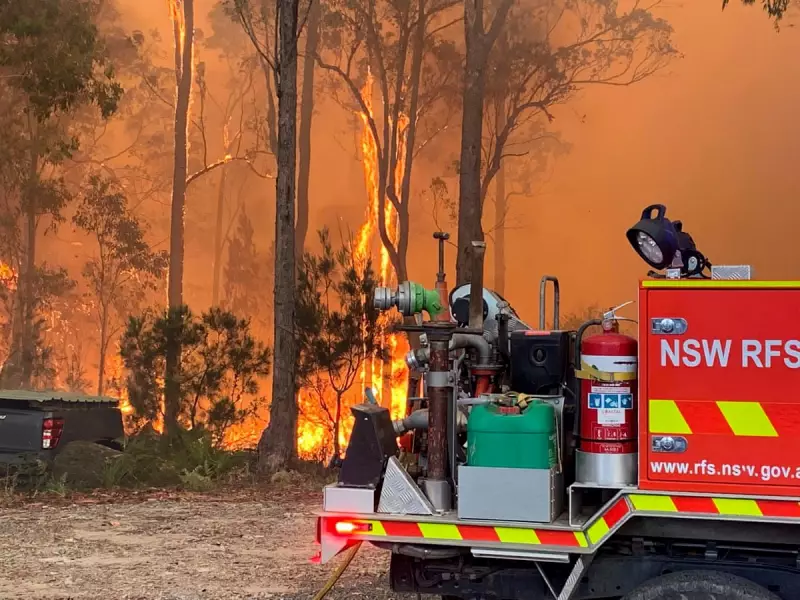
A firefighter has tragically died while battling a blaze on the New South Wales mid-north coast, prompting the state's premier to issue a stark warning about a 'foreboding' beginning to the bushfire season.
A Tragic Loss on the Fireground
Alex Graham, deputy secretary of the NSW National Parks and Wildlife Service, confirmed the death with deep sadness on Monday. The incident occurred near Bulahdelah late on Sunday night. At approximately 11pm, the firefighter was fatally struck by a tree while working on an active bushfire. Colleagues immediately administered first aid until paramedics from NSW Ambulance arrived at the scene.
Premier Chris Minns described the event as a terrible reminder of the inherent dangers faced by emergency personnel. "It's a deeply distressing turn of events, and a sad day for New South Wales this morning," Minns told ABC News Breakfast. He praised the incredible job done by those who put their lives on the line to protect communities and property.

Widespread Blazes and Property Damage
The fatality came during a busy period for fire crews across the state. On Monday morning, roughly 700 firefighters were working to contain multiple fires, with nine blazes still not under control. The weekend saw significant property destruction, particularly in the Koolewong area on the Central Coast. The NSW Rural Fire Service reported that 16 homes were destroyed there, with another nine damaged and seven outbuildings lost. Fortunately, no lives were lost in those incidents.
Further north in Bulahdelah, an additional four homes were lost to the flames. While conditions had eased somewhat by Monday, allowing crews to strengthen containment lines with aerial support, authorities continued to urge public vigilance.
Climate Context and a Warning for the Future
Premier Minns highlighted that the severe start to summer was a concerning sign. "Unfortunately we're likely to have more volatile weather periods in the years ahead due to the changing climate," he stated, citing westerly winds and warmer Pacific Ocean waters as contributing factors for a dangerous December.
NSW Emergency Services Minister Jihad Dib echoed the sentiment, stating the firefighter's death was a solemn reminder of the risks taken by personnel. "These are people who put themselves in harm's way to protect community, and this particular person has made the ultimate sacrifice," Dib said.
The crisis has triggered federal and state disaster assistance funding for several regions including the Central Coast, Mid Coast, Upper Hunter, Muswellbrook, Warrumbungle and Dubbo. At the peak of the Koolewong fire, more than 250 firefighters, 50 trucks, and nine aircraft were deployed.
Containment in Tasmania After Rain
Meanwhile, in Tasmania, a separate major fire at Dolphin Sands near Freycinet National Park was contained following overnight rain. That blaze, which started on Thursday, destroyed 19 homes and damaged 14 others. Over 120 auxiliary structures like sheds and caravans were also impacted. Authorities warned that increasing winds and debris still posed safety risks to the local community.
The Bureau of Meteorology notes that Australia's national annual average temperature is now about 1.5C higher than it was in 1910, with the climate crisis increasing the frequency and severity of extreme weather events like the bushfires currently challenging emergency services.