Record Snowfall Buries Russian Town as Storm Harry Floods Mediterranean
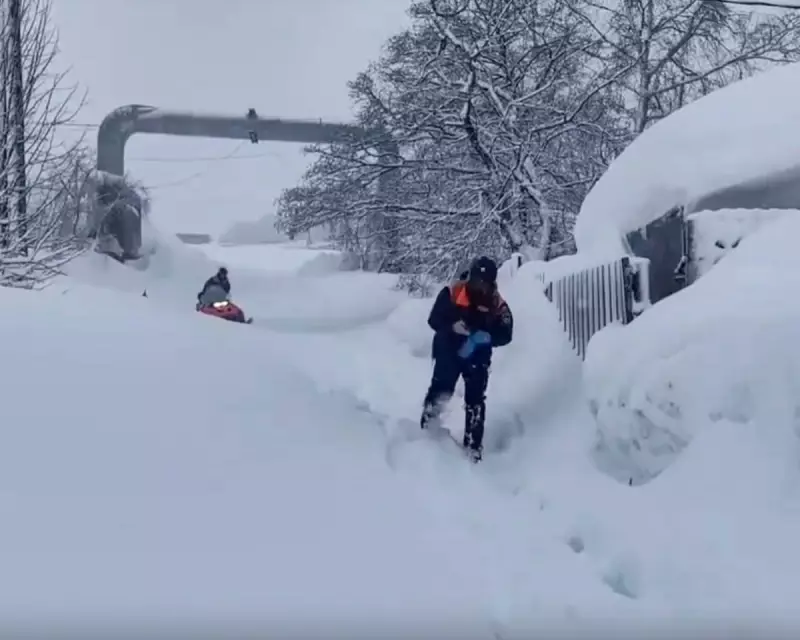
Emergency service personnel in Petropavlovsk-Kamchatsky, located on Russia's Kamchatka peninsula, have been working tirelessly during an unprecedented heavy snowfall event. The town, situated on the east coast of the peninsula, experienced record-breaking conditions that left many residents stranded and vehicles buried under massive snowdrifts.
Unprecedented Snowfall in Eastern Russia
Last week, Petropavlovsk-Kamchatsky received more than 6 feet (1.8 metres) of lying snow in certain areas, with strong winds causing extreme drifting that piled snow over 10 feet high against buildings and cars. This extreme weather event was driven by a combination of strong Pacific low pressures dragging moist tropical air northwards, which clashed with cold Arctic air already present in the region.
These conveyor belts of tropical air, known as atmospheric rivers, typically bring heavy rainfall to areas like California, but snowfall events of this magnitude are rarer and particularly impactful for the Kamchatka peninsula. Heavy snow began falling in the early hours of Monday, 12 January, with snowfall rates reaching 2-5cm per hour at times, continuing until Tuesday evening and depositing 2-3 feet of snow.

As one system passed through, another approached, bringing additional snowfall from Wednesday afternoon until Friday morning, adding another 2-3 feet widely across the region. Cars quickly became buried, with residents digging tunnels through the snow to locate their vehicles. People were seen sledding from roofs as snow accumulated against buildings, and tragically, two individuals lost their lives when a buildup of snow fell from a rooftop.
The clearing of roads and building entrances has continued well into this week, highlighting the ongoing challenges faced by the community and emergency services.
Historic Rainfall and Flooding in the Mediterranean
Meanwhile, in the Mediterranean, a slow-moving area of heavy rain associated with Storm Harry caused a historic rainfall event in north-east Tunisia on Tuesday. Several areas recorded the highest rainfall totals since 1950, with 242mm falling in the coastal city of Sayada—roughly five times the average for January and about 70% of the yearly average. Near the capital, Tunis, 206mm was recorded.
The downpours led to flash flooding, carrying debris as large as cars through streets. Four deaths were reported in the town of Moknine, close to Sayada, including a woman who drowned inside her home. With roads and transport links submerged, some communities were entirely cut off, hampering the already stretched response by emergency services. Schools and courts were among the buildings closed due to the disruption.
Severe rainfall also affected neighbouring regions of Algeria, where two further flooding-related deaths were reported, and Libya, which experienced damaging winds as well. Storm Harry wreaked havoc across eastern parts of Sardinia, Sicily, and south-west Italy between 18-21 January, with heavy rain and strong winds.
In Ogliastra, Sardinia, rainfall amounts were five times higher than the January average in just three days, with 548mm in Genna Tuvara and 489mm in Villagrande Bau Mandara. Similar rainfall totals were observed in Sicily and Calabria, Italy, with 570mm in 72 hours in San Sostene. The extreme weather caused extensive damage to roads, buildings, and infrastructure, resulting in flooding, landslides, and the evacuation of dozens of families from their homes.
These events underscore the increasing frequency and severity of extreme weather patterns globally, impacting communities from the remote reaches of Russia to the Mediterranean coast.