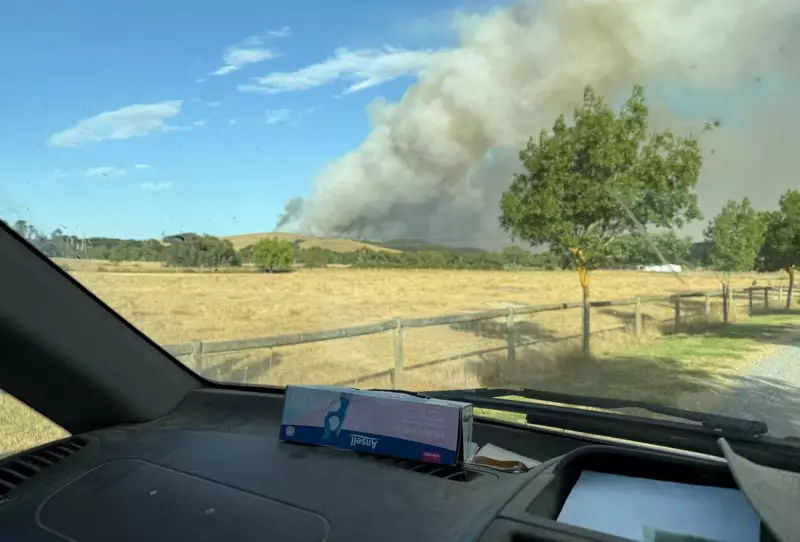
Residents south of Adelaide have been urgently warned to prepare to leave their homes as an uncontrolled bushfire continues to burn across the Fleurieu Peninsula, destroying properties and scorching hundreds of hectares of land.
Firefighters Battle Inaccessible Terrain
The blaze, which ignited east of Mount Compass at approximately 4.30pm on Sunday, has proven difficult for crews to contain. The SA Country Fire Service (CFS) confirmed the fire remains uncontrolled, burning through grass and scrub. More than 120 firefighters, supported by 60 vehicles and water-bombing aircraft, are working in challenging, inaccessible terrain to limit its spread.
Authorities have stated crews are racing against time to make progress ahead of a forecast wind change expected around lunchtime on Monday. The fire has already impacted at least three structures, with one family of five reportedly losing their home. The total burnt area exceeds 650 hectares.

Residents Describe 'War Zone' as Alerts Sound
A Watch and Act alert was issued on Monday morning for the communities of Tooperang, Nangkita, Mount Jagged and Mosquito Hill. The CFS message was stark: "Prepare to leave. Take action now as this bushfire may threaten your safety."
For alpaca farmer Chris Williams, the threat was terrifyingly familiar. His Mount Compass property was severely threatened by fire in 2019, and this latest blaze brought back anxious memories. "It was a worry. We could see the glow and smell the smoke. It wasn't a good feeling," Williams said. He described a bushfire as a "monster" that "makes its own weather."
The speed of the fire was devastating for some. One woman, Natasha Price, told the ABC that her family's motorhome on a Nangkita property was destroyed within 20 minutes of receiving an evacuation alert. "It was like a war zone," she said.
Broader Context of a Warming Climate
The incident occurs amid high fire danger ratings across much of South Australia. It follows the Bureau of Meteorology's confirmation that 2025 was Australia's fourth-warmest year on record, with national average temperatures 1.23C above the norm.
Climate scientists warn that the climate crisis is increasing the frequency and severity of extreme weather events, including heatwaves and bushfires. The Bureau's long-range forecast predicts hotter-than-average conditions for much of the country until April, with elevated sea surface temperatures contributing to the pattern.
While conditions eased slightly overnight, allowing some residents to breathe a sigh of relief, road closures remain in place throughout the affected area. No injuries have been reported. Local MP David Basham assisted in moving cattle to safety, highlighting the community effort in the face of the emergency.