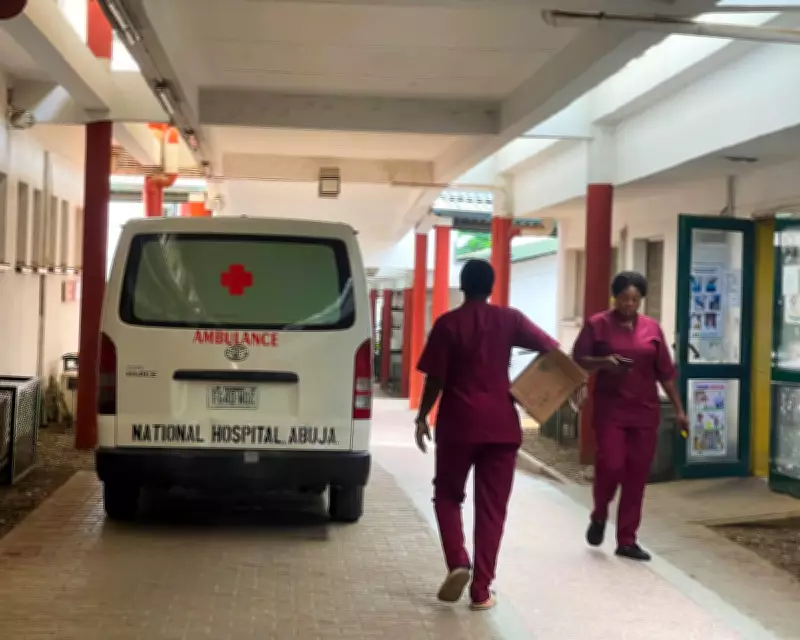
The National Hospital in Abuja stands as a stark symbol of Nigeria's health system, which is grappling with profound challenges. In this environment, survival is often determined by what has been described as a lethal lottery of geography, wealth, and sheer chance. A recent high-profile tragedy has brought this crisis into sharp focus, mapping a system in a state of collapse.
Interconnected Tragedies Highlight Systemic Failures
The death of singer Ifunanya Nwangene, known as Nanyah, from a snakebite in an Abuja hospital last Saturday has sent shockwaves through Nigeria. Allegedly, her death occurred after a frantic and failed search for antivenom, highlighting critical supply chain issues. This event is not isolated; it forms part of a devastating triad of incidents that frame a national health emergency.
Just weeks earlier, the country mourned the loss of novelist Chimamanda Ngozi Adichie's young son in a premium private hospital in Lagos, amid allegations of negligence. Shortly before that, images emerged of boxer Anthony Joshua, after a serious car crash near Lagos, being assisted by bystanders with no ambulance or emergency services in sight. These tragedies—a cobra in an upmarket apartment, a fatal error in a high-end facility, and a wrecked car on the roadside—may seem disconnected, but they are deeply interconnected, serving as a diagnostic map of a health system in collapse.

Data-Driven Diagnosis of a Failing System
To view these events as mere accidents is to misunderstand the depth of the failure. They are predictable outcomes of a system rated as dangerously unprepared. The 2025 SBM Intelligence Health Preparedness Index (HPI) provides a cold, data-driven assessment, indicating that Nigeria's health system is critically underprepared, with not a single state achieving even 30% readiness for a health crisis.
Each tragedy aligns with core failures measured by the index. The snakebite incident exposes chronic supply chain and stock management issues, where even leading federal hospitals lack essential life-saving drugs like antivenom. The private hospital tragedy points to a human resource catastrophe, with a patient-to-doctor ratio exceeding 15,000 to one in some areas, exacerbated by the Japa syndrome brain drain. Joshua's accident reveals the nonexistent emergency and trauma response network, leaving most Nigerians to face medical emergencies alone.
The Brutal Lottery of Geography and Wealth
This systemic failure is not experienced equally across Nigeria. There exists a brutal geographical lottery, where survival chances vary drastically based on location and economic status. For instance, snakebite risks are highest in rural areas like farmlands and new developments, yet healthcare infrastructure is inversely distributed, with urban centres offering only a fragile fighting chance.
In rural Nigeria, a snakebite often triggers a cascade of failures. Data suggests only about 8.5% of victims reach a hospital, with many resorting to traditional first aid methods. Hospitals are frequently hours away, lack antivenom, and impose crushing out-of-pocket costs on the uninsured, who make up over 95% of the rural population. Nwangene's death in Abuja was shocking precisely because it occurred in the capital, where the system is supposed to function, whereas in rural areas, such deaths represent a silent, neglected epidemic.
Public Distrust and the Turn to Traditional Remedies
In the aftermath of the Abuja tragedy, a wave of nostalgia for traditional remedies has swept social media, with posts advocating for cashew tree bark or specific herbs. This is not mere romanticism but a rational symptom of a broken system. When the state fails to provide accessible, affordable, or trustworthy care, people logically turn to traditional healers, who are often more accessible, with an average reach time of 15 minutes compared to over seven hours for formal health facilities.
This trend underscores a deep, well-founded distrust of the formal healthcare system. It is an indictment of a system so dysfunctional that it cedes its life-saving role to unregulated alternatives, even if some remedies are unproven or harmful.

Exhaustion and Scepticism in the Face of Political Responses
Nigerians are exhausted by the relentless challenges of shortages, high costs, and the need to act as their own risk managers and emergency services. The political response to recent outcries, such as the announcement of a ministerial taskforce on patient safety, is viewed with deep scepticism. It is seen as an admission of systemic challenges but fails to address root causes like broken supply chains, professional brain drain, infrastructural decay, and urban-rural inequity.
The fundamental truth revealed by these tragedies is that Nigeria's health system is not just under-resourced; it is fundamentally unreliable. It has abdicated its basic social contract, leaving the wealthy to rely on extreme due diligence and medical tourism, the middle class in a precarious state, and the poor, especially in rural areas, to suffer and die from treatable conditions.
Until the system is rebuilt from its foundations with equity and reliability as core principles, every Nigerian remains at the mercy of this lethal lottery. The exhaustion persists as a rational response to a state that has long failed to guarantee the most basic human dignity: the preservation of life itself.