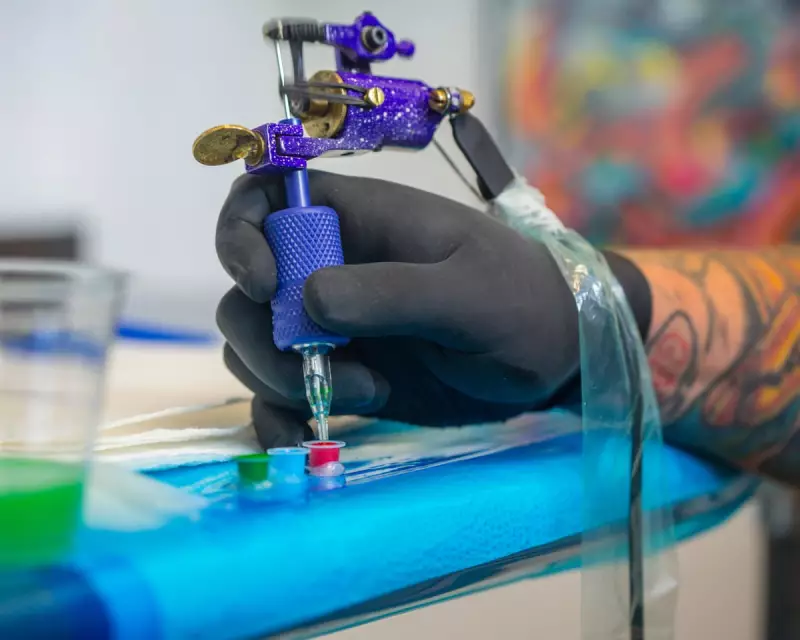
A new scientific study has exposed a significant gap in consumer protection, revealing that many tattoo inks sold in Australia contain toxic metals and carcinogenic chemicals at levels that would fail current European Union safety standards.
Widespread Practice Meets Minimal Oversight
Body art is immensely popular in Australia, with an estimated 30% of adults sporting at least one tattoo. Of those, more than a third have five or more pieces. Despite this widespread adoption, there has been minimal oversight of what these permanent inks actually contain once injected into the skin.
Published in the Journal of Hazardous Materials, the research was led by Professor William Alexander Donald and Dr Jake P. Violi from the University of New South Wales. Their analysis of 15 inks from major international brands available to Australian consumers found every single sample would breach at least one EU regulatory limit.

Alarming Chemical Composition Uncovered
The team employed standard laboratory techniques to screen for a broad range of substances. Their findings were stark. They detected multiple toxic metals, including arsenic, cadmium, chromium, and lead, at concentrations considered unacceptable under EU law.
Furthermore, some inks contained restricted aromatic amines, which are organic compounds suspected of having carcinogenic potential. The study noted that black inks tended to contain a wider range of regulated metals, while brightly coloured inks often showed high levels of specific pigment-associated metals like titanium and aluminium.
"Metals are often key to achieving bright, stable colours that resist fading," the researchers noted, explaining that these substances can be intentional pigments or impurities from the manufacturing process.
A Regulatory Void in Need of Filling
The situation highlights a clear divergence in international standards. Since 2022, the European Union has enforced binding chemical limits on tattoo inks, banning the sale of non-compliant products. Australia, by contrast, has no equivalent national regulatory framework.
Oversight relies on voluntary compliance, with the last government survey conducted in 2016 and updated in 2018. That earlier survey already indicated many inks would not meet the older, less restrictive European guidelines. There is no requirement for routine batch testing of inks sold in the Australian market.
The researchers are careful to clarify that their study analysed ink chemistry, not direct health risks. "We’re not toxicologists," they state, pointing out that health effects depend on dose, exposure time, and individual biology. Cancer Council Australia advises that tattoos have not been shown to cause cancer but acknowledges concerns about ink composition.
Nevertheless, the findings point to an undeniable blind spot. The study concludes by calling for increased monitoring of tattoo inks and a review of Australian standards to align with international best practices, such as those in the EU. This would provide greater transparency for consumers and reduce unnecessary exposure to hazardous substances in a form of self-expression valued by millions.