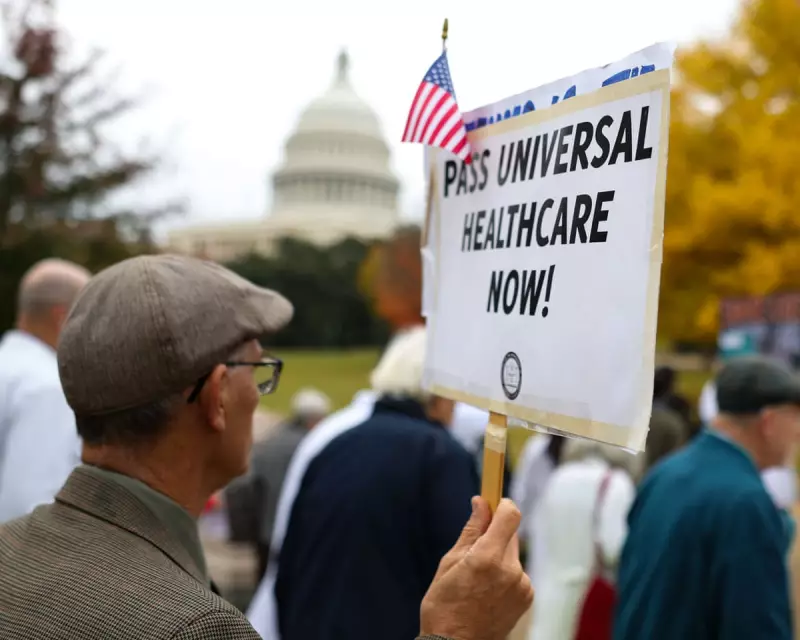
Healthcare Crisis Sparks Capitol Hill Protests and Government Shutdown
Medical professionals and patients gathered in force outside the US Capitol on 3 November 2025, demanding radical changes to America's healthcare policies. The demonstration occurred as the federal government entered shutdown mode amid bitter disagreements over impending rises to health insurance premiums.
Photographer Bryan Dozier captured the scene where healthcare workers and ordinary Americans voiced their frustration with a system many describe as broken beyond repair.
The Staggering Cost of American Healthcare
The current healthcare debate centres on alarming financial statistics that highlight the system's unsustainable nature. According to research firm KFF, the average American family now pays $27,000 annually for health insurance, representing a 6% increase from the previous year.

Meanwhile, employers face their own financial nightmare with average health insurance costs expected to surpass $17,000 per employee in 2026, marking a dramatic 9.5% jump from 2025 figures.
The government shutdown stems directly from this crisis, with Democrats attempting to block Republican efforts to axe tax credits that experts warn would double premiums for millions of citizens.
A Business Case for Medicare Expansion
Gene Marks, a self-described capitalist, presents a surprising solution: expanding the existing Medicare system to cover all Americans. He argues this isn't about creating national healthcare but rather adapting an insurance system that already functions effectively for seniors.
"Our infrastructure doesn't change," Marks explains. "The way our healthcare providers get paid changes. Trust me, they'll adapt."
He points to the UK system where an employee earning £60,000 (approximately $78,000) contributes £3,211 ($4,174) toward healthcare, while their employer pays £8,250 ($10,725). These contributions also cover:
- State pension benefits
- Statutory sick pay
- Maternity leave provisions
- Unemployment benefits
When compared to American costs for retirement plans, unemployment insurance and paid time off, the financial gap narrows considerably.
Practical Benefits for Small Businesses and Workers
For small business owners like Marks, a national health insurance program would create a level playing field with larger competitors who can currently afford superior healthcare plans. The administrative simplicity alone represents a significant advantage.
"It would make administration much easier," he notes, describing how a straightforward payroll deduction would replace the complex web of payments to benefit firms and insurance providers.
Additional benefits include:
- Simplified annual budgeting without difficult negotiations with insurance providers
- Better employee understanding of coverage details
- Reduced employer liability regarding workers' health histories
Marks emphasises that despite his capitalist credentials, he recognises government's vital role in certain sectors. "Providing healthcare to all through a national insurance system strengthens our economy's infrastructure," he argues.
The evidence supporting systemic change appears compelling. The United States ranks just 15th and 69th in different global healthcare studies, challenging assumptions about American medical superiority. As the government shutdown continues over healthcare subsidies, many Americans are asking whether this crisis might finally trigger the fundamental reforms their healthcare system desperately needs.