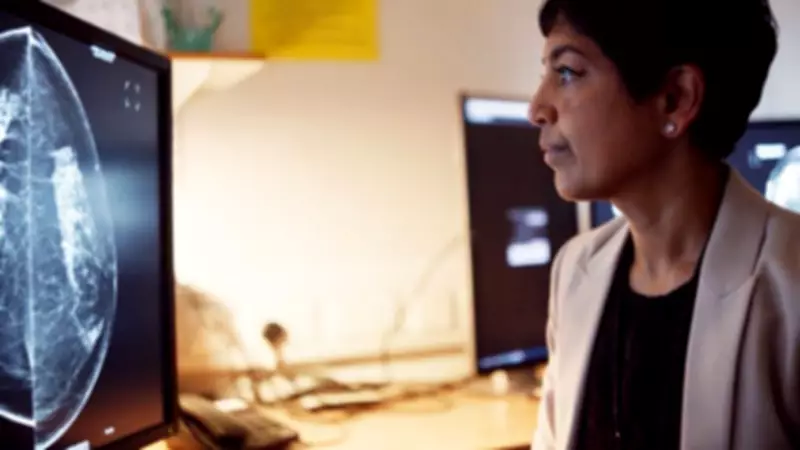
AI Surpasses Human Doctors in Breast Cancer Identification, Study Finds
A groundbreaking study demonstrates that artificial intelligence can detect breast cancer with greater accuracy than human specialists, potentially transforming diagnostic processes within the National Health Service. However, significant obstacles must be addressed before this technology can be fully integrated into clinical practice.
Superior Detection Rates and Early Cancer Identification
Conducted by Google, the NHS, and Imperial College London, the research analyzed 115,000 breast scans from five NHS screening services. The AI system identified approximately two additional cancers per 1,000 women compared to a single human radiologist. Notably, it detected 25% of "interval cancers"—cases diagnosed between routine screenings after previous clear scans—suggesting it could facilitate earlier intervention, a critical factor in preventing cancer progression.
AI Matches Human Teams but Lacks Trust
While the AI outperformed individual doctors, it did not surpass the NHS's standard arbitration system, where two radiologists review scans with a third expert resolving disagreements. A second paper revealed that human-AI teams achieved results comparable to human-human pairs, with the AI excelling at spotting hard-to-detect cancers but generating more false positives. Researchers concluded the differences were statistically insignificant, indicating AI performs on par with specialists while offering unique insights, particularly for first-time screenings.

Significant Time Savings Amid Increased Workload Shifts
The AI completed scan readings in an average of 17.7 minutes, drastically faster than the 2.08 days taken by the first human radiologist. This efficiency could alleviate pressures on the NHS, which faces a 30% shortfall in clinical radiologists, projected to rise to 40% by 2028. However, the technology increased arbitration cases by 142% and 22% at two centers, as doctors struggled to trust AI evaluations. In 93 instances, humans overruled correct AI cancer identifications, often due to confusion over the AI's methodology.
Implementation Challenges and the Need for Phased Deployment
Despite potential time savings of up to 32%, integrating AI into the NHS is complex. Many radiologists still use paper scans incompatible with AI, and the system proved sensitive to changes in scanning equipment, doubling false alarms when machines were switched. Researchers advocate for a gradual, iterative approach with specialist oversight to calibrate AI thresholds to local environments, ensuring reliability without disrupting workflows.
This study underscores AI's promise in enhancing breast cancer detection but highlights that overcoming trust issues, technical barriers, and adaptation requirements will delay its widespread adoption in healthcare settings.