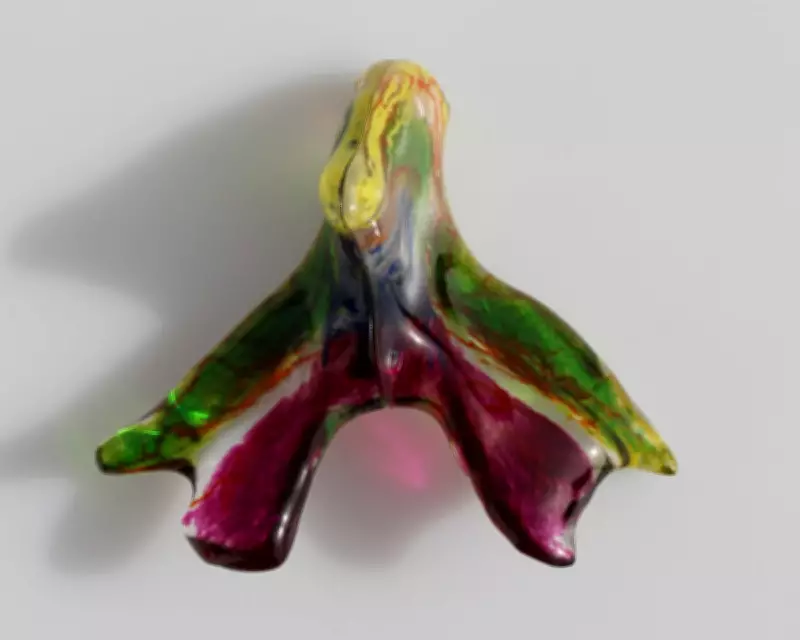
Groundbreaking 3D Map of Clitoral Nerves Revealed
In a landmark achievement for women's health, researchers have produced the first-ever 3D map of the intricate nerve network within the clitoris. This breakthrough, based on the work of Ju Young Lee, comes nearly three decades after similar mapping was completed for the penis, highlighting a long-standing gap in anatomical knowledge.
The study, which has been reported on the preprint server bioRxiv and awaits peer review, utilized high-energy X-rays to scan two donated female pelvises. The resulting 3D images show five complex, tree-like branching nerves in unprecedented detail, with the widest measuring 0.7mm across. This mapping corrects previous misconceptions, such as the belief that the dorsal nerve of the clitoris diminishes near the glans, when in fact it continues strongly to the end.
Overcoming Historical Neglect
The clitoris, essential for sexual pleasure, has been one of the least studied organs in the human body. Cultural taboos around female sexuality have hindered scientific investigation, with the clitoris not appearing in standard anatomy textbooks until the 20th century. Even in the 1995 edition of Gray's Anatomy, it was described merely as "a small version of the penis."

Helen O'Connell, a Melbourne urologist who published the first comprehensive anatomical study of the clitoris in 1998, criticizes this oversight. "It has been deleted intellectually by the medical and scientific community, presumably aligning attitude to a societal ignorance," she said. The new 3D map aims to rectify this by providing detailed insights into the organ's inner workings.
Implications for Medical Practice
The findings have significant implications for various surgical procedures. For instance, the mapping could improve outcomes for reconstructive surgery after female genital mutilation (FGM), a practice affecting over 230 million girls and women globally. Currently, about 22% of women experience a decline in orgasmic function post-reconstruction, but better nerve understanding may reduce this rate.
Additionally, the research could inform surgeries for vulvar cancer, gender reassignment, and cosmetic procedures like labiaplasty, which saw a 70% increase in popularity from 2015 to 2020. Georga Longhurst, head of anatomical sciences at St George's, University of London, noted, "I was especially fascinated by the high-resolution images within the glans, the most sensitive part of the clitoris, as these terminal nerve branches are impossible to see during dissection."
Future Directions and Awareness
Ju Young Lee, the lead researcher, expressed amazement at the delay in achieving this level of knowledge, given that similar mapping for the penis was completed in 1998. She plans to open a clitoris exhibition at Amsterdam University Medical Center to raise awareness, inspired by London's Vagina Museum.
O'Connell emphasized the broader health benefits, stating, "Orgasm is a brain function that leads to improved health and wellbeing as well as having positive implications for human relationships and possibly fertility." This study marks a pivotal step toward integrating female anatomy more fully into medical education and practice, potentially enhancing sexual health and surgical precision for women worldwide.