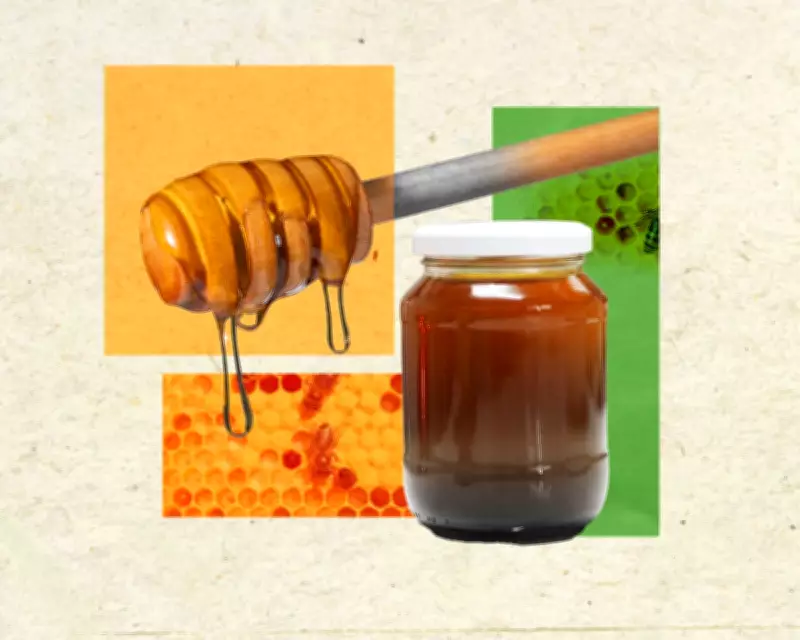
The Ancient Sweetener's Modern Medical Potential
For millennia, honey has been cherished as both a natural sweetener and a traditional remedy. The ancient Egyptians and Greeks utilized it for treating burns, while Hippocrates, the "father of medicine," mistakenly prescribed it for everything from contraception to baldness. Today, this golden substance is frequently marketed as a superfood with an extensive list of purported health benefits, ranging from cough relief to combating drug-resistant superbugs.
The Scientific Composition of Honey
Honey produced by the western honeybee, Apis mellifera, consists predominantly of sugar—approximately 80% of its composition. This high sugar concentration creates an environment where bacteria cannot survive due to insufficient water content. "It basically never goes off," explains Dr. Kenya Fernandes of the University of Sydney, noting that honey has been discovered intact in ancient pots dating back thousands of years.
Beyond its sugar content, honey contains several components with antimicrobial properties. Hydrogen peroxide, the same compound used as a disinfectant, is naturally present in honey. A 2024 study co-authored by Fernandes discovered that dozens of Australian honey samples retained antimicrobial properties even after 15 to 17 years of storage.

Manuka honeys, derived from the nectar of the manuka tree, contain a unique chemical called methylglyoxal, which possesses antibacterial properties. Additionally, honey contains various proteins, peptides, and trace amounts of vitamins and minerals, with nutrient profiles varying based on geographical location and nectar sources.
Wound Healing and Antimicrobial Applications
Some evidence suggests honey can assist with wound healing, though its use in healthcare remains limited. "There is some evidence that honey might be better than certain conventional antiseptics, but most of the studies in this area are not good quality," states Professor Deshan Sebaratnam, a dermatologist at the Skin Hospital in Sydney.
Fernandes emphasizes that honey's effectiveness stems from "a complex mixture of different things, all working together, that are more than the sum of their individual parts." This complexity makes researchers interested in using whole honey for topical treatments rather than isolating individual components.
Despite its antimicrobial properties, raw honey can contain bacterial spores, including those causing botulism. Therefore, it should never be given to infants under 12 months, and medical-grade honey used for wound dressings undergoes sterilization through gamma radiation.
Limitations and Standardization Challenges
Standardizing non-manuka honeys for clinical use presents significant challenges due to variations in active compounds between different honey batches. A recent study led by Fernandes found that bees collecting nectar from diverse Australian native plants produced honey with stronger antimicrobial effects than single-source honey.
"Currently, we lack the apparatus to predict which honeys will consistently perform well against bacteria," Fernandes admits. "That's part of the reason for conducting this research."
Antibiotic Resistance and Internal Use
While honey shows promise as an antiseptic for external application, it is not a solution for the global antibiotic resistance crisis. "It's totally inappropriate to use an antibiotic by eating it," explains Liz Harry, an emeritus professor at the University of Technology Sydney. "It's not like a drug that gets into the bloodstream and reaches the right area."
Harry emphasizes that other antiseptics and disinfectants, such as ethanol, work effectively externally but do not produce the same effects when consumed internally. "There's no reason why manuka would be better to eat than any other honey," she adds.
Gut Health and Prebiotic Potential
Emerging research suggests honey may influence the gut microbiome through indigestible carbohydrates called oligosaccharides, which act as prebiotics that promote the growth of beneficial gut bacteria. However, due to honey's high sugar content, Harry notes, "I don't think honey would necessarily be a product that you sold for gut health."

These possible prebiotic compounds in honey represent a promising avenue for further scientific investigation, though more research is needed to fully understand their effects.
Cough Relief and Sleep Benefits
Some studies have linked honey to improved sleep and reduced cough severity in children with upper respiratory tract infections. However, Professor Clare Collins of the University of Newcastle cautions that "the amount and type of honey given varies across studies, with no certainty about which components are present. So the results need to be interpreted with caution."
It's important to note that such coughs generally do not require treatment, and honey should not replace conventional medical care.
The Verdict on Honey's Health Claims
While honey possesses genuine antimicrobial properties and shows potential for wound healing and gut health, many of its touted superfood benefits remain scientifically unproven. The substance's complex composition and variability between batches present challenges for standardization in medical applications.
As research continues to explore honey's therapeutic potential, consumers should approach health claims with skepticism and consult healthcare professionals for medical advice. The ancient remedy continues to fascinate modern science, but separating evidence-based benefits from sweet mythology requires rigorous scientific investigation.