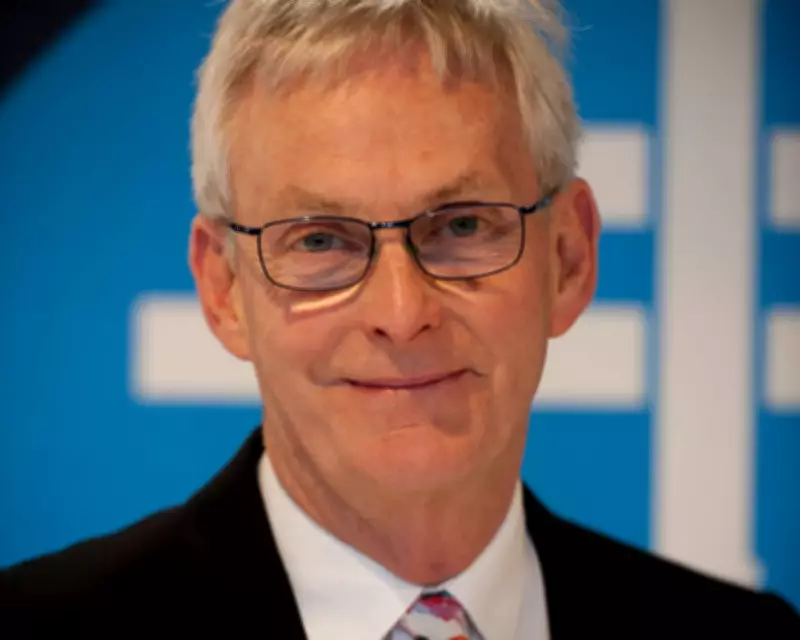
Mike Morgan: Respiratory Medicine Pioneer Who Championed Health Equality
The medical world has lost a towering figure with the passing of Dr Mike Morgan, whose pioneering work in respiratory medicine transformed treatment for millions and brought attention to health inequalities affecting socially deprived communities. Morgan, who died aged 75, dedicated his career to improving outcomes for patients with chronic lung conditions while advocating for greater recognition of respiratory diseases at national policy level.
A Champion for Respiratory Medicine
Morgan served as the national clinical director for respiratory disease at NHS England from 2013 to 2019, ensuring respiratory conditions received unprecedented prominence in the NHS's long-term strategy. His work was instrumental in shaping the 10-year health plan that prioritised earlier diagnosis through improved access to spirometry testing and expanded provision of pulmonary rehabilitation programmes.
When Morgan began his consultant role at Glenfield Hospital in Leicester in 1988, he joined a team of just two other doctors in a field that received minimal research funding compared to cancer or heart disease. Today, the department boasts over twenty respiratory specialists, reflecting the transformation Morgan helped engineer in a specialty once considered medicine's poor relation.

Pioneering Pulmonary Rehabilitation
Morgan's most significant contribution came through his pioneering work on pulmonary rehabilitation. He recognised early in his career that traditional treatments for chronic obstructive pulmonary disease (COPD) focused too heavily on medication while neglecting the transformative potential of structured exercise programmes.
In 1992, Morgan collaborated with physiotherapist Sally Singh to develop the incremental shuttle walking test, a groundbreaking method for measuring patient fitness. Their research culminated in the 1998 publication Practical Pulmonary Rehabilitation, which established exercise therapy as a cornerstone of respiratory treatment.
Initially, Morgan faced scepticism from colleagues accustomed to relying primarily on bronchodilators and other medications. However, his Leicester team's research proved so compelling that pulmonary rehabilitation is now standard therapy across the UK and has been adopted worldwide, including in low- and middle-income countries like India and Uganda.
Addressing Health Inequalities
Morgan understood that respiratory diseases disproportionately affect people in socially deprived areas, where factors like pollution, damp housing and smoking prevalence create perfect conditions for chronic lung conditions. He recognised that these communities often lacked political voice, making it harder to secure research funding and policy attention.
This awareness drove Morgan's commitment to building bridges between academic research and clinical practice. In 2000, he helped establish the Leicester Institute for Lung Health, which has since attracted over £100 million in funding and published more than 700 research papers. The institute has grown into one of the world's largest respiratory research units, with particular strengths in COPD and asthma.
From Railway Roots to Medical Leadership
Born in Ealing, west London in 1950, Morgan was the son of a Great Western Railway stationmaster. After boarding at Taunton School in Somerset, where he developed passions for rugby and judo, he studied medicine at Christ's College, Cambridge before completing clinical training at University College Hospital London.
Morgan initially considered specialising in geriatrics but changed direction after working with leading respiratory physician Martin McNicol at Central Middlesex Hospital. He was particularly drawn to the practical aspects of lung function and the opportunity to significantly improve patients' quality of life.
After marrying anaesthetist Clare Derrington in 1981, with whom he had two sons, Morgan moved through various junior doctor positions before becoming senior registrar at East Birmingham District Hospital in 1985. His appointment to Glenfield Hospital three years later marked the beginning of his transformative three-decade tenure in Leicester.

Enduring Legacy and Recognition
Morgan's influence extended beyond clinical practice into professional leadership. He served as president of the British Thoracic Society in 2016 and received the society's prestigious medal in 2019 for his outstanding contribution to respiratory medicine.
Even after stepping down from his national role, Morgan continued seeing patients until age 70, working through the Covid pandemic before finally retiring in 2022. He maintained lifelong interests in rugby and took up sailing while in Leicester, becoming a member of Rutland Sailing Club.
Morgan's work has left an indelible mark on respiratory medicine, ensuring that pulmonary rehabilitation became standard treatment while highlighting the urgent need to address health inequalities affecting deprived communities. His legacy lives on through the thousands of patients who benefit from the treatments he championed and through the continued work of the research institutions he helped establish.
He is survived by his wife Clare, sons Charlie and Theo, four grandchildren, and his sister Jane.