A stark financial disclosure from the pharmaceutical industry has reignited the debate over soaring drug prices in the United States. In 2024, the American pharmaceutical titan Pfizer directed a mere 18% of its total revenue towards internal research and development. In a striking contrast, a larger share—27%—was funnelled to shareholders through dividends and debt repayment.
Trump's Misplaced Blame on Global Allies
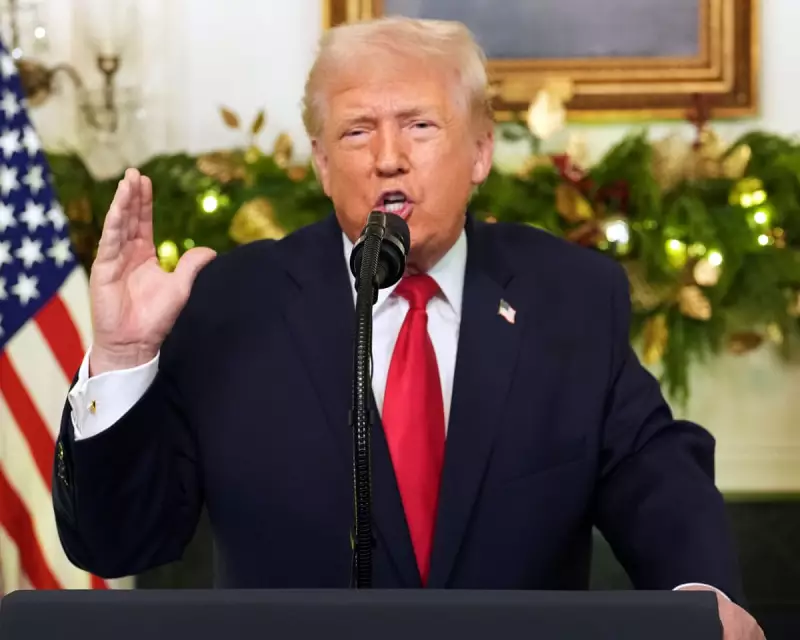
This corporate spending pattern emerges as former President Donald Trump re-enters the political fray with a familiar, yet flawed, diagnosis for America's prescription drug crisis. In a speech on 19 December, Trump asserted that Americans pay exorbitant prices because other Western nations, such as France, Germany, and Japan, secure cheaper deals, effectively freeloading on US innovation.
He even recounted an imagined confrontation with French President Emmanuel Macron, claiming he demanded France double or triple its drug prices. Trump pledged to cut US costs by an implausible "700%". While he correctly identifies the US system as a public health failure—where millions struggle to afford essentials like insulin—his explanation fundamentally misidentifies the culprit.

The Real Winners: Pharma Shareholders, Not Foreign Patients
The evidence points not to foreign governments, but to the pricing power and profit priorities of multinational pharmaceutical companies. Patients in Europe, Canada, South Korea, and Japan do pay less, but they are not receiving medicines for free. The true beneficiaries are corporate investors.
Between 2000 and 2018, shareholders enjoyed over $1.5 trillion in profits, dividends, and share buybacks. US corporations are dominant players, accounting for 49% of the top 20 big pharma revenue in 2024. This model was cemented in the 1990s through global trade agreements like the 1994 TRIPS agreement, which strengthened patent rules worldwide, boosting profits for US, European, and Japanese firms while restricting access to generic medicines.
A Fraying Model and a Shifting Global Landscape
Today, this system is under significant strain. Across the industry, a smaller proportion of revenue is being invested in truly groundbreaking research, with more being returned to investors. Pfizer's 2024 expenditure is a prime example of this trend. Concurrently, innovation has slowed, with fewer public health breakthroughs and a rise in ultra-expensive niche treatments.
Meanwhile, nations outside the traditional Western-dominated system are advancing. China has built a formidable state-backed pharmaceutical sector, producing 3.4 billion Covid-19 vaccine doses in 2021-2022 alone—28% of the global total at the time. Countries like Cuba also developed their own vaccines through state-controlled biotech.
Faced with what may be peak profits, US industry pressure is mounting to find new revenue streams. Trump's proposed solution—to strong-arm allies into paying more for US drugs—protects corporate interests rather than challenging them. It leverages economic pressure on nations dependent on US security, potentially forcing European and Japanese governments into a difficult position between their own domestic pharmaceutical lobbies and outraged voters facing even higher healthcare costs.
Ultimately, the high cost of American medicines is not a subsidy for the world, but a testament to the financial priorities of an industry that increasingly rewards its investors over reinvesting in transformative research for patients.