Space Sperm Navigation Impaired by Microgravity, Australian Study Finds
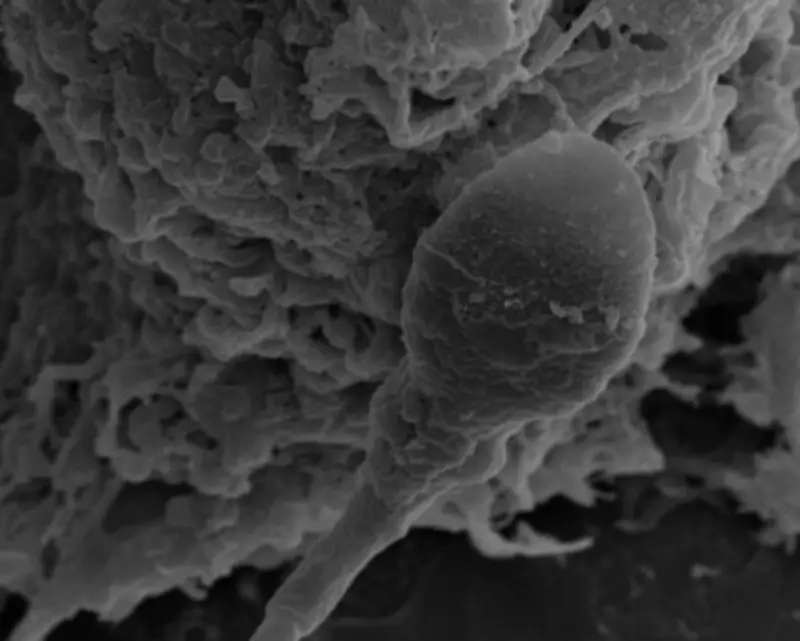
Groundbreaking research from Adelaide University has revealed that sperm become disoriented and lose their navigational abilities when exposed to microgravity conditions. The study, which examined human, mouse, and pig sperm samples, found that weightlessness causes sperm to tumble and flip unpredictably, significantly hindering their ability to find their way to an egg.
Simulating Space Conditions on Earth
Researchers utilized a specialized 3D clinostat machine to simulate the microgravity environment experienced by astronauts aboard the International Space Station. This device effectively negates gravitational effects, creating conditions where cells lose their directional orientation. "It causes them to flip around, to go upside down … they don't really know which way is up or down," explained lead researcher Dr. Nicole McPherson from the university's Robinson Research Institute.
The team then tested the microgravity-exposed sperm in a maze designed to simulate the female reproductive tract. The results were striking: human sperm exposed to weightlessness showed approximately a 40% reduction in successful navigation through the maze compared to control groups under normal gravity conditions.

Implications for Space Colonization
With increasing international focus on deep space exploration, including NASA's Artemis mission to the moon and Mars, and private initiatives like SpaceX's plans for Martian habitats, understanding reproduction in extraterrestrial environments has become critically important. "As we progress toward becoming a spacefaring or multi-planetary species, understanding how microgravity affects the earliest stages of reproduction is critical," said Associate Professor John Culton, director of the Andy Thomas Centre for Space Resources.
The research, published in the journal Communications Biology, addresses fundamental questions about human reproduction beyond Earth. "With the recent advancements in space travel and international interest in deep space exploration, Mars settlement and moon mining, it is critical to investigate the effect of microgravity on early fertilisation events," the researchers noted in their publication.
Historical Context and Future Research
This study builds upon decades of space reproduction research, including:
- 1987 Cosmos 1887 mission findings of reduced testicular mass in space-exposed rats
- 1998 Columbia space shuttle experiments with mouse embryos
- NASA's 2018 Micro-11 mission sending human sperm to the International Space Station
Despite the navigational challenges identified, the research offers hope for future space reproduction. "This gives us hope that reproducing in space may one day be possible," McPherson stated, noting that healthy embryos were still able to form despite the navigational difficulties.
The study also identified potential solutions, finding that adding progesterone helped overcome sperm disorientation. Researchers believe this hormone, naturally released by eggs, may serve as a navigational guide for sperm in challenging environments.
Broader Implications and Ongoing Concerns
Beyond microgravity, the research highlights additional challenges for space reproduction, particularly radiation exposure that bombards astronauts beyond Earth's protective atmosphere. In February 2024, scientists called for increased international collaboration to address knowledge gaps about reproductive health in space, emphasizing the urgent need for comprehensive research and ethical guidelines.
McPherson emphasized the dual benefits of this research: "While it may seem like a bit of sci-fi … we're actually gaining fundamental knowledge in how sperm navigate and transverse the female reproductive tract." The findings not only advance space reproduction science but also contribute valuable insights to terrestrial reproductive medicine and fertility research.