The Dawn of Synthetic Species: A Biological Revolution
Adrian Woolfson's thought-provoking book On the Future of Species: Authoring Life by Means of Artificial Biological Intelligence presents a compelling vision of humanity's imminent ability to create synthetic lifeforms. The London-born, Oxbridge-educated author, who founded the genetics company Genyro in San Diego, argues that we stand at the threshold of a transformation as significant as the original Genesis.
From Mythical Creatures to Biological Reality
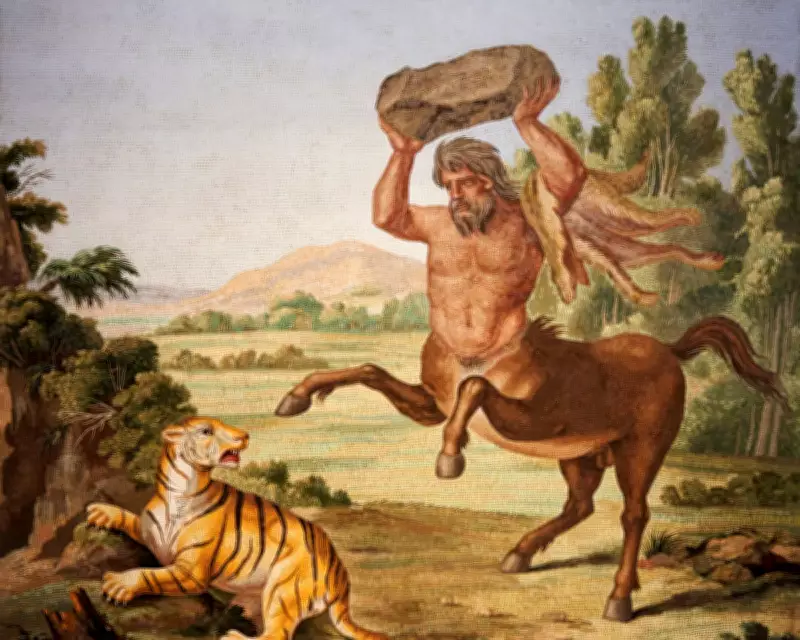
Throughout human history, our imagination has been captivated by hybrid creatures - from Ezekiel's four-faced beasts in biblical texts to the winged Buraq of Islamic tradition and the centaurs of Greek mythology that JK Rowling revived in the Harry Potter series. Woolfson observes that "the impulse to blend the anatomical traits of other species with those of humans appears to be hardwired into our imagination."
What makes Woolfson's analysis particularly significant is his conviction that we're about to move beyond mere imagination. "Very soon, we will not only dream up imaginary animals - we will turn them into biological reality," he asserts. This represents a fundamental shift from biology as a descriptive science to what Woolfson terms a "generative" one.

The Technological Foundations of Creation
Two key technological breakthroughs have brought humanity to this precipice according to Woolfson's analysis. First, DNA synthesis technologies like the Sidewinder method developed at Caltech now enable scientists to construct DNA fragments "of unprecedented size and complexity, rapidly and efficiently." Entire genomes can be synthesised in record times that would have been unimaginable just a decade ago.
Second, artificial intelligence has revolutionised our understanding of protein folding. For decades, scientists could create linear chains of amino acids but couldn't predict how these would fold into three-dimensional proteins whose shape determines their function. The 2020 breakthrough of AlphaFold2, using neural-network technology similar to systems like ChatGPT, has transformed this field completely.
"The structures of complex proteins can now be predicted with confidence, and as a result we are able to create novel ones for use in medicine or elsewhere," Woolfson explains. This protein-creation capability represents the building blocks for constructing entirely new lifeforms.
Potential Benefits and Applications
The potential applications of synthetic biology are staggering in their scope. Woolfson envisions that "synthetic species could be harnessed to produce biofuels, medicines, biosensors, drought-resistant crops and countless other innovations." He even suggests radical possibilities like growing houses rather than building them.
Beyond practical applications, synthetic biology might allow us to improve existing creatures, including humans. Woolfson points to the human spine as "a design disaster" that evolved for quadrupedal movement and remains poorly adapted for bipedal walking. Synthetic biology could potentially guide life "into uncharted landscapes, endowed with entirely new properties that would reinvent the way organisms function."
Ethical Quandaries and Potential Dangers
Despite Woolfson's generally optimistic tone, he acknowledges significant ethical concerns and potential dangers. The distinction between natural and artificial life forms will become increasingly blurred, raising questions about the legitimacy of synthetic species in ecosystems shaped by billions of years of evolution.
More alarmingly, the accessibility of benchtop DNA synthesisers and AI tools could enable bioterrorists to assemble arsenals of human-made pathogens with relative ease. Woolfson also warns that manipulating bacteriophages - viruses that infect bacteria - could inadvertently destabilise the ocean's carbon cycle and accelerate climate change.
Ethical questions multiply when considering mammalian genome manipulation. While making mice more humanlike might create better models for drug testing, Woolfson asks: "But where do you stop? Could we end up with half-human hybrids worthy of Ezekiel?"

Navigating the Synthetic Future
Woolfson adopts a pragmatic position on regulation. While supporting bans on designer babies and parentless humans, he argues against a moratorium on AI-led genomics research, believing it would be ineffective. The potential benefits for humanity, animals, and the planet are simply too significant to halt scientific progress, in his view.
Some critics might find Woolfson overly complacent about the risks of unintended consequences, which appear substantial and real. His prose occasionally becomes overelaborate, and he may exaggerate the immediacy of what he calls the "second Genesis." Nevertheless, his arguments remain compelling and his vision thought-provoking.
As synthetic biology advances, society faces profound questions about our relationship with nature, the ethics of creation, and how to balance innovation with responsibility. Woolfson's book serves as both a wake-up call and a guide to navigating this complex new frontier where science fiction increasingly becomes scientific reality.