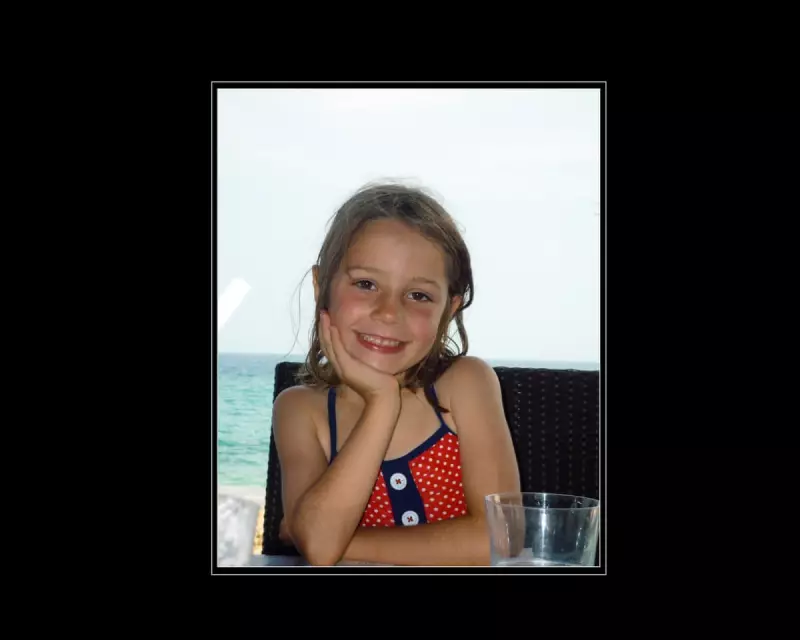
Ian Russell's life divides sharply into two distinct chapters: the ordinary existence before November 20, 2017, and the profoundly altered reality that followed. That Tuesday morning marked the day his youngest daughter, Molly, took her own life at just fourteen years old, a tragedy later linked by an inquest to depression and the negative effects of online content. "Our life before Molly's death was very ordinary. Unremarkable," Russell reflects, describing a typical London suburban life with his wife and three daughters. The weekend prior had been filled with birthday celebrations for all three girls, leaving him feeling exceptionally happy. "That was on a Saturday night," he recalls, "and the following Tuesday morning, everything was different."
A Father's Campaign Against Online Harms
The subsequent years have been defined by grief, trauma, and an unwavering commitment to uncovering the truth about the social media content that contributed to Molly's death. Russell's campaigning led to the establishment of the Molly Rose Foundation, which provides support, conducts research, and raises awareness about online dangers. His efforts also helped propel the Online Safety Act through Parliament in 2023, legislation designed to protect children from harmful content online. Yet, despite this painful journey, Russell finds himself at odds with a growing movement advocating for a blanket ban on social media access for children under sixteen.
The Push for a Ban and Russell's Opposition
Recently, the House of Lords voted decisively in favour of an amendment to the children's wellbeing and schools bill that would prohibit under-sixteens from using social media platforms. The amendment passed by 261 votes to 150, receiving support from across the political spectrum, including many Conservative and Labour MPs, bereaved families, celebrities, and campaign groups. Public opinion appears strongly behind such measures, with a December YouGov poll indicating that 74% of British adults support a ban. However, Russell stands firmly against this approach. Last Sunday, he co-signed a joint statement with organisations including the NSPCC and Full Fact, arguing that "blanket bans on social media would fail to deliver the improvement in children's safety and wellbeing that they so urgently need."

"We're in danger of trying to move too fast and trying to find quick-fix solutions," Russell cautions. "If there were quick-fix solutions, honestly, we would have found them." He emphasises that his position is not born from a desire for controversy but from careful consideration. The core arguments he and other opponents present are multifaceted: children might seek more dangerous alternatives online, find ways to circumvent age limits, face a sudden "cliff edge" of exposure at sixteen, and lose access to vital support networks, particularly for LGBTQ+ and neurodiverse youth.
The Case for the Online Safety Act
Central to Russell's argument is the Online Safety Act, which he believes is only beginning to fulfil its purpose. The legislation mandates that online platforms implement robust age verification measures and prevent harmful content from reaching children. It grants Ofcom, the independent media regulator, powers to fine or even block platforms that fail to comply. Russell acknowledges progress has been frustratingly slow—"It took five years of parliamentary debate to put the Online Safety Act on the books"—but insists the framework is now in place to hold companies accountable.
He points to the recent controversy surrounding Elon Musk's X platform and its integration of Grok AI tools, which could manipulate images to remove clothing, including those of children. "Hideous, wrong, disgraceful," Russell says of the feature. However, he highlights that under the Online Safety Act, Ofcom opened a formal investigation into X, prompting Musk to swiftly remove the software. "The Online Safety Act did what a social media ban couldn't," Russell argues. "If a platform is behaving in an appalling, unsatisfactory, abysmally unsafe manner, it shouldn't be in this country … A ban [for under-16s] removes the impetus to do that."

Regulation Over Prohibition
Russell advocates for sensible, proportionate regulation rather than outright bans. He draws an analogy with road safety: "We don't say: children under 16 shouldn't ride in cars to protect them. We say children under 12 should always be in a car seat. We say that everyone in a car, however old, should wear a seatbelt. The industry is compelled to comply with safety measures … We don't blanket ban 16-year-olds from road travel." Similarly, he believes social media platforms should be made safe for young users through stringent oversight.
He proposes age classification on a platform-by-platform basis, where safer, well-regulated sites could be accessible from age thirteen, while riskier ones might be restricted to older teenagers. "If you were to differentiate like that, you would then drive platforms who wanted to attract younger people [to] start inventing safer things," he suggests. This approach, he contends, would incentivise innovation in child safety rather than pushing young people towards unregulated corners of the internet.
A Personal Journey of Discovery and Distrust
Russell's stance is deeply informed by his family's harrowing experience. After Molly's death, they discovered the disturbing content algorithms had fed her: graphic images and videos related to suicide, self-harm, and depression, often accompanied by slogans like "Fat. Ugly. Worthless. Suicidal." "That discovery of this awful, nihilistic world in which she was drip-fed largely black-and-white, depressive content, that led her to the place where she thought that the only way forward was to end her life, was horrifying," he says.
Initially, reporting this content to Instagram yielded dismissive responses that it did not breach community guidelines. Obtaining a complete picture of Molly's online activity proved a protracted battle with tech companies. While Pinterest cooperated, and Twitter (now X) provided limited data, Meta was particularly obstructive, initially supplying tens of thousands of unsearchable pages. Only after five years of demands did Meta release an additional fifty lever-arch files of evidence, revealing that in her final six months, Molly had been exposed to 2,100 pieces of harmful content on Instagram alone.
"I don't trust the platforms at all," Russell states unequivocally. "You certainly can't judge a social media platform by what it says; you can only judge by what it does." He cites Meta CEO Mark Zuckerberg's apology to parents in January 2024, followed a year later by announcements to reduce fact-checking on Instagram, Facebook, and Threads. For Russell, this underscores the necessity of strong regulatory oversight. "If you've got an effective regulator and strong regulation, then you could go, 'You're not doing what you're telling us you're doing. You're not living up to your risk assessment. You've got three months to fix it, or you're out.' That's the sort of thing that will make a difference."
Seeking Common Ground in a Polarised Debate
The issue has become increasingly politicised, with the Lords amendment seen as a setback for Keir Starmer's government, which favours consultation and observing Australia's approach. Lady Kidron criticised Starmer's stance as "the very epitome of party before country." Yet Russell strives to transcend this division. "I know it will suit many people to divide the cake and say there's pro-ban and there's anti-ban," he observes. "In my case, I'll never be against anyone; I always want to hear their arguments. The division shouldn't be there; the division should be: people who want the world to be safer for children; and technology companies who are absolutely uncaring of that and caring of their profits—that's where the dividing line is."
As the documentary Molly vs The Machines prepares for release, combining inquest reconstructions with broader critiques of big tech, Russell continues his advocacy. On a personal level, he acknowledges the intertwining of his work and grief. "Some days, that can invigorate you and it can be tremendously powerful and comforting. And other days it can absolutely stop you in your steps and you can barely bring yourself to come out the door," he shares. While he longs for an ordinary life where he can remember Molly fondly, the global scale of online harms means his campaign is far from over. For Ian Russell, the path to protecting children lies not in simplistic bans but in robust, evolving regulation that forces technology companies to prioritise safety over profit.