A Doctor's Concern: The Unintended Consequences of Mental Health Labelling
As a general practitioner with over two decades of experience, I have witnessed firsthand the evolution of mental health care in the UK. While our current approach to mental health labelling and diagnosis has undoubtedly brought benefits, I am increasingly concerned that it may be doing more harm than good. The very systems designed to help people understand and manage their mental distress might be contributing to a growing epidemic of perceived mental illness.
The Timeless Nature of Mental Suffering
Mental anguish is not a modern invention. Consider the 7,000-year-old Indian epic The Ramayana, which contains characters displaying symptoms remarkably similar to what we now diagnose as post-traumatic stress disorder. Other ancient texts describe what modern psychiatry would classify as generalised anxiety disorder or severe depression. This demonstrates that certain patterns of emotional distress have been part of the human experience for millennia, even as our frameworks for understanding them continue to evolve.
Research indicates that the human brain has remained largely unchanged for approximately 300,000 years, suggesting that mental suffering has accompanied human consciousness throughout our history. We are all vessels for thoughts, feelings, and desires that influence our mental states. While some emotional patterns remain recognisable across centuries, the labels we apply to them are constantly shifting—and this presents both challenges and opportunities for improvement.

The Expanding Definition of Mental Illness
According to contemporary psychiatric definitions, the 21st century is witnessing an unprecedented epidemic of mental illness. The boundary between mental health and illness has become increasingly blurred. A 2019 survey revealed that two-thirds of young people in the UK believed they had experienced a mental disorder. We are simultaneously broadening the criteria for what constitutes illness while lowering the thresholds for diagnosis.
This trend is not inherently negative if it genuinely helps people feel better. However, mounting evidence suggests that as a society, this approach may be making us feel worse. We have developed a tendency to categorise mild to moderate emotional distress as necessarily clinical problems rather than recognising them as integral aspects of the human experience. This perspective is relatively new in Western culture and contrasts sharply with approaches in many non-Western societies, where similar states of mind are often viewed through spiritual, relational, or religious frameworks rather than psychiatric ones.
The Limitations of Diagnostic Systems
In the United States, mental distress is commonly classified using the Diagnostic and Statistical Manual of Mental Disorders (DSM), now in its fifth edition. In the UK and Europe, practitioners more frequently rely on the International Classification of Diseases (ICD), currently in its 11th revision. Both systems have expanded dramatically in recent decades, pathologising an increasing range of distressing emotions and experiences.
These diagnostic frameworks represent culturally specific models for understanding thought processes. They are tools that should be judged by their effectiveness in helping people navigate life's challenges. As mental health statistics continue to deteriorate, it becomes increasingly clear that our current approach to labelling and diagnosis is failing to deliver the promised benefits.
The Human Element in Mental Health Care
In my role as a GP, where 30-40% of appointments involve mental health concerns, I have learned that effective care requires more than technical proficiency. My early mentor, Dr M, demonstrated how kindness, patience, and emotional awareness could transform clinical consultations. He created space for silence, addressed difficult topics with compassion, and consistently helped patients leave feeling better than when they arrived.

Contrast this with another supervisor, Dr Q, whose approach focused exclusively on technical aspects—prescriptions, referrals, and budget management—while neglecting the human dimension of healing. Her consultations often left patients feeling worse, despite technically addressing their symptoms. I worry that our mental healthcare models increasingly favour Dr Q's approach, prioritising tick-box protocols and standardised questionnaires over genuine human connection.
The Power and Peril of Labels
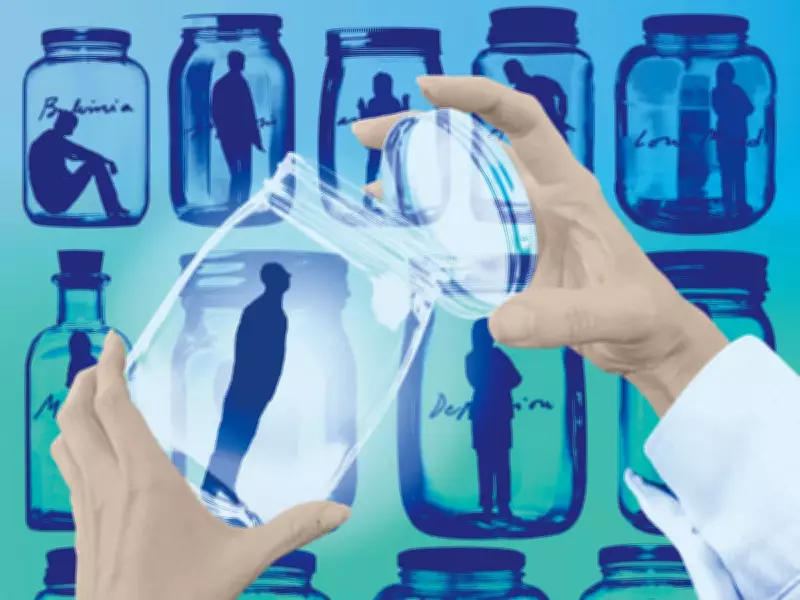
Medical labels possess tremendous power, and in mental health, they can become self-fulfilling prophecies that limit rather than liberate. Many patients now believe that diagnostic labels reflect fixed neurological realities, when in fact these terms were developed through committee discussions among Western medical professionals rather than emerging from laboratory science.
The widespread use of "mental health" as synonymous with "mental illness" has certainly reduced stigma and encouraged people to seek help. However, this linguistic shift has also contributed to the pathologisation of normal human experiences. Today's alarming mental health statistics might represent either overdue recognition of widespread illness or a concerning trend toward medicalising ordinary emotional fluctuations.
Cultural Alternatives to Western Psychiatry
Different cultures approach mental distress in profoundly different ways, sometimes with better outcomes. Shekhar Saxena, former director of mental health for the World Health Organization, noted that he would prefer to receive a schizophrenia diagnosis in Ethiopia or Sri Lanka than in Western countries, because these cultures offer greater opportunities for maintaining meaningful connections and community integration.
The psychoanalyst Clarissa Pinkola Estés collected alternative descriptions of mental states from her clients—terms like "dry, fatigued, frail, depressed, confused, gagged, muzzled, unaroused"—that capture emotional experiences more richly than standard diagnostic categories. These descriptions honour the complexity of human suffering while avoiding the reductionism of psychiatric labels.
Toward a More Flexible Approach
In my clinical practice, I have moved away from rigid diagnostic categories. Instead, I acknowledge that mental states exist in countless variations—perhaps as many as there are individuals experiencing them, multiplied by the moments of their lives. I speak in terms of distress, pain, and suffering rather than applying fixed labels.
Every mental state influences others in complex ways: anxiety can breed delusions; neurodiversity might trigger anxiety; emotional trauma can exacerbate addiction; addictions may fuel depression. We experience our mental lives not as discrete categories but as continuous streams of consciousness. The mind is part of nature, and nature's fundamental principle is that everything flows.
The Evolving Science of Mental Health
Our understanding of mental health has undergone dramatic shifts over the past century. From Charles Sherrington's "enchanted loom" metaphor of brain function to the serotonin hypothesis of depression to genetic determinism and contemporary "connectome" theories, each model has reflected the dominant technology of its era. A 2023 study published in Nature concluded that the serotonin theory of depression lacks empirical substantiation—a significant finding that has yet to be fully integrated into mainstream medical culture.
It seems probable that future generations will view our current approaches as either quaint or barbaric. Despite substantial research investment, we still understand little about how mood shifts operate at the neural level, whether daily emotional fluctuations or longer-term background moods.
Recognising Strengths in Mental Diversity
The most effective psychiatry focuses on strengths rather than weaknesses. Many traits associated with mental health conditions can be beneficial in moderation: a little anxiety keeps us safe; mild obsessiveness enhances attention to detail; slight elation fosters creativity and rule-breaking that benefits communities.
What we label as ADHD might challenge classroom management but could represent valuable energy and multitasking abilities in other contexts. Low mood often signals awareness that life should feel better—a painful but potentially motivating realisation. Every mental health concern I encounter in clinic contains at its core tendencies that, in different doses or settings, could contribute to human wellbeing rather than detract from it.
Cultivating an Unfragile Mindset
If we could hold diagnostic labels more lightly, recognising them as oversimplifications of complex human experiences, might we create a society more accepting of psychological diversity? Could this approach reduce stigma while fostering greater hope and openness to recovery?
With each patient, I strive to identify what helps them become "unfragile"—able to bend and adapt to life's challenges rather than shattering under pressure. Our minds are not brittle or rigid but dynamic, responsive, creative, and adaptive. Change is not only possible for the mind; it is inevitable and fundamental to its nature.
To reverse the apparent mental illness epidemic, we need less rigid classification and more curiosity, kindness, humility, and hope. We must remember that mental suffering, while sometimes devastating, is an intrinsic part of the human condition—not necessarily a disorder requiring medical intervention. By embracing this perspective, we might develop more compassionate and effective approaches to supporting mental wellbeing in our increasingly complex world.