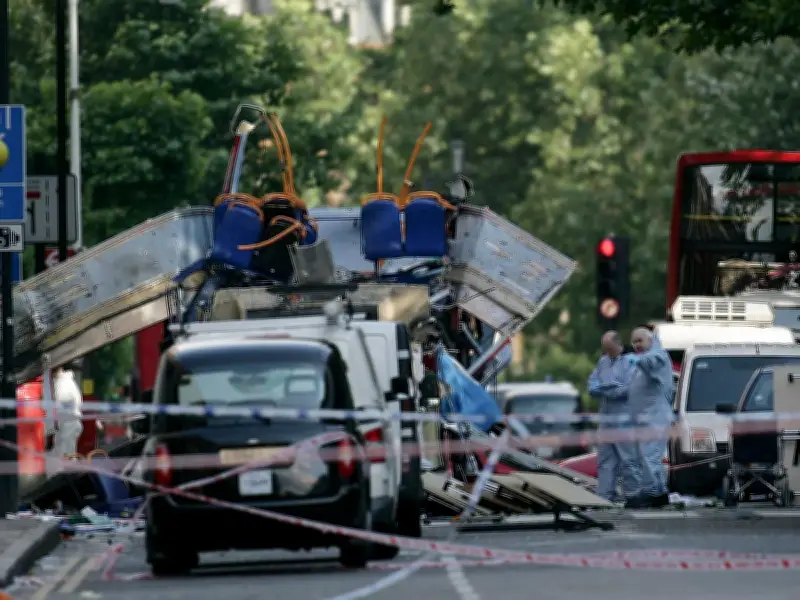
On the anniversary of the 2005 Tube and bus bombings which killed 52 people and injured 770 others, a London doctor who was on the frontline on July 7 has spoken about his enduring trauma and how he has used his experience to support his NHS colleagues over the decades.
Doctor's experience on 7/7
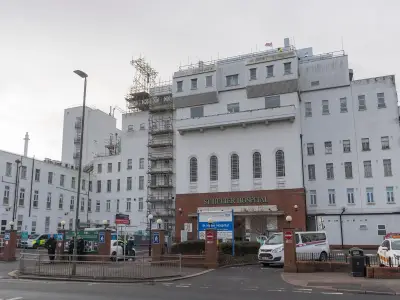
Dr Anthony Allnatt, 55, was 35 on the day of the 7/7 bombings in 2005, working as a senior registrar in anaesthetics at the Royal London Hospital, Whitechapel – less than a mile from the location of one of the three London Underground blasts at Aldgate. The other two Tube bombings took place near Edgware Road and Russell Square stations, simultaneously at around 8.50am. A fourth device was detonated at 9.47am on a bus that had been diverted via Tavistock Square in Bloomsbury.
Tony and his team were first alerted to the incident at around 9.25am, and they received their first patient from the attack around 90 minutes later. When the surgical registrar arrived in theatre to deliver the news of the first patient, Tony recalled that "he just looked so ghastly, like he'd seen something really bad."

"I knew that he'd seen all sorts of things, and I just had this feeling that maybe things were going to get pretty bad. And they did," Tony, consultant anaesthetist at The Royal London Hospital, told PA Real Life.
PTSD symptoms and recovery
In the aftermath of the attacks, Tony began experiencing symptoms like "hyper awareness, hyper vigilance, hyper arousal, I wasn't sleeping, terrible nightmares" – all signs of Post-Traumatic Stress Disorder – though he said that he "didn't realise how abnormal it was." After a long period of recovery, Tony now runs the Theatre Wellbeing Project at the Royal London, a "truly multidisciplinary" service that provides support to all healthcare workers in the theatre department.
According to the British Medical Association, a doctor is lost to suicide every three weeks, and one nurse every week – which shows how essential proper mental healthcare is to the medical field.
Speaking of the day of the bombings on July 7 2005, Tony recalled: "We had nine Priority One patients – people who have a life or limb threatening injury – within about 90 minutes, which is exceptional."
Tony described the action plan that day as being a feat of organisation, as mobile phone networks had been shut down to prioritise emergency service access, and the hospital's internal phone lines were overloaded and became unusable. So, staff at the hospital of all levels had to physically run between departments to relay information and deliver messages. Thankfully, due to the collaboration of staff at the hospital, Tony said that the A&E department never became overwhelmed – even when three double-decker buses full of the walking wounded arrived at the front door – and patients were able to be treated quickly and properly.
Aftermath and long-term impact
Tony handed over at 8pm that evening, and said that getting back to his home – then in Theydon Bois, Essex – was difficult as, of course, the Tube service was not running. He got a lift from a staff nurse from the ITU, but during the journey the realities of the day began to hit him. "I couldn't stand being in the car, which is very unusual. I asked her to drop me off well clear of my house, and I started to walk," he remembered. "I walked into my house, where my now-wife was waiting, and I just started weeping. I just couldn't stop," he said.
"I was due back at work the next day, so I had to sort of try and collect myself, and I thought, well, I'm never going to sleep. Of course, when I went to bed, I went immediately to sleep, but then I woke up a couple of hours later in a state of flight, and I was actually running out of the bedroom door before I really even woke up." Tony said he did go into work the next day, which was a Friday, but after a sleepless night he was sent home, and returned to work for his shifts that weekend. Over the course of the weekend, he cared for many of the patients who had been admitted during the bombings.

Two weeks later, on July 21 2005, there were four more attempted bomb attacks on London's public transport network. In this case, only the detonators of the bombs exploded, causing popping sounds but no damage or injury – but when Tony heard about the attempts, he braced himself for another day treating mortally injured patients. "I just didn't know if I could do it all again," he said.
As time passed after the 7/7 bombings, Tony was asked to give presentations to colleagues at neighbouring hospitals about his experience and his hospital's response, which he did – not realising the impact reliving that day over and over would have on his mental health.
Path to recovery and founding the Theatre Wellbeing Project
A year later, he was back at the Royal London, and a colleague noticed that he didn't seem well. "Things like hyper awareness, hyper vigilance, hyper arousal, I wasn't sleeping, terrible nightmares. I didn't realise how abnormal it was," he said. Tony followed his colleague's advice and spoke to a clinician at the hospital about his experience, and while they were "really nice, very well-meaning," Tony said that they "didn't recognise that I was having some psychiatric symptoms", and after a handful of sessions he was sent on his way.
"I carried on in a state of distress for a few more years, completely ignoring my own mental well-being, my psychological well-being, because I didn't understand what was going on," he said. "Ultimately, I became physically unwell."
By 2009, Tony was given two weeks off work, and went to his GP to discuss his options. The GP referred him to a psychiatrist who solely treats doctors, and he ended up needing six months away from his job, working through what he now understood as Post-Traumatic Stress Disorder (PTSD) with his psychiatrist, occupational health, and his GP. According to the NHS website, PTSD is a mental health condition caused by very stressful, frightening or distressing events. Signs and symptoms can include changes in mood, relationship problems, negative self-thoughts, difficulty sleeping, and hypervigilance, and these symptoms can persist for months or years after the event.
After six months, Tony was able to return to work. However, even after seven years of psychiatry and psychotherapy – and "the support of my friends in the department, and of course unending support from my wife" – he still lives with the trauma, though he has learnt to manage it.
In 2017, several other terror attacks took place in central London, including a driver attacking pedestrians on Westminster Bridge with his car on March 22, and a van ramming pedestrians on London Bridge before its occupants stabbed civilians in neighbouring Borough Market on June 3. In the aftermath of these attacks, Tony was approached by the Lead for Major Incidents at his hospital who informed him that, despite it being more than a decade since the 7/7 bombings, they were unable to offer staff support further to what Tony received in 2005.
"So, we got our heads together," Tony said. "We managed to get in touch with a couple of psychologists, who are just fantastic, and they gave us some ideas, and we started the Theatre Wellbeing Project." The aim was that, rather than just be reactive to things like major incidents, we would embed psychological wellbeing into the operating theatres, so that when there was a crisis... there were pathways to help."
The Theatre Wellbeing Project began in 2017 with sessions several times a year, educating staff across the theatre department about common mental health issues among healthcare professionals, methods of reducing stress in the working environment, and other topics. When the Covid pandemic hit in 2020, Tony suggested they run daily well-being sessions each morning. "The surgical pathway psychologist had been redeployed to us to deliver psychological wellbeing sessions every morning, and somebody organised breakfast as well, so people were arriving to breakfast and a psychologist before they started work," he said. "The psychologist, Joy McInnis, was absolutely phenomenal. Just thinking about it now just makes the hairs stand up on the back of my neck."
What makes the Theatre Wellbeing Project truly remarkable, Tony added, is that it is "truly multidisciplinary – doctors, nurses, health care support workers, operating department practitioners all attend. I think that this, along with the fact that the Trust has agreed that the sessions take part during the working day, makes it unique within the NHS."
"We did an analysis of sickness and staff retention before the pandemic and after the pandemic," he added. "Sickness was reduced and staff retention was improved, not just in relation to how ours had been pre-pandemic, and post-pandemic, but also in comparison to the trends in other departments, pre-pandemic and post-pandemic... Looking after people, it's a good thing."
Now, Theatre Wellbeing Sessions are held for staff at the Royal London Hospital once a week, and remain open to all who work in the theatre department. "One of the reasons why I am so passionate about the whole thing, is because I don't want people to go through what I've been through," Tony added. "So I would hope that I would have had the insight and the courage to say, right at the beginning, I need help, rather than waiting, rather than not knowing what to do, rather than not knowing where to get the help. All these things are now available, and are widely known and well-advertised. Reducing the stigma is so important."
An artwork inspired by Tony's experience has been unveiled at the Royal London Hospital, as part of a gallery for the charity You Okay, Doc?, which supports doctors' and healthcare workers' mental health and wellbeing. A free, confidential, 24/7 text message support service is available through Shout for anyone who is feeling overwhelmed or is struggling to cope, and healthcare workers can text YOD to 85258 to access support.