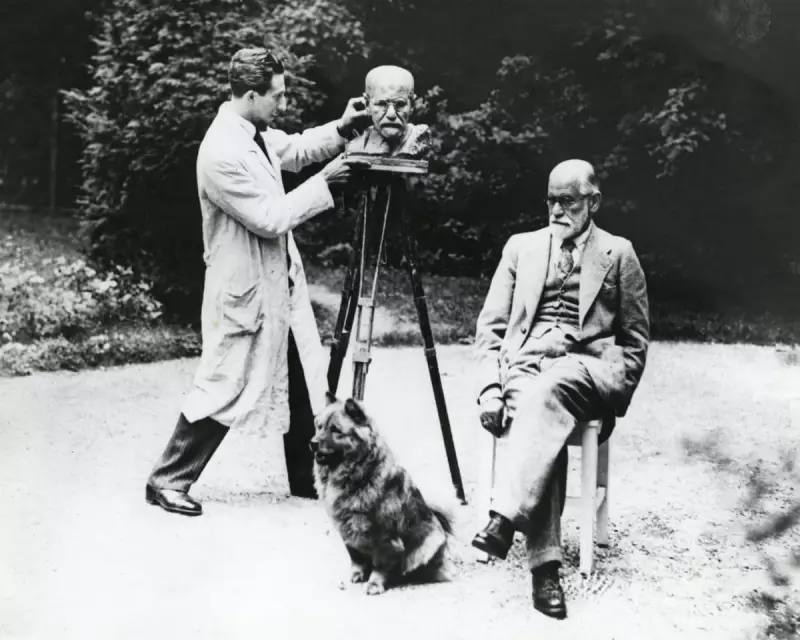
For decades, the legacy of Sigmund Freud has been fiercely contested, dismissed by some as pseudoscience and revered by others as a foundational pillar of understanding the human mind. Now, a new and provocative defence emerges from an unlikely quarter: modern neuroscience. In his latest book, The Only Cure, neuroscientist and psychoanalyst Mark Solms mounts a wide-ranging argument to rehabilitate Freud not as a 'Viennese witch doctor', but as a pioneering scientist and healer whose core insights remain critically relevant.
The Case for a Cure: Evidence and Scrutiny
Solms's argument hinges on the book's bold title, which makes two central claims. Firstly, that psychoanalysis offers a lasting cure, with benefits that persist beyond the end of treatment. Secondly, he posits it as the only true cure, suggesting rival treatments like medication are merely palliative, failing to address the root causes of psychological distress. To support this, Solms cites clinical trial overviews, presenting an encouraging narrative for the therapy's efficacy.
However, a closer examination of the evidence reveals a more nuanced picture. Critics point out that some of the cited reviews group psychoanalysis with other psychological treatments, muddying the waters for its specific benefits. Furthermore, when focusing on long-term psychoanalytic therapy (involving at least 50 sessions over a year), studies, while showing clear benefit, often accompany their findings with cautions about the low quality of available evidence. The gold-standard methodologies of double-blind drug trials are notoriously difficult to apply to psychotherapy, leaving the scientific jury still deliberating.

Separating Freud from Freudianism
A significant strength of Solms's approach is his willingness to discard much Freudian orthodoxy. He distances the clinical practice of psychoanalysis from its more notorious and vulnerable theoretical underpinnings, explicitly rejecting articles of faith like the universal sexual basis of pleasure, the death drive, and penis envy. He also treats with scepticism the later, more eccentric developments by figures like Jacques Lacan.
What Solms fiercely retains is Freud's central insight: the profound and lasting impact of early-life experiences, particularly those buried in the unconscious. He argues that in modern society, unmet emotional needs can leave individuals trapped by 'contextually inappropriate emotions'. Through moving case histories, including that of a doctor named Teddy P., Solms illustrates psychoanalysis as a 're-parenting process'—a humane practice where empathetic listening allows patients to detoxify their past.
Bridging the Brain and the Mind
Solms, uniquely credentialed as both a neuroscientist and a Freud scholar, seeks to synthesise these two worlds. He highlights the early Freud's serious contributions to neuroscience and his belief that models of the mind and brain would one day converge. This effort aims to rescue Freud from the charge of being unscientific or unfalsifiable, a critique famously levelled by philosopher Karl Popper.
Yet, Solms maintains a critical stance towards purely pharmaceutical interventions. While accepting drugs like antidepressants can complement therapy, he argues they do not constitute a cure, comparing their use to treating angina with painkillers instead of surgery. The ultimate goal, he suggests, must be to address the underlying psychological causes.
While questions remain about the definitive evidence for psychoanalysis as the only cure, Solms's engrossing work has shifted the debate. For many sceptics, it may move the needle from outright scorn to a more open, agnostic position. As the reviewer, clinical neuroscientist Professor Raymond Tallis, concludes: the therapy's value in practice will always depend fundamentally on the acumen and integrity of the individual therapist. The Only Cure stands as a striking contribution to the ongoing re-evaluation of one of history's most influential, and controversial, thinkers.