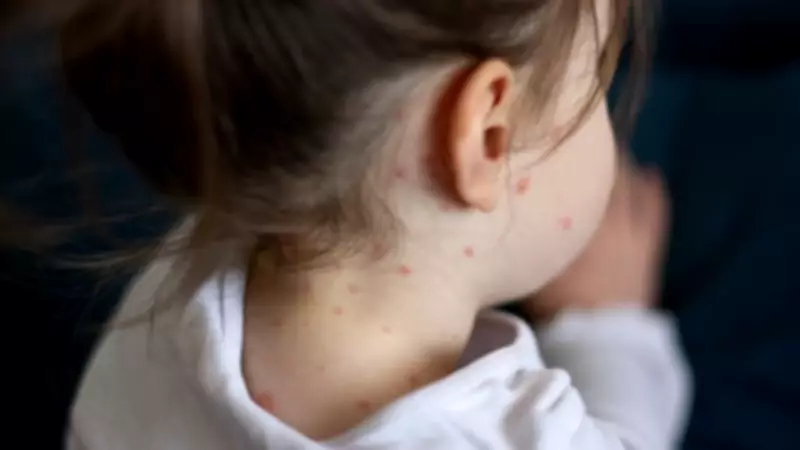
Measles Outbreak in North London Sparks Health Alert
A fast-spreading measles outbreak in north London has resulted in more than 60 children becoming infected, with approximately a dozen requiring hospital treatment. According to reports, 60 suspected cases have been identified in Enfield, with 34 confirmed by the UK Health Security Agency between January 1 and February 9. The NHS Ordnance Unity Centre For Health GP surgery has indicated that infections have been confirmed across at least seven schools, warning that the disease is actively spreading. Notably, none of the infected children had been fully immunised, prompting urgent calls for parents to ensure their children receive the measles vaccine.
Symptoms of Measles: What to Look For
Measles is a highly infectious disease that can lead to severe complications, including pneumonia, meningitis, and, in rare cases, death. The initial symptoms often resemble a cold and include:
- A high temperature
- A runny or blocked nose
- Sneezing
- A cough
- Red, sore, or watery eyes
These cold-like symptoms are typically followed a few days later by a rash. The rash usually starts on the face and behind the ears before spreading to other parts of the body. The spots are generally raised and may merge into blotchy patches that are not usually itchy. Some individuals might also develop small spots inside the mouth.

What to Do If You Suspect Measles
If you believe your child has measles, it is crucial to seek medical advice immediately. Request an urgent GP appointment or call 111 for guidance. Remember, if your child has been vaccinated, it is highly unlikely they have contracted measles. Due to the infectious nature of the disease, avoid visiting a doctor without calling ahead to prevent further spread. If a doctor diagnoses your child with measles, ensure they avoid close contact with babies, pregnant women, and individuals with weakened immune systems.
School Absence and Contact Tracing
Children diagnosed with measles should stay home from school or nursery for at least four days after the rash first appears. Schools or local health protection teams will notify parents if their child has been in contact with someone infected with measles and provide specific instructions. Unvaccinated siblings or others more susceptible to infection may be advised to stay off school for up to 21 days to mitigate risk.
Potential Complications and Risks
Measles can lead to serious health issues if it spreads to the lungs or brain, and in rare instances, it can be fatal. Statistics indicate that about one in 5,000 individuals with measles is likely to die. Last year, a child in Liverpool died after contracting measles alongside other health problems. Approximately one in five people with measles requires hospital treatment, and one in fifteen develops severe complications. These can include deafness, seizures, pneumonia, meningitis, blindness, and brain damage. High-risk groups include babies, young children, pregnant women, and those with compromised immune systems.
The MMR Vaccine: A Lifesaving Intervention
The measles vaccination is administered as part of the MMR jab, which also protects against mumps and rubella. This vaccine is considered safe and highly effective. Introduced in the UK in 1988, with a measles vaccine available since 1968, it has drastically reduced cases. Historically, England and Wales saw between 160,000 and 800,000 cases annually, with around 100 deaths from acute measles each year. Since the vaccine's introduction, it is estimated that 20 million cases and 4,500 deaths have been prevented. Two doses of the MMR vaccine provide lifelong protection: the first is typically given at age one, and the second at three years and four months. If a dose has been missed, individuals can still request the vaccine from their GP.

Falling Vaccine Rates and Rising Cases
Declining immunisation rates have raised concerns about widespread measles outbreaks. The World Health Organisation recently warned that Britain has lost its measles elimination status. From 2021 to 2023, the disease was considered eliminated in the UK, but transmission re-established in 2024. Vaccination coverage has stagnated, with measles infections in the UK surging to 3,681 in 2024. Latest figures show that only 83.7% of five-year-olds in England received both MMR doses in 2024-25, down from 83.9% the previous year. This is the lowest level since 2009-10 and falls short of the 95% rate recommended by the WHO for herd immunity.
Historical Context and Vaccine Hesitancy
In 1998, a study by British doctor Andrew Wakefield, published in The Lancet, falsely linked the MMR vaccine to autism. Although the study was discredited and retracted in 2010, with Wakefield struck off the medical register, it caused widespread panic. MMR immunisation rates in the UK dropped to about 80% in the late 1990s and early 2000s, leading to a resurgence of measles cases. By 2007, cases exceeded 1,000 for the first time in a decade. Despite the debunking of the autism link, vaccine hesitancy persists, fueled by misinformation on social media and other online sources.
Barriers to Vaccination Today
Professor Helen Bedford, a children's health expert at UCL Great Ormond Street Institute, highlights several factors contributing to low vaccination rates. Access issues are a primary concern, with parents often unaware of vaccine schedules, how to make appointments, or facing logistical challenges such as transportation costs. For families experiencing poverty, even a bus fare to a GP surgery can be prohibitive. Additionally, the COVID-19 pandemic has led more parents to question vaccinations, often turning to the internet for answers where disinformation is prevalent. The lack of accessible health personnel for discussions exacerbates this problem, underscoring the need for improved public health communication and support.