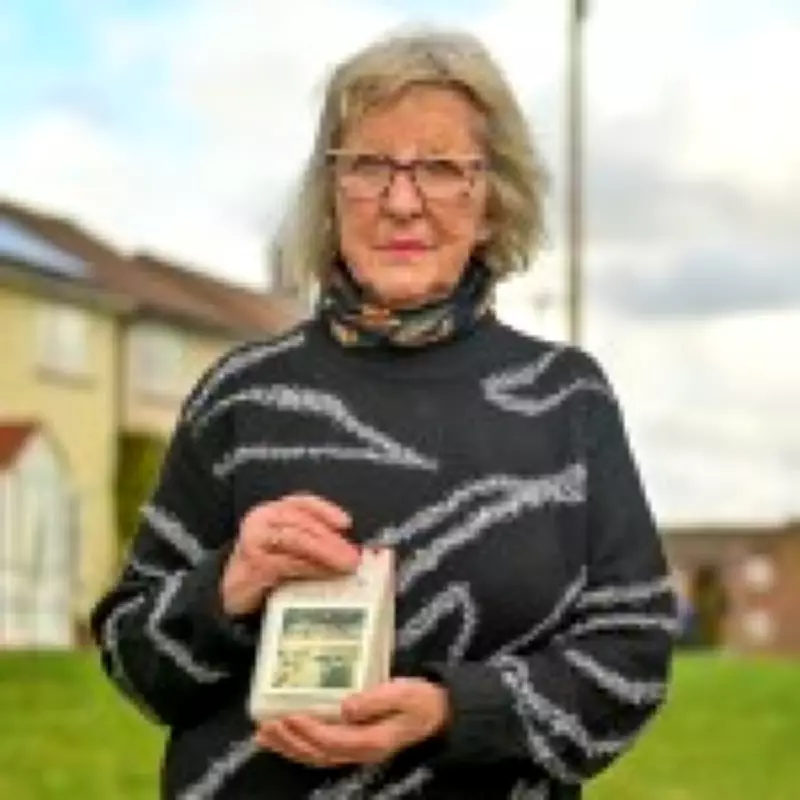
A mother's decades-long search for answers has revealed a shocking medical secret: doctors removed her baby's brain after his death without ever informing her.
The Unanswered Question
For over forty years, Jane Andrews has been haunted by one persistent question: "Why could I not see my baby's body before his funeral?" Her son John died at just six weeks old in January 1980, but the full truth about what happened to his body remained hidden until more than twenty years later.
Now 81, the grandmother from Salisbury has come forward with her story for the first time, revealing how she buried her infant son without knowing he was missing one of his most vital organs.

A Devastating Discovery
"I thought John was all complete," Jane told Metro. "But now I know I never buried him completely. I was deprived of my final goodbyes. That is hard to live with. I think it is disgusting and terrible."
The revelation came in 2001 when Jane, troubled by lingering questions about her son's burial, wrote to the hospitals involved. The response from University Hospitals Southampton NHS Trust contained a bombshell admission.
Then Chief Executive D.J. Moss confirmed in writing that John's brain had been removed during a post-mortem examination and "respectfully disposed of by cremation" without Jane's knowledge.
A Troubled Medical History
Jane's pregnancy with John was already complicated. As a 35-year-old shop assistant, her waters broke just seven months into the pregnancy, requiring an emergency transfer from Salisbury District Hospital to Southampton General Hospital.
Her medical history included profound tragedy: her first son Michael died as a newborn in 1967, followed by years of reproductive issues and miscarriages. Jane believes these problems were connected to the drug Diethylstilbestrol (DES), which she was repeatedly given during the 1970s.
DES, now known to cause severe long-term health issues, was prescribed to millions of women between the 1940s and 1980s before being withdrawn. Jane developed a large tumor in her reproductive system that she attributes to the drug.
The Final Days
After an emergency cesarean, John was placed in the special care baby unit. "I got him christened as soon as I could because it wasn't clear if he was going to make it," Jane recalled. "Each day I was allowed to go down and look at him in an incubator and I was allowed to just hold his hand."
Just as preparations were being made to bring him home, John died. The death certificate listed pneumonia, prematurity birth asphyxia and respiratory distress syndrome as causes.
Jane was allowed to nurse him briefly in the special baby unit before staff took him away. That was the last time she saw her son's body.
Denied Final Goodbyes
When Jane requested to see John before burial, she claims she was discouraged from doing so. "I wanted to see him before the burial, but it was either I wasn't allowed to or it was advisable not to," she said. "When I queried it with the undertaker, he said it was because John had a post-mortem and it's not very nice after a post-mortem."
Accepting this explanation, and grateful for NHS support, Jane even pursued a nursing career to give back to the health service. But questions about John's burial continued to trouble her.
"I blamed myself all the time for John's death," she admitted. "That is hard to live with when you have that 24/7 over your head. But the more I thought about it, when you lose somebody you are allowed to see them before they are buried and spend time with them. The more I thought about it, I wasn't allowed to do that."
The Hospital's Explanation
The 2001 letter from University Hospitals Southampton explained that John's brain had to be placed in special preserving fluid for six to eight weeks before examination, meaning it couldn't have been present at his funeral.
The chief executive apologized unreservedly, stating the hospital hadn't informed Jane because they didn't want to cause her more distress after losing a child. "We realise now that however well meaning this was, it was misguided," he wrote. "In trying to spare you further pain, we may have made things even worse."

Generational Impact
Jane's granddaughter Emma, 30, is equally devastated about what happened to the great uncle she never met. "She had a newborn baby whose organ was ripped apart, and his mother had no chance of saying goodbye," Emma said.
"It makes you wonder. Was this just her? Was this other people? Why did my nan have to live through this? If there's one thing that I can go out and do for her now, it is reclaim some justice for her. She's alive, and it's her time to tell her tale."
Emma herself has faced reproductive issues throughout her life and considers herself a "DES granddaughter" because of the dangerous drug given to her grandmother. She's part of a campaign seeking justice for those affected by DES and says questions remain about what role it played in John's death.
Broader Implications
Paul Whiteing, CEO of Action Against Medical Accidents, told Metro: "At AvMA we sadly see too many cases where families encounter a tragedy at birth and the hospital holds back key information and facts about what happened to their child. The trauma that this causes to the family is profound and can last a lifetime."
"Families deserve dignity, respect, honesty and clear information. Anything less is morally wrong and causes unnecessary trauma to families already grieving from their loss."
Official Responses
University Hospital Southampton NHS Trust declined to comment beyond their 2001 letter to Jane. The Department of Health and Social Care issued a statement expressing deep sorrow about Jane's experience.
A spokesperson said: "Families should always be treated with dignity, respect and compassion. Clear consent and communication must underpin decisions about post-mortem examinations and the handling of organs and tissue."
"While practices and standards have changed significantly since 1980, we expect the highest standards of care, transparency and accountability across the NHS."
The government also acknowledged DES campaigners for "shedding light on the lasting harms" caused by the drug and confirmed work with cancer alliances to ensure clinicians understand DES impacts.
For Jane, the search for answers continues. "When I read the letter it made me feel worse," she said. "All the time I had been blaming myself. I feel that I was cheated from having him buried respectfully. I do not know what happened to his brain. If it was 'disposed of properly' why was it not put in an urn?"
Her story highlights ongoing concerns about medical transparency, historical practices, and the profound, lasting impact on families when information is withheld during their most vulnerable moments.