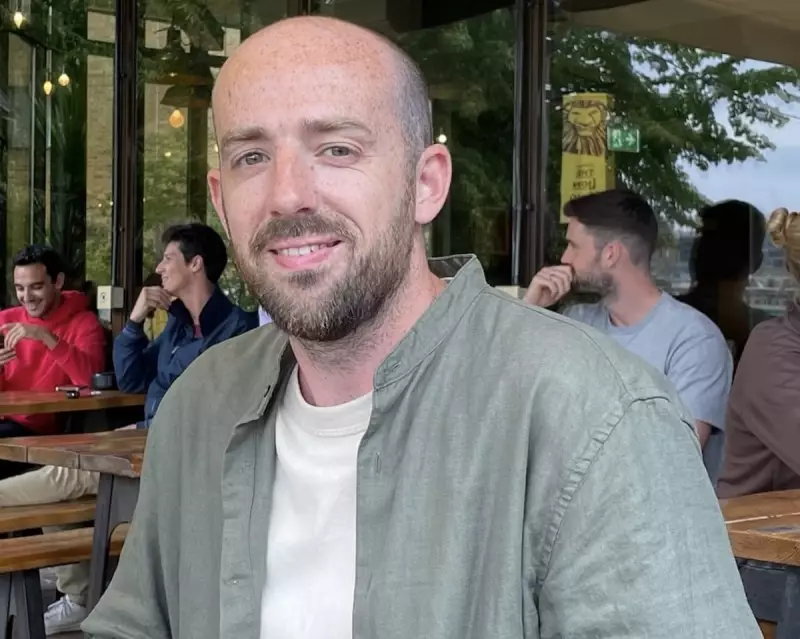
The Long family are preparing for their second Christmas without their eldest son, Ollie, whose life was tragically cut short by suicide at the age of 36 after a long battle with gambling addiction.
A Cycle of Addiction and a System Exploited
Ollie Long was remembered by his family as a kind, quick-witted man with bright career prospects. His addiction began conventionally, sparked by a love for football and Liverpool FC, which led him to take up a bookmaker's sign-up offer. Football betting, fuelled by in-play wagers, has become Britain's biggest betting sport, with nearly £10bn wagered last year.
After an initial large win of around £15,000, things rapidly deteriorated. Ollie began depositing thousands, chiefly with Bet365, and as his mental health suffered, he lost his job as a business analyst and his relationship. He turned to payday loans and borrowed over £22,000 from his parents to repay debts.

Despite periods of hope and recovery—including signing up for the blocking app Gamban, working for a gambling charity, and crucially, registering with the UK's self-exclusion scheme GamStop—Ollie was unable to break free. His family now believe a sinister network of offshore operators deliberately preyed on his vulnerability.
The 'Not on GamStop' Loophole: A Hunting Ground for the Vulnerable
GamStop, used by over half a million people, allows individuals to bar themselves from all licensed UK online gambling sites. However, its growth has spawned a grim parallel industry: affiliate websites that specialise in directing users to "Not on GamStop" or "Non GamStop" casinos.
These offshore sites, typically licensed in jurisdictions like Curaçao, operate outside UK regulation. They are promoted via search engines and social media, directly targeting those who have tried to self-exclude. Ismail Vali, founder of data firm Yield Sec, states these entities "came into the UK marketplace to make money from the most vulnerable at-risk communities."
Yield Sec's analysis suggests over 84% of illegal gambling content in Britain is linked to 'Not on GamStop' sites. The illicit market's takings from UK punters are estimated to have skyrocketed from £122m in 2022 to £583m last year.
Following the Money Trail to an Offshore Network
Bank statements from Ollie's final months tell a revealing story. After his GamStop registration, transactions shifted from well-known bookmakers to obscure recipients with names like MadsWinterEU and Wintermads.com.
This trail connects to a network of offshore operators. A complaint to the Financial Ombudsman Service about the casino Donbet listed payments to a recipient called WinterMDSE. Donbet's website states it is operated by Santeda International, licensed in Curaçao. An estimate from GAMRS analysis, reported by Next.io, suggests the Santeda network takes £2bn in bets from the UK annually.
Ollie's sister, Chloe, describes this business model as "morally incomprehensible," accusing the casinos of "exploiting people at their most vulnerable for their own financial gain."
Regulatory Gaps and Calls for Urgent Action
The UK Gambling Commission has historically had limited power to tackle these offshore entities, with an annual budget of just £1.5m for this task. Following the recent budget, where Chancellor Rachel Reeves announced an extra £1bn-a-year tax on licensed operators, the industry warned it could drive more punters to the unregulated black market.
However, experts like Vali argue the 'Not on GamStop' phenomenon exists primarily to serve those who are already barred—the self-excluded and underage—regardless of tax levels. He criticises regulators for being "asleep at the wheel" and calls for platforms like Google and Facebook to be held accountable for hosting adverts for these sites.
The government has now allocated £26m over three years to help the Gambling Commission combat illicit operators. The regulator reports increasing its actions, securing 214 website removals and blocking 180 sites in Q4 2025.

Chloe Long remains unconvinced, warning that illicit markets are "thriving." She urges the government to replace the current approach with a genuinely effective enforcement strategy. "Ollie’s death has shattered our family," she says. "Anything less will cost more innocent lives."
In the UK and Ireland, Samaritans can be contacted on freephone 116 123, or email jo@samaritans.org or jo@samaritans.ie.