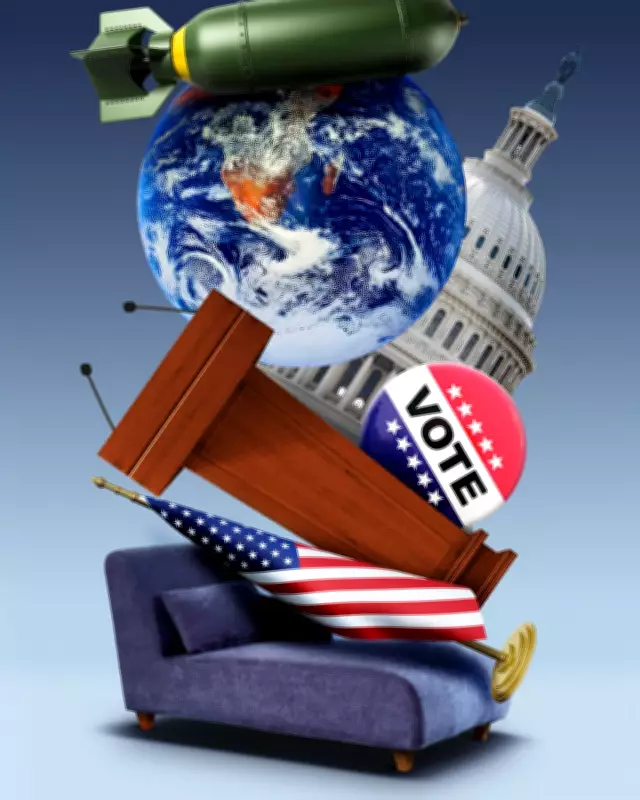
The Rise of Political Depression in Therapy Offices
A comprehensive survey conducted between 2017 and 2020 has revealed that political stress is directly linked to serious mental and physical health consequences. The research found consistent connections between political turmoil and debilitating fatigue, significant sleep disruption, heightened anger responses, compulsive behaviors, and even suicidal ideation among affected individuals.
When Political Turmoil Becomes Personal Crisis
Rebecca McFaul, a music professor at Utah State University, experienced this phenomenon firsthand. Waking up in her Logan, Utah farmhouse on a cold January morning, she felt what she describes as "a certain kind of terror and horror at it all." Watching disturbing political events unfold from afar while trying to maintain her professional responsibilities created what she calls a "seismic" psychological shift. "This is just all upside down," she reflected about her emotional state.
Ann Cvetkovitch, a queer scholar and writer, identifies McFaul's experience as classic "political depression" - a condition characterized by the awareness that the world is deteriorating combined with the realization that traditional political responses no longer effectively change circumstances or provide emotional relief. While this condition shares symptoms with clinical depression - including hopelessness, despair, and emotional shutdown - its origins differ fundamentally. Political depression emerges primarily from external factors: the violence, systemic collapse, and injustice present in the surrounding world rather than internal psychological processes alone.

Therapy Practices Adapt to Political Realities
In recent years, political depression has moved from academic discussion into mainstream consciousness and therapeutic practice. According to a 2024 LifeStance Health survey, approximately two-thirds of respondents reported discussing politics or elections during their therapy sessions. Mental health platforms like Zocdoc and Spring Health documented significant surges in appointment bookings and new member registrations immediately following the 2024 election.
Therapeutic practices have evolved to address this emerging need. Many therapists now maintain specialized blogs focusing specifically on political depression and anxiety, while some clinicians have developed expertise in treating political-related distress. Educational institutions from Georgetown University to Missouri State University have established post-election "coping spaces" offering various resources including distraction activities like Lego sets and coloring books, phone-free zones, and complimentary counseling services.
The Physical and Psychological Toll of Political Stress
Research confirms that political stress exacts measurable physical and psychological costs. Kevin Smith, a political scientist who led the 2017-2020 survey study, documented clear connections between political engagement and adverse health outcomes. The research identified that young, politically engaged individuals with left-leaning perspectives experienced the most severe impacts.
Brett Ford, an associate psychology professor at the University of Toronto specializing in stress and emotion research, explains that contemporary politics has transformed into a form of chronic stress. "Chronic stressors are large-scale, they don't have clear endpoints, they feel out of your hands, and they reliably evoke negative emotions," Ford states. Her research focuses on identifying practices that reduce political distress while maintaining engagement.
Ford emphasizes the delicate balance required in coping strategies. While turning off news sources and employing distraction techniques provide temporary relief, these approaches risk decreasing motivation for political action. "We need people to have to be OK in terms of their mental health, and we also need them to be engaged," Ford asserts, highlighting the challenge of protecting wellbeing without encouraging disengagement.

Therapeutic Approaches to Political Distress
Shahem Mclaurin, a licensed clinical social worker and mental health influencer with a private practice in New York, observes that political concerns increasingly dominate therapy sessions regardless of whether clinicians explicitly invite such discussions. "A person does not exist in a vacuum," Mclaurin explains. "When they come to you about, say, anxiety, it's not just them experiencing anxiety alone. They're experiencing that anxiety within a system."
Mclaurin, a former youth organizer in Baltimore, frequently encounters clients struggling with politically-induced anxiety, frustration, and anger. He recalls being in session during the January 6th Capitol protests when his client became unable to focus on personal matters amid the national crisis. For Mclaurin, addressing political realities in therapy isn't optional but essential. "These things impact all of us, and pretending like they don't have an impact on your clients' personal lives is kind of ridiculous," he states.
Rather than encouraging clients to adapt to problematic societal conditions, Mclaurin focuses on what he calls "the choice of hope" - helping individuals connect with communities and recognize their capacity to effect change. "One person standing outside worrying about a topic is just a person yelling," he observes. "But when it's a group of people, it's a protest."
Community and Creativity as Antidotes
Both Cvetkovitch and McFaul emphasize community connection and creative expression as vital responses to political depression. Cvetkovitch helped organize events like the International Day of the Politically Depressed, where activists wore bathrobes to express world-weariness and distributed buttons reading "Depressed? It Might Be Political!" The goal, she explains, is creating spaces where people can collectively process their distress about current events.
McFaul and her husband, physics professor Rob Davies, have channeled their concerns into the Crossroads Project - a collaborative performance combining science, art, and music to help audiences understand global challenges and inspire protective action. After one performance, a music student approached McFaul with gratitude, saying, "I've been waiting for my professors to say anything about this. None of them have ever acknowledged what's wrong before."
For therapists like Mclaurin, authenticity remains crucial when addressing political depression with clients. "I validate their feelings," he says. "I hold the space. I tell them that I'm frustrated too. I don't lie to them, and I don't pretend to be a robot. I let them know that it's human, and I share that humanity with them."