Robert Goodman: The Visionary Psychiatrist Who Transformed Child Mental Health Assessment
In 1992, a tragic incident at London Zoo where a man with schizophrenia was mauled by lions highlighted critical failures in mental health services. This event, among others in the early 1990s, sparked widespread concern and created an urgent need for better statistical understanding of mental illness. While initial official surveys focused on adults, the landscape of child psychiatry was about to change forever through the work of one remarkable individual.
The Birth of Revolutionary Assessment Tools
Robert Goodman, a distinguished child psychiatrist who passed away at age 72, created two groundbreaking psychiatric assessment instruments that now form the foundation of population surveys worldwide. When the Office for National Statistics decided to survey children and young people's mental health for the first time in 1999, they turned to Goodman to guide their team of psychologists and statisticians.
Goodman served as professor of brain and behavioural medicine at King's College London's Institute of Psychiatry, Psychology and Neuroscience from 1990 while also working as a psychiatric consultant at the Maudsley Hospital in south London. His journey toward creating these transformative tools began in 1995 when he was asked to update the "Rutter scales" - screening questionnaires developed by his former mentor, Michael Rutter.

Developing the Strengths and Difficulties Questionnaire
Initially unenthusiastic about what he considered an unproductive task, Goodman quickly became fascinated with behavioral assessment methodology. From the Rutter scales emerged his far more comprehensive and practical creation: the Strengths and Difficulties Questionnaire (SDQ). Goodman intentionally designed this instrument to be exceptionally brief - just one page - to prevent user fatigue and maintain engagement.
The SDQ represented a paradigm shift in mental health screening. Instead of focusing exclusively on problems and deficits, Goodman incorporated questions about children's strengths and the real-world impact of their difficulties. This holistic approach provided a more balanced and clinically useful picture of young people's mental health.
The Computer-Assisted Diagnostic Breakthrough
Recognizing the severe strain on psychiatric services, Goodman took his innovations further in 1996 by developing the Development and Well-Being Assessment (DAWBA). This comprehensive package includes interviews and questionnaires about a child's mental health, with responses processed through a computer program that generates assessments and predicts likely diagnoses.
Goodman was remarkably ahead of his time in recognizing the potential of computer-assisted diagnosis. When the NHS declined to fund his project, he invested over £100,000 of his personal savings to establish youthinmind.com, which offers both the SDQ and DAWBA alongside a directory of mental health services.
Global Impact and Alarming Discoveries
These assessment tools became cornerstones of epidemiological research, including the ONS's groundbreaking 1999 study "The Mental Health of Children and Adolescents in Great Britain," which surveyed approximately 10,500 children. The follow-up study in 2004 revealed that 10% of children aged five to fifteen had a diagnosable mental disorder - a figure far higher than anticipated.
Goodman expressed profound concern about these findings, telling the Guardian in 2008: "If it had been diabetes, it would be a national scandal." His work inspired governments across Europe and worldwide to conduct similar surveys using his assessment instruments. The SDQ alone has been translated into 89 languages, including Zulu and Norwegian, and has been utilized in more than 4,000 research studies.
A Life of Intellectual Curiosity and Compassion
Born in Edgware, north London, Goodman displayed intellectual curiosity from an early age. Despite his parents' socialite lifestyle as proprietors of the Kendal Hall Country Club for the Jewish community, Goodman preferred solitary pursuits like walking in nearby woods and studying nature. His environmental consciousness developed early through reading the Ecologist magazine and spending summers on Teddy Goldsmith's farm in Cornwall.

After excelling at Haberdashers' Elstree boys' school, Goodman won a scholarship to Cambridge University, where he topped his class in physiology. He completed clinical training in Oxford before returning to Cambridge as a bye-fellow at Caius College. His career path solidified under the mentorship of Michael Rutter at the Maudsley Hospital, where he specialized in hemiplegia and co-founded the charity HemiHelp in 1991.
Beyond Psychiatry: A Multifaceted Legacy
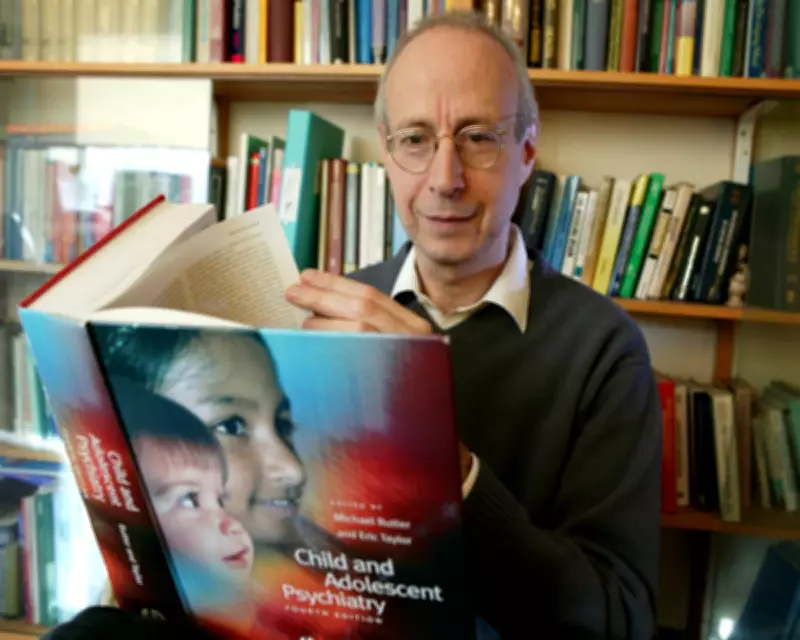
Standing at an imposing 6'6", Goodman humorously referred to himself and colleague Stephen Scott as "13 foot of terror" around the hospital, though colleagues described him as exceptionally gentle and unthreatening. With Scott, he authored "Child and Adolescent Psychiatry" in 1997, negotiating with publishers to make previous editions freely available online - reflecting his Buddhist principles and altruistic nature.
Beyond his assessment tools, Goodman published more than 140 academic papers covering topics from autism and anxiety to callous traits in children. His teaching at King's College was memorable, sometimes featuring unconventional methods like appearing with pink and blue hair to encourage students to question authority.
In his personal life, Goodman married psychotherapist Susan Lightbody in 1981, and they raised three children in Dulwich, southeast London. A committed environmentalist, he stood as a Green Party candidate in local council elections and maintained a daily meditation practice in an old air-raid shelter in his garden. He regularly attended Buddhist retreats at Plum Village in France.
Goodman received the Michael Rutter medal for lifetime achievement from the Association for Child and Adolescent Mental Health in 2022. His legacy extends far beyond his professional accomplishments, encompassing his compassionate approach to mental health care and his commitment to making psychiatric assessment accessible worldwide. He is survived by his wife, three children, four grandchildren, and his sister Alison.