In the face of profound personal loss, one London journalist discovered an unexpected source of comfort: the infinite expanse of the night sky. Luke Abrahams turned to the ancient practice of stargazing to navigate the complex emotions following his mother's cancer diagnosis, embarking on a transformative journey from the African bush to the remote wilds of Patagonia.
Finding Solace Under the Southern Skies
The journey began in April last year at the Sabi Sands private game reserve in South Africa. Despite the serene scene of elephants at the Sand River, Abrahams was grappling with inner turmoil. "Luke, I've got cancer," his mother had recently told him, words that delivered a devastating blow. With a familial connection to Southern Africa through his South African grandfather, he sought distance, yet felt his mother's presence strongly in the spirit of the land.
While safaris are typically associated with wildlife, Abrahams had a different mission: to immerse himself in the cosmos. This pursuit aligns with the growing trend of noctourism, where travellers seek out dark skies for planetary alignments and celestial events. For Abrahams, it represented a necessary disconnect from the constant notifications of modern life and a reconnection to something vastly larger than himself.

The Healing Power of Cosmic Perspective
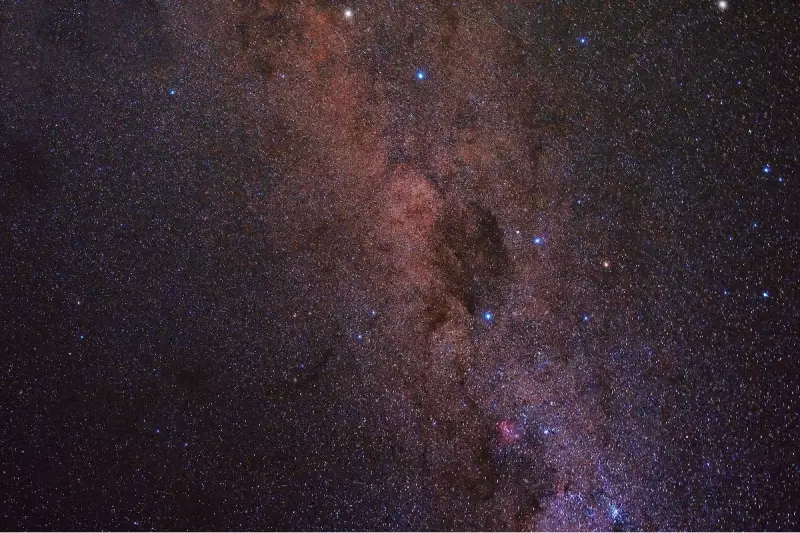
One pivotal night found him on the airstrip near Singita Ebony Lodge in the Kruger bushland, one of the darkest and safest spots for observation. As his eyes adjusted, the Milky Way unveiled itself like a thin veil of mist. Jupiter rose, and a profound sense of awe and humility washed over him. Surrounded by shooting stars, constellations, and nebula dust, his personal worries—his mother's illness, work stress, spells of depression—began to feel insignificant against the grand scale of the universe.
This experience is supported by research. A 2016 study by Coventry University found that stargazing promotes wellbeing through an 'increased sense of flow through fascination and loss of time'. As researcher Dominic Gregory Vertue noted, it can help "turn negative fixations into larger perspectives." For Abrahams, this cosmic perspective was a therapeutic tool, forcing a necessary and grounding contemplation.
From Tanzania to Patagonia: A Continued Voyage
A month later, in Tanzania's Grumeti Reserve at Singita Explore, the magic continued. Peering through a camp telescope, he saw Saturn's rings for the first time, a sight that underscored the fragility of our own planet. His newfound obsession with black holes, pulsars, and nebulas served as a powerful distraction from his grief.
The journey culminated in January this year in Chile's Patagonia National Park, staying at Explora's lodge. On a brisk Wednesday evening at 10pm, the sky performed a rare spectacle: Venus, Mars, Jupiter, and Saturn aligned with Earth in near-perfect unison. During three hours of observation, a worldly realisation crystallised. He understood we are on a rock hurtling through space, on a cosmic voyage that is the greatest journey any human will ever undertake.
The Ultimate Comfort in Stardust
The overarching lesson from his year under the stars was the beauty inherent in the cycle of existence. The universe taught him that death is a part of a vast, natural process. The atoms that constitute both him and his mother will one day return to swirl through the cosmos as stardust, to be used again in the pillars of creation. This thought, rather than being nihilistic, became a profound source of comfort.
Luke Abrahams's story is a powerful testament to how engaging with the monumental scale of the universe can provide a unique and healing framework for processing personal loss, offering a perspective where life's struggles are both acknowledged and gently dwarfed by the timeless dance of the cosmos.