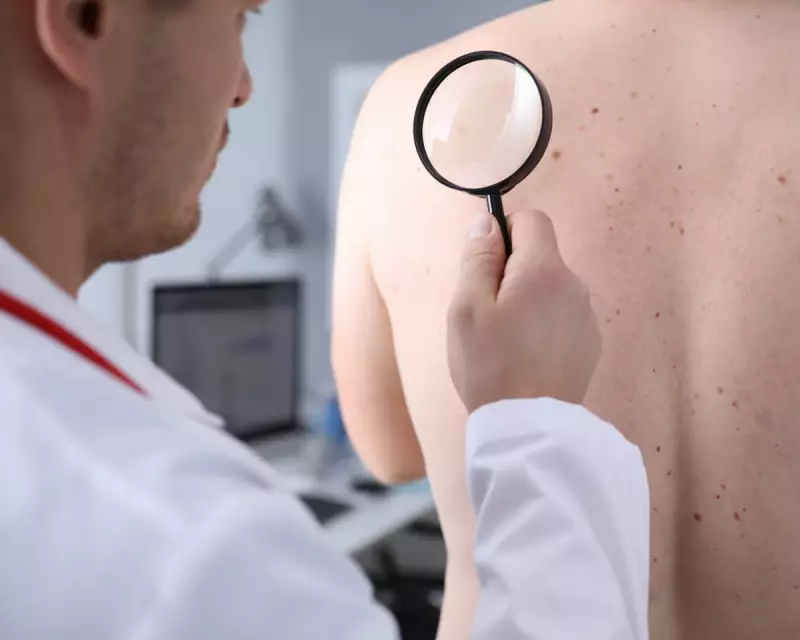
It began as something I could almost dismiss - a peculiar mark on my back that didn't quite belong. At first, it was easy to ignore, to rationalise away as just another blemish or age spot. But as weeks turned into months, this strange visitor on my skin began demanding attention in ways I couldn't continue to overlook.
The First Glimpse of Something Wrong
Like many people, I'd always been casual about skin checks. The occasional mole or freckle seemed harmless enough, just part of life's landscape. But this was different. Positioned inconveniently on my back where I could barely see it, the mark seemed to change almost imperceptibly at first, then more noticeably over time.
What began as a subtle discolouration gradually evolved, developing irregular borders and an uneven texture that set off quiet alarm bells in the back of my mind. Still, the human capacity for denial is remarkable - I found countless reasons to postpone getting it checked.

The Turning Point: When Denial Was No Longer an Option
The moment of truth came unexpectedly during a routine appointment for something entirely different. Almost as an afterthought, I mentioned the mark to my GP. The change in the room's atmosphere was palpable. What I'd been dismissing as probably nothing was suddenly being treated as potentially something very serious indeed.
Within days, I found myself in a specialist's office, undergoing a biopsy that would confirm my deepest fears: it was melanoma, the most dangerous form of skin cancer.
Learning the ABCDE of Skin Cancer Detection
Through this frightening journey, I discovered the crucial warning signs that everyone should know:
- Asymmetry: One half of the mole doesn't match the other
- Border: Edges are irregular, blurred or ragged
- Colour: Uneven shades of brown, black, or sometimes pink, red or white
- Diameter: While melanomas can be small, they're often larger than 6mm
- Evolving: Any change in size, shape, colour or elevation
The Aftermath and a New Perspective
My diagnosis led to surgery and ongoing monitoring, but it also sparked a profound shift in how I approach my health. That strange mark I'd tried to ignore became my teacher, showing me the importance of listening to our bodies when they whisper warnings.
Early detection saved me from a much more dire prognosis. My experience stands as a testament to why we must overcome our tendency to dismiss unusual changes in our skin. What we might write off as insignificant could be our body's way of sending an urgent message.
Now, I view skin checks not as paranoid behaviour but as essential self-care. That strange mark on my back, which I initially tried to ignore, ultimately taught me the most valuable lesson of my life: sometimes, the things we want to overlook most are the ones we need to examine closest.