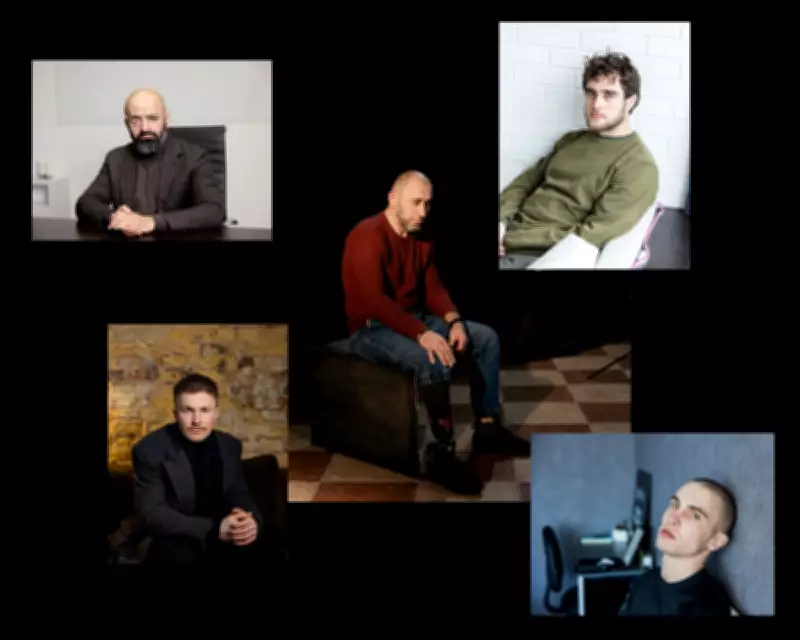
Five Ukrainian Men on How War Forced Personal Transformation
Russia's full-scale invasion of Ukraine in February 2022 compelled men from all walks of life to join the frontlines, most with no prior combat experience. The conflict has fundamentally altered their identities, relationships, and psychological wellbeing. Tracy McVeigh spoke with five soldiers about their journeys from civilian life to military service and the profound changes they've undergone.
Valentyn Polianskyi: From Tailor to Marine Veteran
Valentyn Polianskyi, now 24, studied tailoring at university but felt self-conscious about his passion for sewing, believing it was "more for women than men." After signing with the 36th marine brigade, he served as a material support sergeant. Deployed to Mariupol when the invasion began, he learned his girlfriend was pregnant just before his unit surrendered to avoid annihilation.
Polianskyi endured three years of Russian captivity, suffering beatings, starvation, torture, and poisoning. "Sometimes, I find it easier not to talk at all. It's very hard to talk about captivity," he admits. Upon release, he discovered he had a wife and a two-and-a-half-year-old daughter, but their relationship has grown distant. "Before the invasion we were closer; it was very romantic. Now we are a lot colder," he says.

Now working with an organisation assisting released prisoners, the formerly gentle tailor has become hardened. "I would kill each Russian with my bare hands," he states calmly, highlighting the deep psychological scars left by his experiences.
Henadii Udovenko: Builder Turned Commander
Fifty-three-year-old Henadii Udovenko owned a small building company before the war. On the morning of the invasion, he immediately reported to Kyiv's military registration office. "I was afraid at first. I didn't know how I would react in a combat zone – I was interested to see if I would be a coward or not," he recalls.
Udovenko rose through the ranks to command a unit, despite losing a leg to a trench wound in 2023. He returned to the front as soon as possible, believing his men needed him more than his family did. He observes that the war has created "huge misunderstandings between Ukrainian men and women," with relationships strained by the transformation of ordinary men into warriors.
"The invasion has turned ordinary men into warriors, and that seeps into and divides the family," he notes, emphasising how military camaraderie creates bonds that civilian relationships struggle to match.
Denys Monastyrskyy: Gamer to Sniper Instructor
Denys Monastyrskyy joined the army in 2014 at age 17, following Russia's annexation of Crimea. His father was killed in the fighting, and he lost two fingers to shrapnel in 2017. The full-scale invasion drew him back into uniform, where he now trains recruits in weapons handling.
"They took my fingers; they killed my father; they are on my land," he says, explaining his motivation. Monastyrskyy believes war reveals personal strengths and weaknesses, creating commonality among men of all ages. However, he acknowledges the toll on relationships: "A lot of couples are doing very worse now; lots of women left with the children."
He reflects that while Ukrainians never give up, "war is very sad. War doesn't knock on your door, it just barges in."
Masi Nayyem: Refugee Lawyer to Wounded Soldier
Afghan-Ukrainian lawyer Masi Nayyem was on a date when he received his mobilization alert. As a former paratrooper, he immediately joined the fight. "I just thought: it's time to be a man, now you can show who you are," he says.
Nayyem lost an eye and part of his brain to a mine explosion in June 2022. After facing racist trolling online, he realised the comments came from Russian bots, reinforcing his belief that the war has united Ukrainians. He now co-founded the legal aid centre Pryncyp, advocating for veterans' rights.
He describes the psychological challenges veterans face: "It's like when you are stabbed with a knife and you aren't supposed to take the knife out. That is now, a silent time; the knife is still in and the bleeding will come later."

Alex Tomkin: DJ and Video Producer in Uniform
Alex Tomkin openly admits his initial fear of the frontline: "I'm no traitor, but who wants to die?" Conscripted in June 2022 while returning from a DJ gig in Odesa, he discovered the army gave him "an internal confidence" he previously lacked.
Tomkin observes that prolonged separation from women has created an "invisible ice" between soldiers and civilians. "When you don't see women for a long time, you start valuing them differently," he says, noting that constant survival mode leaves little room for romance.
Despite the hardships, he believes distance has clarified what he wants in relationships: "Before, I had short relationships all the time. Honestly, I was a demon. Now, I want something real, something for life."
The Common Threads of Transformation
These five stories reveal several shared experiences among Ukrainian soldiers:
- Psychological transformation from civilian to warrior identities
- Strained relationships with partners and families due to separation and trauma
- Physical injuries that have permanently altered their lives
- Newfound camaraderie with fellow soldiers that often surpasses civilian bonds
- Ongoing mental health challenges with limited access to psychological support
Each man's journey underscores how war forces ordinary people to confront extraordinary circumstances, reshaping their personalities, values, and connections to others in profound and often painful ways. Their experiences highlight both the resilience of the human spirit and the deep scars that conflict leaves on those who survive it.