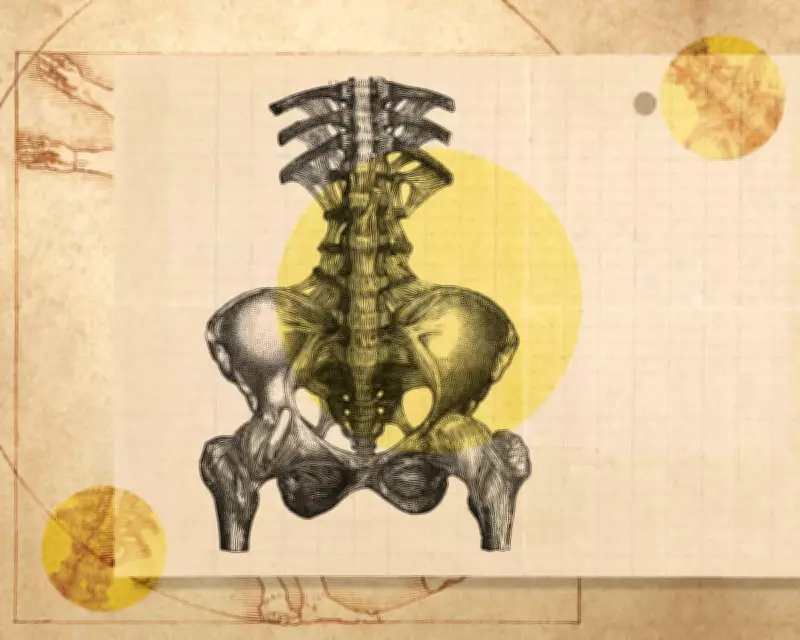
An overwhelming majority of back pain cases originate from something as seemingly harmless as a muscle spasm. This initial event can trigger a cascade of nerve sensitisation and chronic discomfort in the lower back, creating a challenging cycle that is notoriously difficult to treat effectively.
The Surprising Triggers of Debilitating Pain
Countless individuals who have experienced "doing their back in" find themselves perplexed by the stark contrast between the innocuous nature of the triggering action and the intense, sometimes paralyzing pain that follows. Simple daily movements—such as rising from bed, lifting a coffee cup, waving to a friend, bending to pat a dog, or turning to flush a toilet—can unexpectedly set off weeks, months, or even years of suffering.
The explanation lies in the fact that most instances of lower back pain do not stem from actual damage to muscles, tendons, or bones. Instead, they frequently begin with a benign muscle spasm, which then initiates a pathway of nerve sensitisation. This process makes the nervous system overly responsive, leading to persistent pain that resists conventional treatment approaches.

A Widespread Health Concern
It is estimated that approximately 80% of the population will encounter lower back pain at some stage in their lives. While the absence of serious underlying injury might offer little solace to those in agony, there is encouraging news: preventing lower back pain is significantly easier than treating it. Moreover, many cases naturally resolve over time with appropriate care and patience.
The Importance of Spinal Movement
Professor Manuela Ferreira, head of musculoskeletal health at the George Institute for Global Health in Sydney, explains that the spine serves as a protective pillar for the spinal cord and nerves while enabling us to stand, bend, turn, and twist. This complex functionality involves numerous moving parts.
"There are so many structures that could be involved in the process of back pain; so many joints, so many muscles—big muscles, small muscles—the disks," Ferreira notes. She emphasises that these structures are often under-moved in modern lifestyles. "Joints need to be moved. We're putting a lot of weight, a lot of load, on the especially the lumbar [lower] spine, without allowing it to adjust itself and move around."
Understanding the Triggers
Back problems rank as the third-highest contributor to disease burden in Australia, accounting for 2.2% of the national health budget. At any given time, one in six Australians suffers from back issues. The prevalence is partly due to the high recurrence rate; about one-third of individuals who experience an episode of low back pain will have another within a year.
Professor Peter O'Sullivan, a musculoskeletal therapist from Curtin University in Perth, highlights various factors that predispose individuals to back pain, including genetic, lifestyle, and mental health elements. Often, the initial muscle spasm occurs when the body is run down.
"The current view is the majority—and this is like 95% of back pain—will often emerge at a time when you're under stress, not sleeping, not as active, fatigued, and then you do something like just be bending over, picking something up, and then your back spasms," O'Sullivan explains. This acute pain leads to protective seizing up and reduced movement, causing tissue and nerve changes that heighten sensitivity to even minor stimuli.
The Reality of Pain Without Visible Injury
Many people with lower back pain are surprised to learn that it rarely results from serious injury. Imaging studies using X-rays, CT scans, and MRIs show no significant differences between those with pain and those without in most cases. "This old thinking of, 'Oh, you've done your back' is not supported with current evidence," O'Sullivan states.
However, this does not lessen the crippling impact of lower back pain. O'Sullivan compares it to a muscle cramp or severe headache—the pain is undeniably real, even if medical technology cannot pinpoint its exact cause.

Prevention Through Lifestyle Changes
As with many musculoskeletal issues, prevention proves far more effective than treatment. A recent Australian study demonstrated that adopting healthier lifestyle habits—such as improving sleep quality, quitting smoking, eating a balanced diet, and increasing physical activity—could save individuals thousands in healthcare costs related to low back pain.
PhD researcher Tiara Tian from the University of Sydney shares the story of a study participant who had endured chronic lower back pain for over four decades. "She went from being very impacted by back pain in her daily life, all the way to not being bothered by back pain for the last 12 months," Tian reports. This remarkable improvement was achieved through gradual increases in physical activity, starting with a daily 15-minute walk and progressing to Zoom-based exercise classes.
Movement as the Ultimate Solution
Experts unanimously advocate for continued movement as the key to managing most back pain. "The best movement is the next movement," O'Sullivan asserts. For spine-specific exercises, he recommends yoga for its ability to promote flexibility and strength. "We encourage people to move the spine in all directions … flex, extension, rotate and side-bend."
Ferreira clarifies that exercising with back pain does not mean ignoring discomfort but rather adapting movement patterns. "You have to change how you move, but you have to keep moving—it's almost like reminding your brain that it's OK to move."
By understanding the pathway from muscle spasm to nerve sensitisation and embracing proactive prevention strategies, individuals can take meaningful steps toward safeguarding their lower back health and enhancing overall wellbeing.