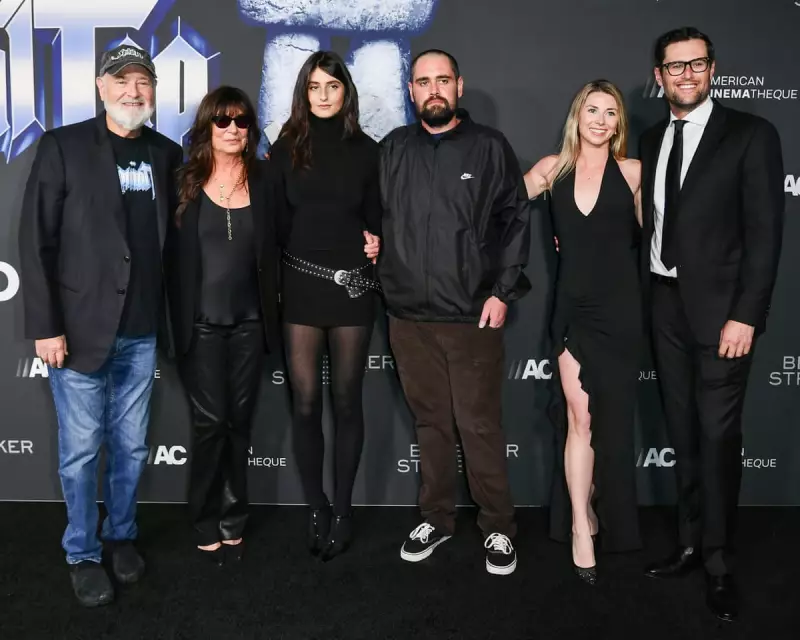
The devastating news that film director Rob Reiner and his wife Michele were killed, with their son Nick named as a suspect, has sent shockwaves through America. For many families grappling with a loved one's addiction, the tragedy has brought a complex mix of grief and a profound fear: that the public conversation will now be dominated by the spectre of violence, an exceedingly rare outcome, rather than the daily realities of a national crisis.
A Fear Shared by Millions of Families
For Ron Grover and his wife Darlene, the story felt painfully close to home. Their own son became addicted to opioids at 15, later turning to heroin, mirroring Nick Reiner's struggles with substance use and mental health. For years, their life was a cycle of rehabilitation centres and jail cells. Their son achieved sobriety in July 2010 after seven agonising years.
"It's just tragic," Grover said of the Reiners. "It tears you up, because that's a family destroyed, just like so many other families we know whose loved ones didn't survive the disease of addiction."

The scale of the issue is vast. A 2023 survey by the health non-profit KFF found that more than two-thirds of Americans report their lives have been touched by addiction, whether through personal struggle, family experience, homelessness linked to substance use, or overdose. More recent data from the Substance Abuse and Mental Health Services Administration indicates that in 2024, about 48.4 million people, or 16.8% of the US population, had a substance use disorder.
"This can happen to anybody, no matter how rich you are, no matter how poor you are, no matter how powerful you are," Grover emphasised.
The Stigma of Violence Versus the Reality of Harm
Greg, the chair of support group Families Anonymous, whose son has addiction, immediately recognised the Reiner story as a 'family disease' with immense impact. However, he expressed deep concern about public perception. He worries the murders will make people "very wary of anybody who's admitted to having an addiction, and think that they could become violent at any point in time. And that's not true."
Colleen Berryessa, an associate professor at Rutgers School of Criminal Justice who studies addiction, agrees. She notes that while the tragedy sparks important conversation about a prevalent issue, the US suffers from significant stigma around addiction and mental health, often fuelled by the "idea of someone being really dangerous."
She also cautioned against assumptions regarding Nick Reiner's alleged actions and his state of mind, noting it is unclear if he was using substances or experiencing mental health issues recently. In September 2025, Rob Reiner himself stated Nick had not used drugs in over six years.
"I'm afraid that people are going to take their stigmatization of addiction and substance use disorder, and fill in the gaps to try to make sense of what happened," Berryessa said. "Because of his history, the first thing that everyone is talking about is his addiction."
While substances like alcohol or meth can sometimes lead to aggression, Berryessa stressed that a brutal act like the Reiner double homicide is highly unusual. "The huge majority of people with addiction or substance use disorder do not ever show anything remotely close to violent behaviour. It's a real rarity," she said. "The actual reality is a person is significantly more likely to hurt themselves than anyone else."
The Daily Fears of Parents, and Hope for Recovery
For parents like Greg and Grover, the primary fear has never been *of* their sons, but *for* them. "I'm afraid he's going to die at some point," Greg confessed. "If he relapses or uses again, it's eventually going to kill him. That's my biggest fear."
Grover, a retired manufacturing manager from Missouri, recalled the relentless anxiety: "Our fear then was, every single night you laid your head down on the pillow, that you could get that call or that knock on the door telling you that he was never coming home." This dread, he said, is present "every single day, 365 days a year, for a parent."

This is compounded by profound loneliness, self-blame, and worry about societal judgment. Greg explained the unpredictable nature of the disease: "With addiction, it can change on the spot... It's possible that [the Reiners] were a perfectly happy family a month before, all together and enjoying each other, and then this tragedy happens a month later. It's not unusual for that to happen."
Yet, there is powerful hope. About three in four people with addiction are able to achieve sobriety. Grover's son is now a testament to this: a sober husband, father, college graduate, and union electrician. Grover learned he couldn't "fix" his son, but he could always offer support. "I tell any parent or anybody else that's dealing with someone addicted to drugs: make sure your hand is always, always extended, because you never know when they'll reach out and take it."
The Reiner tragedy is a stark reminder of addiction's destructive potential, but families across America plead for the narrative to encompass the full story: one of a common disease where recovery is possible, and where stigma often poses a greater barrier than the illness itself.