Virtual Reality Provides a Temporary Escape for Gaza's Children
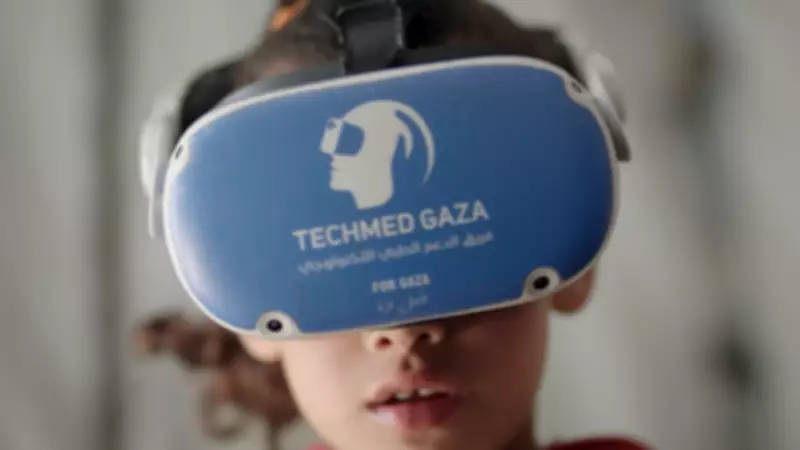
In the heart of Gaza City, amidst the rubble and displacement camps, a small office space offers a glimmer of hope for Palestinian children scarred by war. Using virtual reality headsets, these young survivors are transported to peaceful worlds, if only for a few minutes, before returning to the harsh realities of their environment. This innovative therapy, run by TechMed Gaza, aims to alleviate the severe psychological trauma inflicted by two years of conflict.
Razan's Journey: From Injury to Healing
Seven-year-old Razan stands still, wearing a VR headset as a therapist gently guides her through a session. She describes seeing trains, toys, animals, and the sea—a stark contrast to her daily life. Razan was injured last year while fetching water for her family when a shell landed nearby, sending shrapnel into her leg. After multiple surgeries, including a failed reconstruction, her leg remains misshapen, with doctors in Gaza stating that proper recovery requires treatment abroad. The trauma left Razan refusing food for days, surviving only on water before collapsing. Her mother, Rana Abu Harbid, notes that while Razan's mental health is slowly improving with VR therapy, nightmares still haunt her, causing her to wake terrified and shaking.
Ahmad and Amjad: Brothers Bound by Trauma
In the same office, brothers Ahmad, 17, and Amjad, 13, share their experiences. Ahmad describes how the VR headset helps him breathe again when the pressure of war becomes overwhelming, while Amjad finds solace in virtual nature scenes. Their lives were shattered when an Israeli airstrike hit their home, throwing Ahmad into the air "like a piece of paper" and blinding him in one eye. Amjad suffered even more severe injuries, initially assumed dead until he moved his hand in the hospital mortuary. Shrapnel remains in both boys' bodies, with Amjad needing surgery outside Gaza, a distant possibility due to limited exit permits.

The VR Therapy Project: A Beacon of Hope
TechMed Gaza initiated the VR project after a war-injured child exhibited severe psychological symptoms, such as refusal to eat or drink and constant crying. Lama Abu Dalal, a staff member, explains that VR has shown positive results, with around 180 cases treated through structured sessions involving breathing exercises, walking simulations, and natural environments. Remarkably, some children who were too fearful to walk have taken their first steps while wearing the headset, indicating psychological rather than physical barriers. However, the project faces challenges: with only a few headsets available, breakdowns mean no replacements due to closed crossings, limiting the number of children who can benefit.
The Ongoing Struggle in Gaza
This therapy occurs against a backdrop of ongoing instability. Although a ceasefire was announced late last year, it remains fragile, with continued strikes and casualties. Life in displacement camps is precarious, and only a small number of people are allowed to leave Gaza daily for medical treatment, leaving thousands in need. As Razan removes her headset, the virtual forest and sea vanish, replaced by the camp's reality. For a brief moment, these children escape the war, but they must step back into Gaza as it is—a testament to their resilience and the urgent need for broader support.