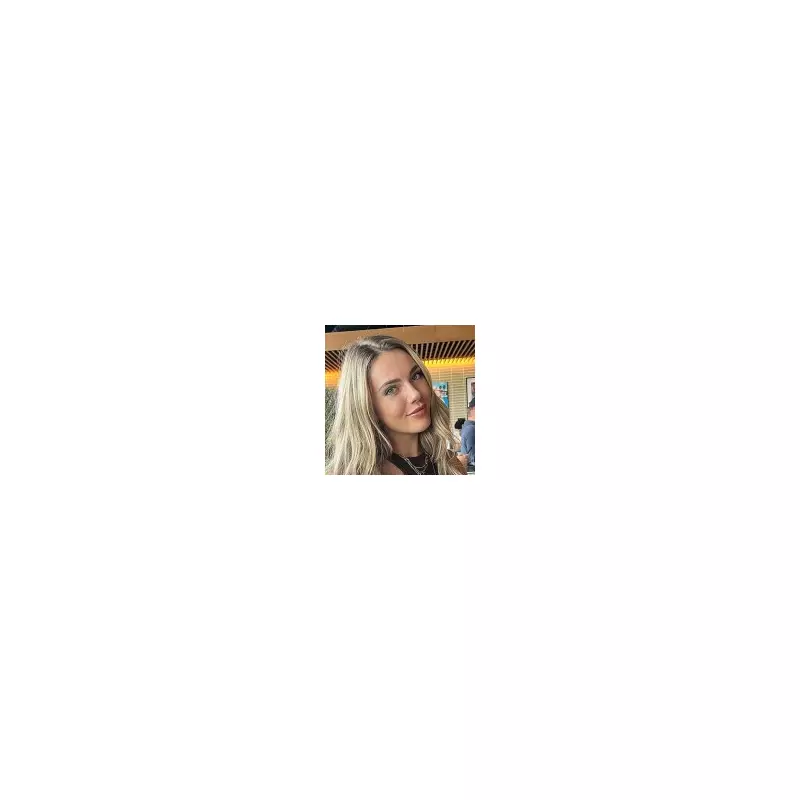
A young woman has shared a powerful cautionary tale about how an addiction to social media filters distorted her self-image so severely it led to unnecessary cosmetic surgery costing nearly £7,500.
From Digital Tweaks to Real-World Surgery
Aspen Brook, now 29 and from California, began using digital filters on apps like FaceTune when she was just 12 years old. She routinely used the technology to slim her nose, alter her bone structure, and perfect her skin. Over time, she became convinced she looked worse without these digital enhancements.
The distortion reached a critical point when she became fixated on the idea she had a double chin—a feature that did not exist in reality. "I saw the non-existent feature every time I looked in the mirror," she explained. This belief drove her to spend £7,439 on AirSculpt surgery, a minimally invasive fat removal procedure, to eliminate the imagined flaw.

A Cycle of Dissatisfaction and Diagnosis
Despite undergoing the major procedure, Brook's struggle was far from over. She returned to using filters, still not feeling she had reached the "ultimate" level of prettiness. "After getting the surgery, I was sure I would be finally happy with what I looked like… that I wouldn't want to use face filters anymore," she told the Daily Mail.
Her pursuit of an altered appearance didn't stop there. Alongside the AirSculpt, she has continued to get Botox and facial fillers and underwent a breast augmentation at age 21. She even considered liposuction, but was refused by a surgeon who called her "crazy." Brook now recognises she was suffering from body dysmorphic disorder (BDD), a condition that causes obsessive focus on perceived flaws, often leading to anxiety and depression. She squarely blames social media filters for triggering this disorder.
Pregnancy, Perspective, and a Pledge for the Future
The turning point came with her first pregnancy. Gaining up to 70 pounds and experiencing a lack of control over her changing body forced her to "pause and sit with myself." This process, coupled with the beauty she saw in her newborn daughter, fundamentally changed her self-perception. She realised she had been "very beautiful" all along, before any treatments.
Her strict Mormon parents were reportedly "shocked, saddened and heartbroken" to learn the truth about her surgery and the distorted self-image that prompted it.
Now a mother-of-one, Brook hopes to protect her children from similar harm. She plans to steer them away from social media until they are 16 or 17. She also offers advice to others considering cosmetic procedures: find an ethical practitioner to ensure any surgery is undertaken for the correct, healthy reasons.
Her story serves as a stark warning about the potential psychological dangers of ubiquitous digital enhancement tools and the intense pressure to conform to often unattainable beauty standards.