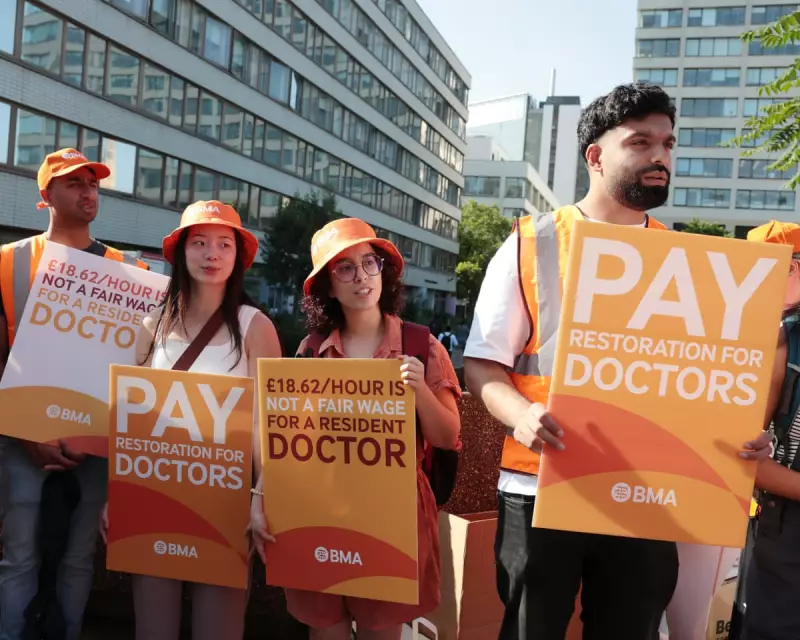
England's National Health Service is bracing for another major disruption as resident doctors begin a five-day walkout, marking a significant escalation in a bitter pay dispute that has now stretched over three years.
A Dispute With No End in Sight
Wednesday 4th June 2025 signals the start of the 14th round of industrial action by resident doctors in England within the last 33 months. This latest five-day stoppage will bring the total number of strike days to 59 since the conflict began. Senior NHS officials privately fear the standoff could become a "never-ending" saga without a dramatic shift in negotiations.
The core demand from the British Medical Association (BMA), the doctors' union, is a further 26% pay increase, to be staged over several years. This follows a deal agreed with Labour Health Secretary Wes Streeting shortly after the party took office 17 months ago, which gave doctors a 22.3% pay rise over two years. That settlement, which Streeting hailed as a swift resolution to the Conservatives' impasse, proved to be only a temporary peace.

Mounting Pressure on an Overstretched NHS
The strikes are hitting a health service already under severe strain. Despite some progress under Labour, 7.42 million hospital tests and treatments are still waiting to be carried out in England, affecting 6.24 million people. Furthermore, 18% of A&E patients across the UK are routinely treated in corridors or waiting rooms due to overcrowding.
The Royal College of Emergency Medicine estimates that 16,600 seriously ill people in England die annually due to delays in securing a hospital bed. Against this backdrop, the latest strike action has forced the NHS to cancel tens of thousands of appointments and operations, while pleading with the public to use A&E only for genuine emergencies over the next five days.
A Battle of Wills and Public Opinion
Health Secretary Wes Streeting has adopted a firm stance, accusing the BMA of being unreasonable and stating that the parlous state of public finances prevents him from meeting the 26% demand. He has warned that this strike could be the "Jenga piece" that causes the NHS to collapse, especially with winter pressures looming.
While Streeting appears to be winning the public relations battle, he has failed to win over the doctors. YouGov polling indicates a significant shift in public sentiment; whereas a majority backed the doctors during the Tory administration, now only 33% support the strikes, with 58% opposing them.
In an attempt to break the deadlock, Streeting has made three separate offers to expand the number of specialist training places for resident doctors, doubling the number from 1,000 to 2,000, and then again to 4,000. However, the latest offer was rejected this week by an overwhelming 83% of doctors in a union survey.
BMA sources suggest Streeting's increasingly dramatic rhetoric during the voting period hardened attitudes among members. One source stated there is a strong determination "not to be pushed around by the government." The union's current legal mandate to strike expires on 6th January. NHS chiefs and the government hope that when a new six-month mandate is sought, strike-weary doctors who are tired of losing pay may vote against further action.
However, with both sides deeply entrenched and the history of this dispute showing doctors' resolve, hopes for a swift resolution in the new year remain faint. The prospect, as one NHS official bleakly summarised, is of a conflict that will simply "drag on and on and on."