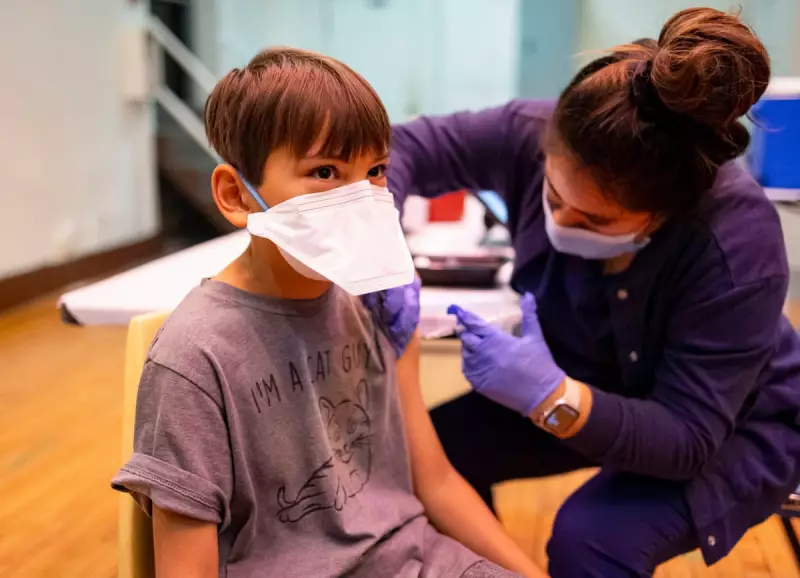
Health officials in the United States have issued an urgent call for influenza vaccination following a record-breaking season for paediatric deaths and the emergence of a concerning new virus strain.
Record-Breaking Season Sparks Alarm
The US Centers for Disease Control and Prevention (CDC) has confirmed that the 2023-2024 flu season was one of the highest severity on record outside of a pandemic. A devastating 288 children died from influenza, marking the deadliest paediatric flu season ever tracked by the agency.
Dr Timothy Uyeki, chief medical officer of the CDC's influenza division, emphasised the gravity of the situation in a recent clinician briefing. "Influenza activity is increasing in the US. The time to get vaccinated for this season is now," he stated. The warning comes after the first known paediatric death of the current season was reported in the week ending 22 November.

Last season's toll extended beyond child fatalities, with an estimated 610,000 to 1.3 million hospitalisations across all age groups in the United States.
New Variant and Vaccine Effectiveness
Compounding concerns is the identification of a new influenza variant. In August, the CDC detected the H3N2 virus subclade K, which has mutated from the H3N2 version included in this season's vaccine. This has raised questions about the vaccine's potential effectiveness.
"It's too early to know what impact exactly this new subclade will have on the influenza vaccine effectiveness for this season," explained Dr Lisa Grohskopf, a medical officer in the CDC's influenza division. She noted that accumulating sufficient data takes time.
However, early data from the United Kingdom, which experienced an earlier start to its flu season, is cautiously encouraging. Vaccine effectiveness there is estimated at 70-75% for children and 30-40% for adults, figures consistent with prior seasons. "The evidence indicates that influenza vaccination remains an effective tool," Dr Grohskopf affirmed.
Tragic and Preventable Outcomes
The CDC's data reveals particularly harrowing details about severe complications in children. Last season, 109 paediatric cases of encephalopathy—a brain dysfunction—were reported. Of these, 74% required intensive care and 54% needed mechanical ventilation. Shockingly, 55% of the affected children had no underlying health conditions, and only 16% of those eligible had been vaccinated. Nearly one in five (19%) of these children died.
"The majority of these are preventable, and this is really, really tragic," said Dr Uyeki. He stressed that the record death toll "clearly highlights the fact that we need to do a much better job of preventing influenza and preventing influenza-associated death in children."
Vaccination is recommended for everyone aged six months and older, offering protection against severe outcomes like pneumonia, cardiac issues, and neurological complications. For the 2023-2024 season, the vaccine was 63-78% effective at preventing hospitalisation in children and 41-55% effective in adults.
Policy Changes and Declining Antiviral Use
The CDC has updated its vaccine policy, now recommending only flu vaccines that do not contain the preservative thimerosal (thiomersal). This follows a vote by its vaccine advisers in June.
In a move to potentially improve uptake, the US Food and Drug Administration (FDA) made a significant change in September 2024 regarding FluMist, the nasal spray vaccine. It may now be administered at home by a caregiver or the patient, which could help assuage hesitancy in those averse to injections.
Officials also raised the alarm over a decline in the use of antiviral medications, which are a safe and effective treatment, especially when started early. Dr Uyeki reported that only 35% of high-risk children are prescribed antivirals, and just 32% of children visiting emergency departments for flu received them.
The urgent public health messaging unfolds against a backdrop of challenges, including staff cuts at health agencies and the spread of vaccine misinformation. The call from the CDC remains clear: vaccination and prompt antiviral treatment are critical to preventing another tragic season.