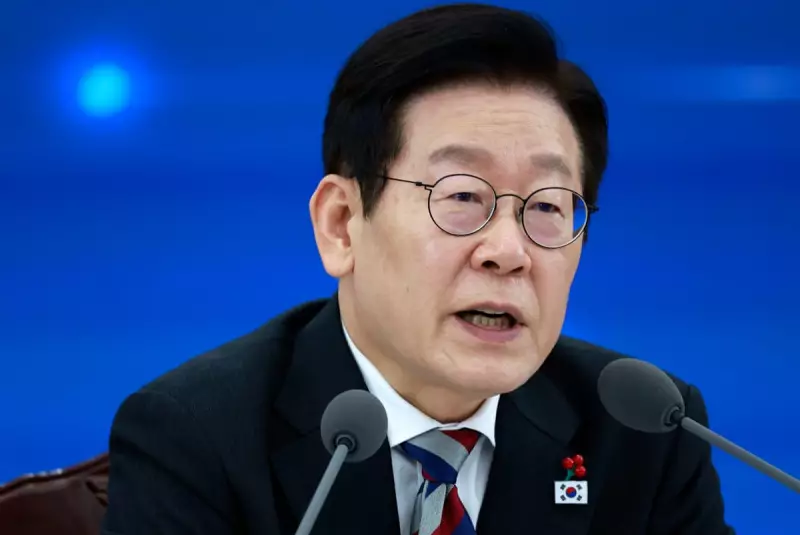
In a landmark move that could reshape public health priorities, South Korean President Yoon Suk Yeol has publicly advocated for hair loss treatments to be covered by the country's national health insurance scheme. The announcement, made during a policy discussion on 19 December 2025, frames hair loss not merely as a cosmetic concern but as a significant medical and mental health issue affecting millions.
A Shift in Medical and Social Perception
President Yoon's directive challenges long-standing perceptions, urging health authorities to recognise the profound psychological and social impact of alopecia. He argued that the condition can lead to severe mental distress, including depression and social anxiety, particularly among younger demographics. This stance marks a significant evolution from viewing hair loss as an inevitable part of ageing or a superficial worry.
The call to action was issued to Han Duck-soo, the country's Prime Minister, and Health Minister Cho Kyoo-hong. President Yoon emphasised the financial burden on individuals, noting that current treatments are prohibitively expensive for many. Out-of-pocket costs for medications like finasteride and minoxidil, or procedures such as hair transplants, can run into thousands of pounds, placing effective care out of reach for average citizens.

The Economic and Social Rationale
The push for inclusion is underpinned by stark data. An estimated 10 million people in South Korea are affected by hair loss, with a notable and worrying increase in cases among those in their 20s and 30s. This trend has fuelled a booming private industry while leaving a substantial portion of the population without affordable solutions.
President Yoon highlighted that expanding coverage would align with the government's broader duty to safeguard the "health and happiness of the people," a principle enshrined in the National Health Insurance Act. The proposal suggests a re-evaluation of what constitutes essential healthcare, moving beyond life-saving treatments to include conditions that severely impact quality of life and mental wellbeing.
Potential Implications and Global Context
Should the policy be enacted, South Korea would become one of the very first nations to classify hair loss treatment as a standard public health benefit. This decision could trigger a domino effect, prompting debates in other countries with advanced healthcare systems, including the UK's NHS, about the boundaries of public health coverage.
The initiative is not without its challenges. Health officials must now grapple with complex questions of cost, eligibility, and which specific treatments would be subsidised. The health ministry has been tasked with conducting a thorough review to assess the feasibility and framework of this potential expansion.
This policy shift reflects a growing global awareness of the intricate link between physical appearance, mental health, and social participation. By addressing the financial and emotional toll of hair loss, the South Korean government is testing a new frontier in comprehensive public health provision. The world will be watching closely to see if this compassionate approach becomes a new benchmark for national health services.