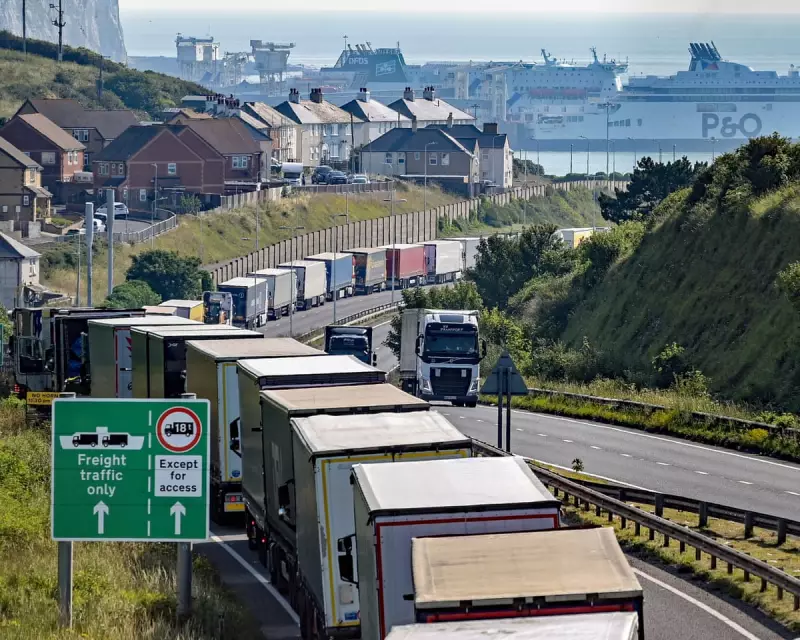
Nearly a decade after the 2016 referendum, the economic consequences of Brexit are coming into sharp focus. While the immediate doomsday predictions were avoided, the UK has faced years of political uncertainty followed by the tangible introduction of new trade barriers in 2020. The result has been a clear negative impact on trade, business investment, and the growth of living standards.
The Case for Closer EU Relations
In response to this economic underperformance, the debate over Britain's future relationship with the European Union has been reignited. Labour's shadow minister, Wes Streeting, recently called for a deeper trading relationship with the EU, with many interpreting his comments as support for joining a customs union. This is a step further than the position of Labour leader Keir Starmer, who has ruled out rejoining either the single market or a customs union.
The economic argument is compelling. The EU remains the UK's largest trading partner, accounting for £358bn in exports (41% of the total) and £454bn in imports (51% of the total) last year. Although the Trade and Cooperation Agreement secured tariff-free trade, it introduced significant non-tariff barriers, falling far short of the seamless access provided by the former single market and customs union membership.

Quantifying the Brexit Damage
Goods exports were hit particularly hard. Volumes plummeted after the Brexit transition ended in January 2021 and, in real terms, still have not recovered to 2019 levels. While the Covid pandemic complicated the analysis, economists have demonstrated that the UK's trade in goods performance has been markedly weaker than that of other G7 nations.
The Office for Budget Responsibility estimates the overall economic cost of Brexit at a substantial 4% of GDP. Services exports have shown more resilience, but key sectors like financial services in the City of London have lost significant EU market share due to lost single market access.
The Rocky Road to a New Deal
Labour's manifesto explicitly rejects a return to the single market or customs union, largely due to the political toxicity of freedom of movement. Instead, the party pledges to "tear down unnecessary barriers" through targeted agreements on areas like veterinary standards, mutual recognition of qualifications, and help for touring artists.
However, the potential economic boost from such piecemeal deals is limited. The government's own assessment suggests a veterinary agreement and energy cooperation might add only 0.3% to GDP by 2040.
A full customs union could offer greater benefits, potentially reducing the costly "rules of origin" bureaucracy that adds 2-8% to firms' costs. The Liberal Democrats, citing research, claim a bespoke arrangement could boost the economy by 2.2% and generate £25bn annually.
Yet negotiating a new customs union would be fraught with difficulty. The UK would not be "rejoining" but creating a fresh agreement, akin to those the EU has with Turkey or Andorra. Brussels would drive a hard bargain, likely demanding concessions on freedom of movement and budget contributions. Furthermore, the UK would have to apply EU tariffs, effectively outsourcing trade policy without a formal say, and jeopardising its independent post-Brexit trade deals.
Most economists agree that closer EU relations would aid UK growth. But as the queues of lorries at the Port of Dover symbolise, unwinding the current framework will entail years of complex political wrangling, both at home and in Brussels, with significant trade-offs for any future government.