

EU Commissioner Signals Openness to UK Customs Union Discussions
In a significant diplomatic development, the European Union has indicated a willingness to explore closer trade relations with the United Kingdom, including the possibility of a customs union arrangement. This comes as the new Labour government seeks to strengthen economic ties with its European neighbours amidst ongoing global instability.
High-Level Meetings in London
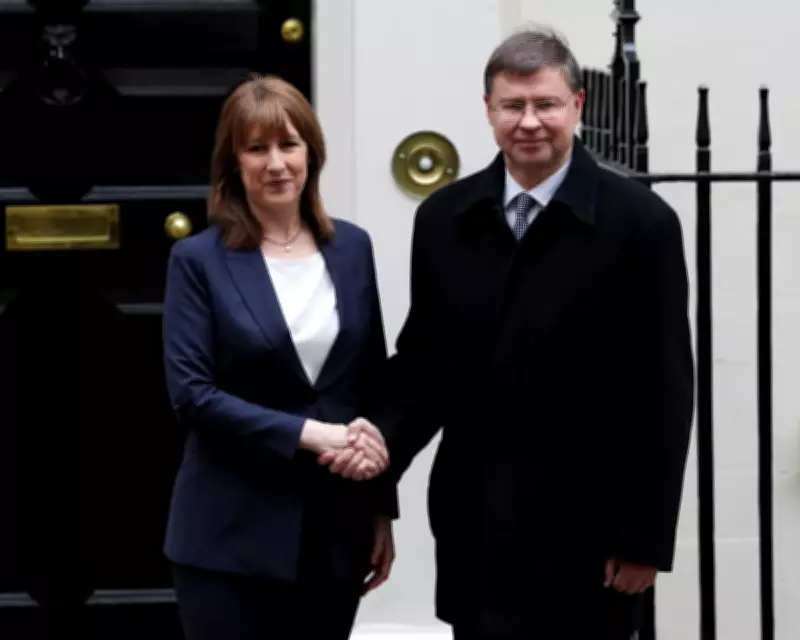
European Commission economy commissioner Valdis Dombrovskis visited 11 Downing Street in London this week for talks with senior UK ministers, including Chancellor Rachel Reeves. During these discussions, Dombrovskis conveyed the EU's readiness to engage constructively on future trade arrangements between the two parties.
"We are ready to engage with an open mind," Dombrovskis told the BBC when questioned about the potential for a customs union agreement. This statement represents a notable shift in tone from the EU, which has maintained a firm position on single market access since the Brexit referendum in 2016.

Labour's Push for Closer EU Ties
The commissioner's comments arrive amid growing pressure within the Labour party to pursue a customs union with the European Union. Prime Minister Keir Starmer has expressed interest in developing deeper economic links with the EU single market, though he has previously stated that the existing customs union model "doesn't now serve our purpose very well."
Starmer has suggested exploring other areas of single market cooperation where progress might be achievable. However, Dombrovskis implied during his London visit that the UK would not be able to selectively choose elements of single market alignment, emphasising that the most mutually beneficial arrangement would require acceptance of the "four freedoms" including freedom of movement.
Complex Trade Implications
A customs union with the EU would present significant implications for the UK's independent trade policy. Such an arrangement would potentially call into question existing UK trade deals with countries including India, Australia and Japan - agreements that, while adding relatively little to economic growth, have served as potent symbols of post-Brexit sovereignty.
Theoretically, participation in an EU customs union would bring the UK under the umbrella of the EU's extensive network of over 40 trade agreements covering approximately 70 countries and regions worldwide.
EU's Evolving Position
Nearly a decade after the Brexit referendum, EU insiders acknowledge that offering special arrangements to the UK remains challenging, given that member states must commit to all single market policies. Nevertheless, the public rhetoric has noticeably warmed in recent months.
European Parliament president Roberta Metsola is expected to call for "a new way of working together" between Europe and the UK on trade, customs, research, mobility, security and defence in a speech scheduled for later this week.
Responding to Starmer's recent comments, European Commission chief spokesperson Paula Pinho described the EU single market as "the jewel of the crown" and expressed appreciation that its advantages were recognised by the UK prime minister.
Current Negotiations and Future Prospects
Discussions are already underway between the EU and UK on several practical agreements, including a veterinary accord, youth exchange programme, and linking emissions trading systems. Cabinet Office minister Nick Thomas-Symonds has advocated for a "ruthlessly pragmatic approach" to resetting the UK-EU relationship.
In a Financial Times article, Thomas-Symonds highlighted that food, drink and carbon trading deals currently under discussion could be worth £9 billion annually to the UK economy by 2040. He reiterated Labour's manifesto commitment not to rejoin the single market or customs union, or reintroduce freedom of movement.

Broader European Context
These developments occur as the EU focuses on revitalising its single market following a hard-hitting 2024 report from former Italian prime minister Mario Draghi, who warned that "Europe risks becoming subordinated, divided and deindustrialised at once." Draghi has called for a move from confederation to federation within the European project.
EU leaders will gather in Belgium next week for a special summit dedicated to strengthening the single market, which European Council president António Costa has described as "a strategic imperative" for the continent's future prosperity and security.
The evolving dialogue between London and Brussels suggests both parties recognise the mutual benefits of closer cooperation, even as they navigate the complex legacy of Brexit and divergent political priorities on both sides of the Channel.





