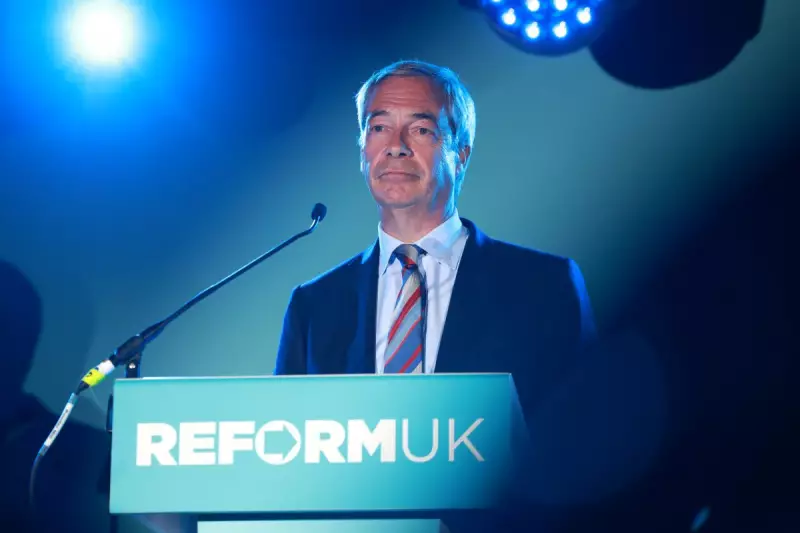
Farage's Davos Declaration: Bank Taxes as Political Vengeance
Nigel Farage's appearance at the World Economic Forum in Davos created a striking spectacle of political theatre. For a right-wing populist who has built his career railing against global elites, his presence at this gathering of international financiers and policymakers represented a deliberate act of confrontation. Farage positioned himself as the tribune of ordinary people, determined to challenge the very establishment figures whose policies he blames for undermining traditional European industries and cultural values.
The Bank Tax Proposal: Economic Policy or Personal Retribution?
During an interview with Bloomberg's Stephanie Flanders, Farage reaffirmed Reform UK's controversial commitment to eliminate the interest payments that the Bank of England makes to commercial banks on their reserves. The party's 2024 manifesto claimed this measure would save the Treasury approximately £35 billion annually, citing support from various economic institutions and former Bank of England officials. However, the Institute for Fiscal Studies director Paul Johnson has expressed significant reservations, suggesting the actual savings might be less than half that amount and only temporary in nature.
What proved particularly revealing was Farage's personal motivation for pursuing this policy. "Some of the banks won't like it. Well, I don't like the banks very much because they debanked me, didn't they?" he declared, exposing a Trumpian tendency to blend policy with personal grievance. This approach mirrors Donald Trump's own legal actions against financial institutions, including his $5 billion lawsuit against JP Morgan Chase over alleged debanking practices.

The Contradictory Nature of Reform UK's Economic Platform
Farage's background adds layers of complexity to his current political positioning. Emerging from the City of London's commodities trading world in the 1980s, he once described himself as the politician "keeping the flame of Thatcherism alive" following Margaret Thatcher's death. His personal style retains elements of that era's financial culture—pinstriped suits, cigars, and lengthy business lunches—yet his current policies diverge significantly from traditional free-market conservatism.
Reform UK's 2024 manifesto, titled "Our Contract with You," presents an economically incoherent collection of promises that attempt to appeal simultaneously to interventionist and free-market constituencies. The document pledges to slash government spending and reduce regulations while simultaneously committing to substantial public investment in policing, criminal justice, defence, and even partial renationalisation of utilities. This approach has been described as "Boris Johnson's cakeism"—the desire to have policies both ways without acknowledging their inherent contradictions.
The Political Balancing Act: Can Reform UK Sustain Its Broad Appeal?
Farage has recently moderated some of his party's more extreme tax-cutting proposals while advocating for potentially uncompetitive economic interventions, including reopening steelworks and nationalising British Steel. This strategic ambiguity has allowed Reform UK to attract support from both traditional Conservative voters and disaffected Labour supporters, creating the broadest of political coalitions united more by opposition to current policies than by coherent alternative visions.
The fundamental question remains whether Farage represents a genuine anti-capitalist champion of state intervention or a deregulatory free-market advocate seeking economic growth. The trading floor veteran of his youth must recognise that these contradictory positions cannot be maintained indefinitely without political consequences. As the French statesman Pierre Mendès France observed, governing requires making difficult choices, however challenging those decisions might be. For Reform UK and its leader, those choices are becoming increasingly unavoidable as their polling success brings greater scrutiny to their policy platform.