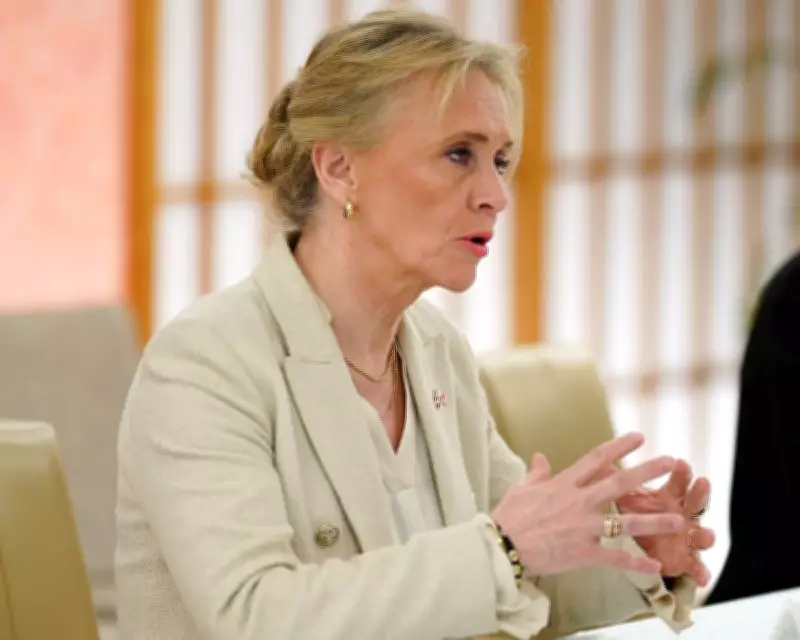
Iceland's foreign minister, Þorgerður Katrín Gunnarsdóttir, has expressed concern that her country may face a "Brexit moment" in the upcoming EU accession referendum, with warnings about misinformation, foreign interference, and artificial intelligence. With just over three months until the vote on whether to continue accession talks with the European Union, the developments are being closely monitored by Washington, Moscow, and Brussels.
Fearmongering and Misinformation
Þorgerður accused individuals and groups both inside and outside Iceland of engaging in "fearmongering," stating that the country is being targeted with rhetoric and misinformation "from the playbook of Nigel Farage and Reform." She warned that the referendum could become a target for Russia and other actors seeking to negatively influence public debate. The minister cautioned that foreign interference and the spread of misinformation could ultimately affect the result.
"I am fearing that we will face a Brexit moment," she told the Guardian. "That would be, from my point of view, a rather dangerous path because … there were all kinds of lies put forward by the Brexiteers." She cited disputed figures used by the leave campaign regarding the UK's financial contributions to the EU. Þorgerður emphasized that Brexit "should be an example of how not to run a campaign" rather than something to be emulated, noting that "nothing of what they promised has actually been activated or realized."

Coalition Government's Decision
The Icelandic coalition government, comprising the left-leaning Social Democratic Alliance and People's Party, along with Þorgerður's centre-right pro-European Liberal Reform Party, surprised many when it announced in March that it would hold the EU referendum on 29 August. This decision came earlier than previously indicated, as the government had earlier stated it would hold the vote no later than 2027. The move was partly motivated by threats from the United States, a longtime ally, to forcibly acquire Greenland, which is a close neighbor of Iceland.
Þorgerður explained, "For us, from my point of view, the international order that underpinned our security and prosperity for decades is under serious pressure. The world has changed so decisively, I would say, so Greenland has of course affected, or had influence on, our decision." She noted that old alliances are being tested and trade is being used as a "political weapon," adding, "You do not treat a friend and an ally like Greenland and Denmark like the US did at the beginning of this year." However, she insisted that Iceland's relationship with the US remains strong and that the country is broadening its alliances. "Iceland being a member of the EU is not contradicting all the good relationship with the US. One thing does not exclude the other thing."
Referendum Details
When Icelanders vote in August, they will be asked not whether they want to join the EU, but whether they want the government to resume accession talks with the bloc. Iceland first applied for EU membership in 2009, and the council agreed to open accession talks in 2010. However, the Icelandic government withdrew from the process in 2013. If Icelanders vote yes, talks will resume, and if a deal is reached, the government will hold a second referendum on whether to accept it.
Public Opinion and Key Issues
Opinion polls indicate a tight contest. A recent survey conducted on behalf of the foreign ministry found that 42% of Icelanders support reopening accession talks, while 39% are opposed. Advocates of EU membership view it as important for international security and an opportunity for better integration in Europe, while opponents warn of potential impacts on fishing, agriculture, and Iceland's sovereignty. Fishing, a major export and deeply rooted in Icelandic culture and identity, is a particularly emotive issue.
Þorgerður appealed to voters to "make up their own minds" and be cautious about their sources. She accused some political parties of spreading misinformation in a manner similar to UKIP's tactics before the UK's Brexit referendum. "It's like they are having the playbook from Nigel Farage and Reform, and of course that is concerning," she said. A spokesperson for Reform UK responded, "Reform UK has no connection to Iceland," adding, "We wish them well in staying outside of the EU."

Warnings from Leaders and Experts
Þorgerður's comments follow a warning from Prime Minister Kristrún Frostadóttir that foreign influence in the referendum would "not be tolerated, whether from the European Union, China, Russia or the United States." President Halla Tómasdóttir also issued a warning about the dangers of AI, which she said "can instantly produce content that appears credible but is misleading, spread unverified information at breakneck speed, and influence our opinions and wellbeing in ways we are not always aware of."
Hafsteinn Einarsson, an associate professor at the University of Iceland specializing in AI, expressed doubt that Iceland is adequately equipped to inform the public about the referendum. He has found that AI models often answer popular questions about the referendum in Icelandic using unreliable sources, while it is increasingly easy for people to mass-produce misinformation using AI. "This is what I am worried about: that people who are seeking information ask their AI model … about the referendum and issues related to the referendum and then they are presented with an answer and they might not even check the sources, because they trust AI, and then many of them just take this as fact," Einarsson said.