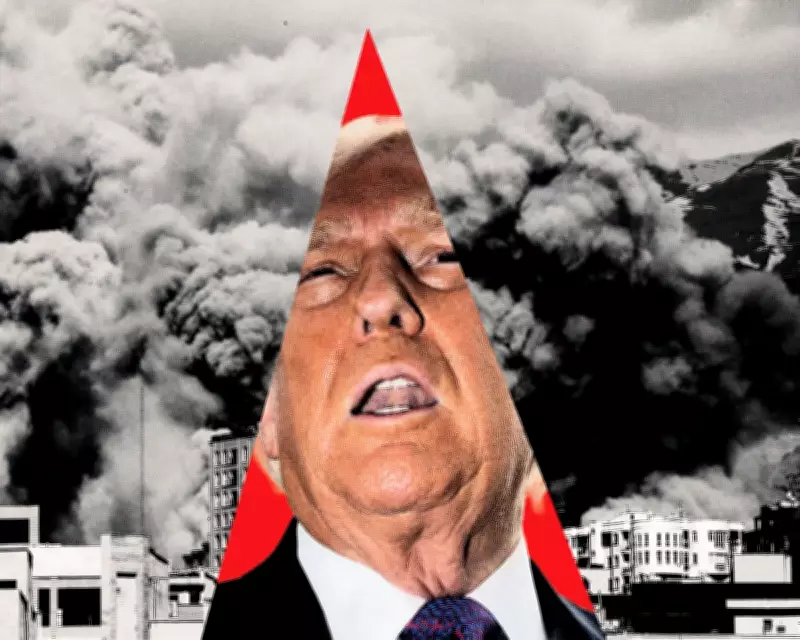
Economic Consequences of Iran Conflict Pose Grave Threat to Trump's Political Future
Donald Trump remains buoyant following the successful capture of Venezuelan President Nicolás Maduro, a strategic move that granted the United States control over Venezuela's substantial oil reserves and critical mineral resources. This operation also enabled Trump to severely restrict Cuba's access to energy, raising the possibility of destabilizing a communist government that has been a persistent thorn in Washington's side since 1959. Trump exhibits similar confidence regarding his collaborative military venture with Israel against Iran, maintaining an unwavering belief in victory despite Iran's retaliatory missile and drone attacks targeting Israel and neighboring Arab nations.
Economic Resilience and Energy Independence
Trump has publicly dismissed concerns about energy market disruptions, asserting on social media that temporary oil price increases represent "a very small price to pay for U.S.A., and World, Safety and Peace." He added emphatically, "ONLY FOOLS WOULD THINK DIFFERENTLY!" This sense of invincibility stems partly from the American economy's demonstrated resilience against Trump's unconventional policies, including extensive tariffs, federal workforce reductions, immigrant deportations, and persistent criticism of the Federal Reserve. Remarkably, leading economists recently speculated about achieving a soft economic landing from high inflation.
The United States enjoys greater insulation from global energy price shocks than other major advanced economies. Domestic crude oil production has surged dramatically since the early 2000s, significantly reducing import dependence. Natural gas, with prices less vulnerable to international market volatility, now constitutes 36% of America's energy consumption, up from 30%, while oil's share has decreased to approximately 38% from nearly 50% during the 1973 oil crisis. This shift occurred when Arab producers embargoed shipments to punish U.S. support for Israel in the Yom Kippur War.

While European markets reeled from Iran's blockade of the Strait of Hormuz (handling 20% of global oil shipments) and Qatar's liquefied natural gas facility shutdowns, the S&P 500 index—Trump's preferred economic indicator—remains near historic highs.
Mounting Public Opposition and Economic Pressure
Nevertheless, Trump confronts impending defeat not from Iranian military forces but from overwhelming American public opposition—the sole power historically capable of halting U.S. military campaigns. The Iran war has proven deeply unpopular from its inception, an unusual development for a nation typically supportive of military engagements even under questionable justifications. Economic repercussions will likely exacerbate this discontent.
America's energy self-sufficiency provides incomplete protection since oil prices are determined globally regardless of origin. Regular gasoline prices have already surpassed $3.50 per gallon, reaching their highest level since Trump assumed office. Government projections indicate retail gasoline prices won't return to 2025 levels until fall 2027, with diesel prices remaining elevated until at least late next year.
These cost increases will cascade through the economy: trucking companies will transfer higher fuel expenses to consumers; farmers facing elevated fuel and fertilizer costs will raise food prices; retailers and airlines will grapple with swelling fuel expenditures. These pressures will inevitably appear in inflation metrics—which stabilized at 2.4% annual increase in February—and hinder Federal Reserve interest rate reductions. Additionally, expensive gasoline will likely suppress sales of popular SUVs.
Administration Countermeasures and Strategic Dilemmas
The Trump administration recognizes these dangers and has implemented measures to curb oil prices, including tanker insurance programs, escorted convoys through the Strait of Hormuz, sanctions waivers for Russian oil exports, and considerations for expanding Venezuelan production. However, reversing the most significant oil price surge in over thirty years requires more substantial solutions: either concluding the conflict or degrading Iran's capabilities to threaten Hormuz shipping lanes.

Trump's public statements reveal contradictory positions—simultaneously claiming Tehran's "unconditional surrender" while declaring the war "very complete, pretty much." Yet Washington advisors should understand that aerial bombardment alone cannot secure long-term victory. Iran's Revolutionary Guards and Basij forces, though unpopular domestically, won't surrender weapons or risk annihilation. Despite infrastructure damage, thousands of ground combatants remain capable of sustaining hostilities and supporting Tehran's regime.
Trump faces limited options: retreat from "unconditional surrender" demands with face-saving victory claims, deploy ground troops (an option he hasn't eliminated), or escalate bombing campaigns to civilian targets after exhausting military infrastructure. All approaches lack swift resolution, ensuring prolonged economic suffering from the conflict. Trump may ultimately discover that while capturing Maduro proved relatively straightforward, decapitating America's adversaries doesn't guarantee universal success.