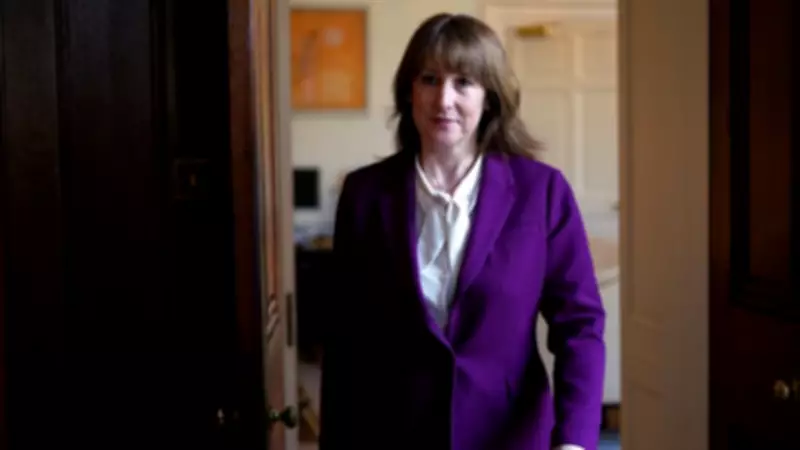
Chancellor Rachel Reeves Advocates for Stronger EU Ties in Economic Growth Plan
In her highly anticipated Mais lecture, Chancellor Rachel Reeves is set to declare that forging a "deeper relationship with the European Union" is essential for revitalizing the British economy. Scheduled for delivery on Tuesday afternoon, this address marks her second appearance at the prestigious City of London event, where she will outline a comprehensive strategy to combat economic stagnation.
Strategic Choices for Economic Revival
Reeves will emphasize that Britain is not powerless in a changing global landscape, asserting that the nation can shape its own future through stability, investment, and reform. "Our method is stability, investment, and reform - through an active and strategic state," she will state. The chancellor plans to unveil three pivotal growth opportunities for the coming decade: fostering growth in every region of Britain, advancing AI and innovation, and strengthening ties with the EU.
However, this vision has sparked immediate backlash from the Conservative Party. Shadow Chancellor Sir Mel Stride has accused Reeves and the Labour government of attempting to "row back on Brexit," arguing that their economic policies, rather than the EU departure, are to blame for the current stagnation. "Labour are desperate to blame anyone but themselves for their economic failures," Stride added. "Under increasing pressure, having mismanaged the economy, Reeves would rather point the finger at Brexit than accept their poor choices have been a disaster for our economy."

Economic Context and Forecasts
Reeves's lecture comes against a backdrop of lackluster economic performance. Recent data shows no growth in January and a mere 0.2% expansion in the preceding three months. The Office for Budget Responsibility (OBR) has revised its growth forecast for 2026 downward to 1.1%, a decrease from the earlier 1.4% projection. However, slight improvements are anticipated for 2027 and 2028, with forecasts adjusted to 1.6% each, up from 1.5%.
Compounding these challenges are the economic repercussions of the Iran war, which threatens to escalate energy prices and inflation if the conflict persists. Reeves has acknowledged this risk, noting it is "certainly not good for the British economy." In response, she has engaged in discussions with Ireland's finance minister, Simon Harris, to explore avenues for closer EU collaboration.
AI as a Cornerstone of Growth
Beyond EU relations, Reeves will highlight artificial intelligence as a critical driver of future prosperity. "AI is the defining technology of our era," she will proclaim, urging the UK to "chart our own course" rather than rely on foreign powers or market forces alone. Her plan includes a commitment of £500 million to support promising AI companies and a £1 billion investment in commercial-scale quantum computers, aiming to position the UK as the fastest adopter of AI among G7 nations.
The annual Mais lecture, hosted by City St George's University, is a premier event in the banking and finance sector, with past speakers including Rishi Sunak, George Osborne, and Mark Carney. Reeves's address builds on her 2024 lecture as shadow chancellor, reinforcing her long-standing advocacy for enhanced EU engagement and technological advancement.
As the debate over Brexit's economic impact intensifies, Reeves's proposals set the stage for a contentious political battle, with growth forecasts and global uncertainties adding urgency to the discussion.