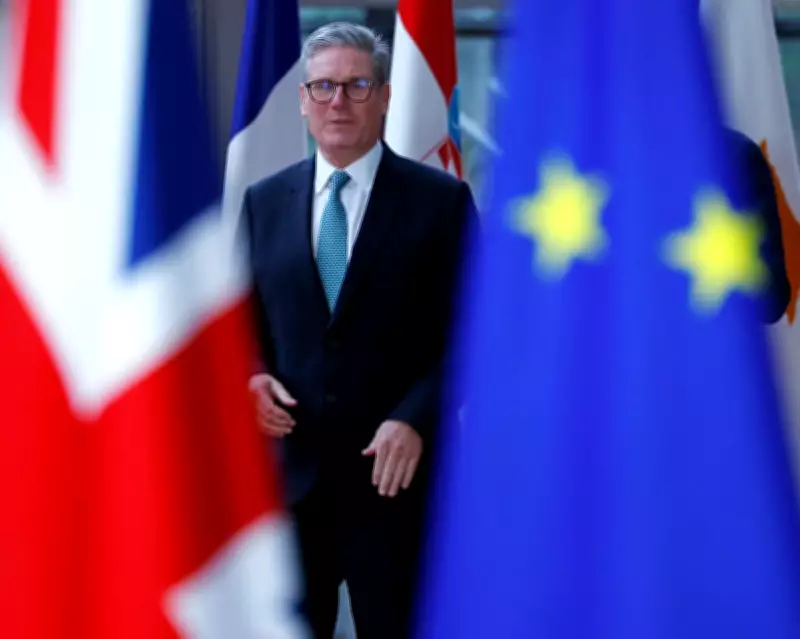
Starmer's EU Reset at Risk of Stalling, MPs Warn
Keir Starmer's crucial policy to improve Britain's relationship with the European Union is facing significant challenges, with a recent parliamentary report highlighting a lack of direction and drive. Since the EU-UK summit in May 2024, which aimed to map a new dynamic path forward, progress has slowed, risking the long-term goal of closer ties with Europe. The foreign affairs committee's report underscores that while there has been welcome progress with allies, Starmer's project is "suffering from a lack of direction, definition and drive." For Labour to deliver economic growth, enhance living standards, and counter the threat from Reform UK, revitalizing the EU reset is urgent.
Four Key Actions to Jumpstart the EU Reset
To ensure promises from last year's summit become reality, Starmer must act swiftly in collaboration with EU leaders. Here are four actionable steps the prime minister can take to reinvigorate the reset.
1. Implement a Food and Drink Deal with the EU
A sanitary and phytosanitary (SPS) agreement would streamline trade with the EU, Britain's largest market, making it easier and cheaper. This deal is expected to add up to £5.1 billion annually to the UK economy, providing a much-needed boost. It would also demonstrate to voters that politicians understand their struggles and can "make life affordable," as noted by Labour MP Dr. Jeevun Sandher. By easing prices at the tills, this measure directly addresses cost-of-living concerns.

2. Strike an Energy Deal on Emissions Trading Systems
Negotiating an energy agreement with Europe, particularly on emissions trading systems (ETS), is vital to reduce heating bills and mitigate the cost-of-living crisis. Recent global events, such as Donald Trump's actions in Iran, have heightened risks of oil price shocks, impacting UK residents already under financial strain. Jonny Peters of climate thinktank E3G warned of significant price spikes due to geopolitical tensions, emphasizing that UK-EU energy negotiations are "absolutely vital." This deal would offer crucial protection for consumers.
3. Break the Negotiations Logjam with Youth Mobility
Progress in negotiations is often stalled, but focusing on youth mobility could unlock deeper cooperation. The UK trade and business commission recommends launching a time-limited youth experience scheme (YES), capped at 44,000 visas in the first year. This would be the UK's largest programme of its kind, restoring opportunities for young Britons and Europeans denied by Brexit. With 72% public support, it aligns with Labour's manifesto pledge to lower net migration while fostering cross-border ties.
4. Develop a Shared Approach on Defence and Security
In an increasingly unstable world, collaborating with European democracies on defence and security is urgent. British trust in the US has declined since Trump's return to the White House, highlighting the need for closer ties with EU allies. Starmer, as a former international lawyer, must prioritize access to the EU's Security Action for Europe commission, a shared defence fund. This collaboration is essential to counter threats like Russia's war in Ukraine and ensure collective security.
Navigating the Path Forward
Britain has regained warmth from European partners, but more effort is needed. Ministers should avoid cherrypicking or requesting carve-outs in deals, such as the food and drink agreement, and emphasize mutual benefits to the EU. Independent research by Frontier Economics shows that deep alignment in goods and services protects Europe from US tariffs. Once SPS and ETS deals are established, expanding alignment to all industries, including services, should follow.
Starmer's EU reset may be approaching a standstill, but with focused action, it can regain the direction and drive needed for Britain and Europe's future. Millions depend on this reset for economic stability and security.