Tories Issue Direct Challenge to Trump's Protectionist Trade Policies
The Conservative Party has launched a direct challenge to President Donald Trump's protectionist trade policies, with Shadow Chancellor Mel Stride warning that tariffs risk seriously undermining vital transatlantic relations between the United Kingdom and the United States.
Defending Free Trade Against Protectionist Threats
In a significant speech delivered at a conference hosted by British-American Business, Stride argued forcefully that free trade remained "worth defending" as he took direct aim at what he characterised as the Trump administration's increasingly protectionist stance. The shadow chancellor raised specific alarm about the administration's frequent moves to place economic ties with close allies under threat through tariff measures.
"Tariffs are not the answer to our economic troubles," Stride declared unequivocally. "Increasing trade barriers is unquestionably a step backwards and will leave everyone worse off, so the approach of the current US administration is concerning. Being close partners, we have a duty to be honest when we see our friends making a mistake."

Criticism of Populist Trade Tools
The Conservative frontbencher went further in his criticism, hitting out at Trump's use of tariffs in threats against Greenland's sovereignty and characterising such protectionist policies as the "tool of populists" rather than sound economic strategy. This represents a clear attempt by the Conservatives to draw a distinctive party position on international trade that contrasts with other Westminster parties.
Stride took specific swipes at Reform UK for what he portrayed as their failure to stand up adequately to Trump's protectionist policies, while simultaneously criticising Labour for their perceived eagerness to boost trade ties with China. The speech reflects the delicate diplomatic balancing act that British political leaders face when responding to the Trump administration's unconventional economic approach.
Recent Trade Developments and Statistics
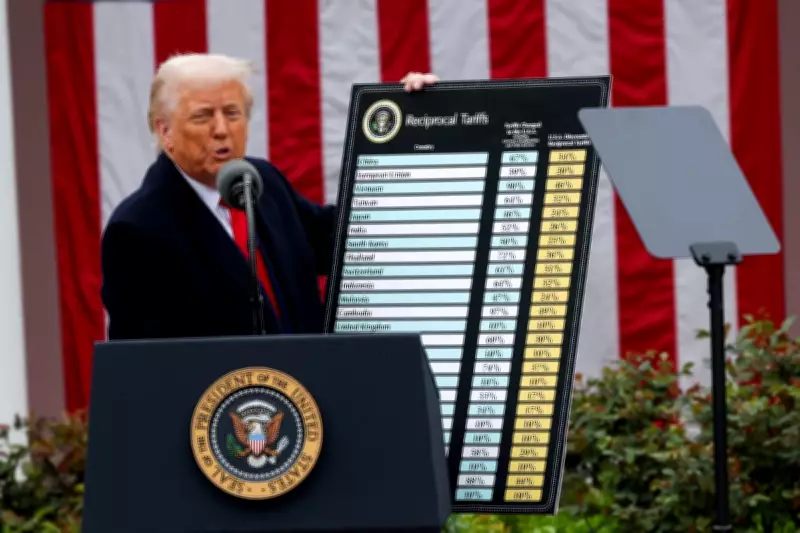
The context for this intervention comes amid recent developments in UK-US trade relations. President Trump had previously rowed back on tariff threats against the United Kingdom and other major European nations following the striking of a security deal concerning Greenland. Additionally, the UK secured the first trade agreement after Trump announced sweeping tariffs during last year's 'Liberation Day' address from the White House.
Current trade arrangements show automotive manufacturers benefiting from a preferential 10 per cent tariff rate compared to the 25 per cent applied to other countries for the first 100,000 car exports. However, most other goods exported to the United States still face the baseline 10 per cent tariff rate upon entry into the country.
The scale of UK-US trade remains substantial at approximately £329.5 billion, dwarfing the roughly £102 billion in trade with China. Interestingly, the UK imports more goods from the United States than it exports, while the opposite pattern holds true for trade with China.
Warning About China's Trade Approach
Stride issued a particularly stark warning about the importance of building closer UK-US ties to counter what he described as China's "aggressive" approach to international trade. He pointed specifically to China's Belt and Road Initiative, extensive state control mechanisms, and what he characterised as anti-competitive practices through subsidies and non-tariff barriers.
"As with any community, whether of people or of nations, the whole system can be strained if just one member chooses not to play by the rules," Stride cautioned, highlighting concerns about China's trading practices. His comments underscore growing Conservative anxiety about maintaining a rules-based international trading system while navigating complex relationships with both the United States and China.
This intervention represents one of the most direct challenges yet from a senior Conservative figure to Trump's trade policies, signalling potential tensions ahead in the crucial transatlantic economic relationship as both nations approach significant political transitions.