

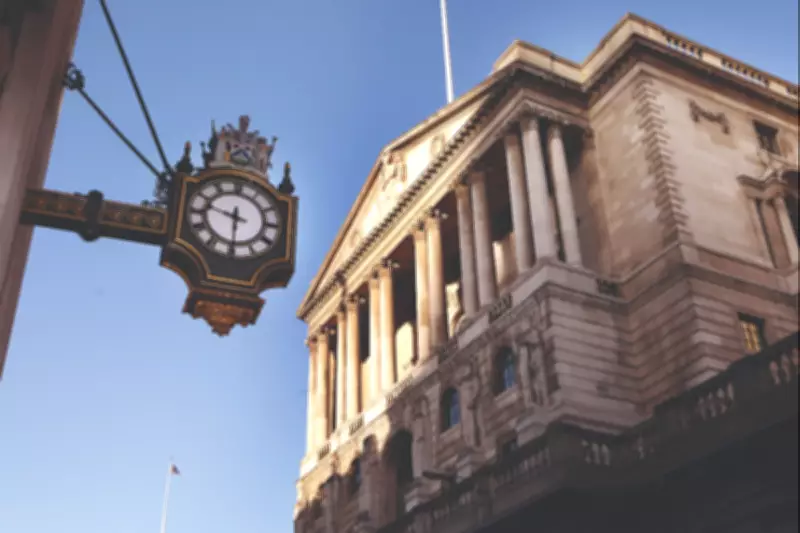
Bank of England Maintains Interest Rates Amid Middle East Conflict Concerns
The Bank of England has delivered a unanimous decision to hold interest rates steady while issuing stark warnings about how the ongoing war in Iran could trigger significant inflationary pressures as early as April. In a pivotal move, the Monetary Policy Committee (MPC) voted to maintain the base rate at 3.75 percent, simultaneously abandoning previous guidance that suggested potential rate cuts in upcoming meetings.
Policymakers Signal Readiness to Act as Energy Prices Surge
Governor Andrew Bailey led several policymakers in declaring they "stand ready to act," a statement that has heightened concerns about possible interest rate increases later this year. Bailey emphasized that the MPC's focus has shifted decisively toward the risks posed by escalating oil and gas prices, which threaten to drive up household bills and business costs in the coming months.
"War in the Middle East has pushed up global energy prices," Bailey stated. "You can already see that at the petrol pump and, if it lasts, it will feed into higher household energy bills later in the year. The best way to tackle this is at the source by re-opening energy supply lines. We have held interest rates at 3.75 percent as we assess how events unfold."

The Bank of England chief's cautious tone marks a dramatic departure from February's meeting, where he described revised inflation forecasts as "good news." Bailey reiterated that the MPC's primary mandate remains returning inflation to the two percent target, a goal now complicated by geopolitical developments.
Revised Inflation Forecasts Undermine Budget Measures
Fresh inflation projections beginning in April have been revised upward, effectively undermining Chancellor Rachel Reeves' budget initiatives designed to reduce energy costs and accelerate price growth moderation. Forecasters now anticipate inflation will persist at three percent during the second quarter, with projections suggesting a potential jump to 3.5 percent thereafter.
These predictions remain fluid and contingent upon developments in trade flows through the strategically vital Strait of Hormuz. The economic modeling follows substantial market movements, with Brent Crude oil prices climbing eight percent to exceed $114 per barrel on Thursday. Simultaneously, natural gas prices surged following reports of "extensive damage" to a key Qatari facility from Iranian strikes.
Since the conflict's inception, oil prices have skyrocketed by more than 50 percent, while a prominent European gas benchmark has doubled. Treasury and Office for Budget Responsibility officials employ a standard calculation suggesting that a 20 percent increase in energy prices typically adds approximately one percentage point to inflation while reducing GDP growth by half a percentage point.
MPC Members Express Diverging Views on Rate Trajectory
Economists caution that the duration of the conflict will critically determine its economic impact. MPC members noted that households and businesses remain particularly vulnerable to inflationary shocks, which could foster more pessimistic expectations. The committee has established a six-week evidence-gathering period to assess the war's consequences, warning that prolonged hostilities could trigger "self-perpetuating behavior in wage and price dynamics."
External MPC member Swati Dhingra, who has historically advocated for swifter rate reductions, suggested that an extended conflict might "warrant" interest rate increases. Conversely, fellow dovish member Alan Taylor maintained there remains a "high bar to hiking" rates under current circumstances.
Chief economist Huw Pill offered a measured perspective: "The potential for second-round effects following recent events in the Middle East remains substantial, justifying caution in monetary policy setting. While financial conditions have tightened in recent weeks, whether this proves sufficient to contain potential upside risks to price stability stemming from energy prices is an open question."

The Bank of England's decision reflects the delicate balancing act facing policymakers as they navigate between supporting economic growth and containing inflation amid unprecedented geopolitical uncertainty. With energy markets in turmoil and inflation forecasts deteriorating, the MPC's next moves will be closely scrutinized by markets, businesses, and households alike.





