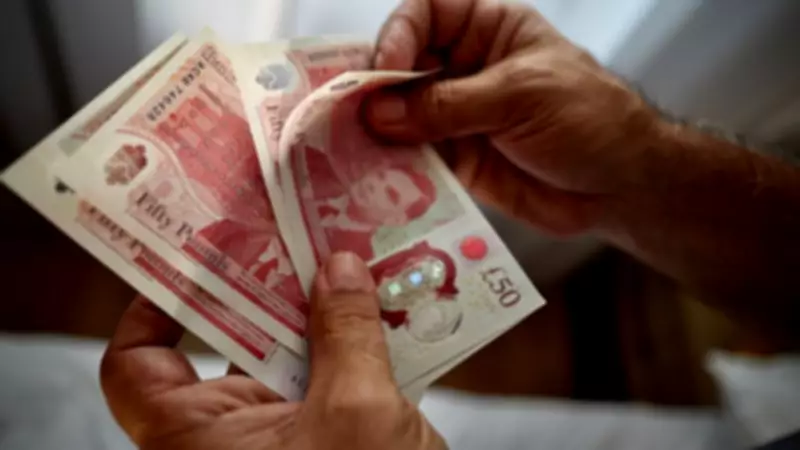
Interest Rate Hikes Could Deepen Consumer Misery Amid Iran War Fallout
Less than three weeks ago, the financial debate centered on when and by how much interest rates would fall. Now, a dramatic shift has occurred, with expectations of three interest rate hikes in 2026, as the war in Iran takes a heavy toll on global economies and household budgets.
Economic Chain Reaction from Rising Energy Costs
Sharp increases in oil and gas prices, triggered by the conflict in Iran, have set off a significant economic chain reaction that is already affecting consumers directly. The benchmark Brent crude oil has surged above $110 per barrel, a stark rise from around $72 before the war began. Similarly, wholesale gas prices have nearly doubled, now standing at 150p per unit compared to 77p just three weeks ago.
As a result, inflation forecasts have been revised upward. Thomas Pugh, chief economist at accounting firm RSM, notes that inflation, previously anticipated to fall to 2% by year-end, could now reach 5%. This shift has prompted City traders to anticipate further monetary tightening, with three more interest rate hikes potentially on the horizon later this year.

Shift in Monetary Policy Expectations
In late February, the consensus among financial experts was that borrowing costs would decrease this year, with discussions focused solely on the timing and extent of the cuts. However, the landscape has changed rapidly. Before the Bank of England announced it would keep the base interest rate at 3.75%, traders had already moved their focus. No longer debating cuts or stability, they assigned a 3% chance of an increase, reflecting growing concerns over inflationary pressures.
Current market data from the London Stock Exchange Group (LSEG) indicates that traders have priced in an interest rate hike as early as June, with a possibility of it occurring next month when the energy price cap is expected to rise due to elevated wholesale costs. The April meeting of the Bank of England's interest rate setters is now on a knife-edge, with a 51% chance of no change and a 49% likelihood of a cut.
Looking ahead, traders believe there will likely be three hikes in 2026, occurring in June, July, and December. If these materialize, the interest rate could climb to 4.5% by the end of the year, a sharp contrast to earlier predictions of a drop to 3.25% before 2026 concludes.
Diverging Views and Immediate Impacts
Not all analysts agree with this outlook. Economic research firm Pantheon Macroeconomics suggests that if oil prices remain below $125 per barrel and do not experience further upticks, the Bank of England may have enough leeway to avoid changing its base interest rate. However, the prospect of higher rates is already having tangible effects, particularly for those seeking to remortgage.
Average mortgage rates have reached year-long highs, with the typical two-year fixed mortgage rate jumping from 4.83% at the start of the month to 5.3% on Thursday, according to financial information company Moneyfacts. This marks the highest level since April 2025. Similarly, the average five-year fixed deal has risen from 4.95% to 5.35%, a peak not seen since August 2024.
The Monetary Policy Committee has acknowledged the broader economic implications, stating, "Conflict in the Middle East has caused a significant increase in global energy and other commodity prices, which will affect households' fuel and utility prices and have indirect effects via businesses' costs." They further warned that CPI inflation will be higher in the near term as a result of this new shock to the economy.
As consumers brace for potential interest rate hikes, the combined pressures of rising energy costs and inflation continue to strain pockets, underscoring the far-reaching consequences of geopolitical instability on everyday financial stability.