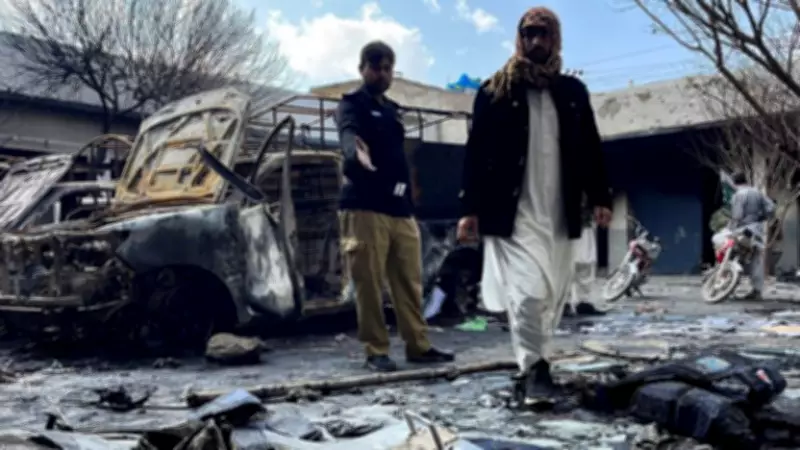
In a significant escalation of violence, nearly 150 militants have been killed during a 40-hour battle in Pakistan's southwestern Balochistan province, according to government statements. This comes after a series of deadly attacks by separatist fighters rocked the region, resulting in a major security flare-up that has drawn international attention.
Coordinated Assaults and Counter-Operations
On Saturday, Balochistan was hit by a coordinated series of gun and bomb assaults, which left almost 50 people dead. Attackers, dressed as civilians, targeted critical infrastructure including hospitals, schools, banks, and markets, as reported by junior interior minister Talal Chaudhry. In response, the Pakistani army, police, and counterterrorism units launched large-scale counter-operations to quell the violence.
High Casualty Figures and Tactical Details
Officials detailed that armed men across districts such as Quetta, Gwadar, Mastung, and Noshki opened fire on security installations, attempted suicide bombings, and briefly blocked roads in urban areas. Balochistan's chief minister, Sarfraz Bugti, stated that 92 militants were killed on Saturday, with an additional 41 on Friday, bringing the total to 145. The attackers, however, claimed the lives of 17 police officers and 31 civilians during the clashes.

Intelligence reports had indicated that such an operation was being planned, prompting pre-emptive actions a day prior to the attacks, according to Bugti. He noted that this tally represents the highest number of militants killed in such a short span since the insurgency intensified, with some of the deceased identified as Afghan nationals.
Aftermath and Separatist Claims
The aftermath of the battle was starkly visible in Quetta, the provincial capital, where burnt-out vehicles, bullet-riddled doors, and streets sealed off with yellow tape marked the scene. The banned separatist group, Baloch Liberation Army, claimed responsibility for the attacks, dubbing the operation Herof, or black storm. Designated as a foreign terrorist organisation by the US, the group alleges to have killed 84 security force members and captured 18 others, though these figures remain unverified by Pakistani military sources.
Broader Context of Balochistan's Struggles
Balochistan, Pakistan's largest and resource-rich province, is also its poorest, facing decades of separatist insurgency. Separatists demand greater autonomy and a larger share of the province's natural resources, leading to ongoing tensions. Pakistan's defence minister, Khawaja Asif, accused the insurgents of increasingly targeting civilians, labourers, and low-income communities, while junior interior minister Talal Chaudhry alleged they used civilians as human shields during the attacks.
The Pakistani government has further accused the insurgents of being sponsored by India, though India dismisses these claims as baseless allegations. This incident underscores the complex security challenges in the region, with implications for stability and international relations.