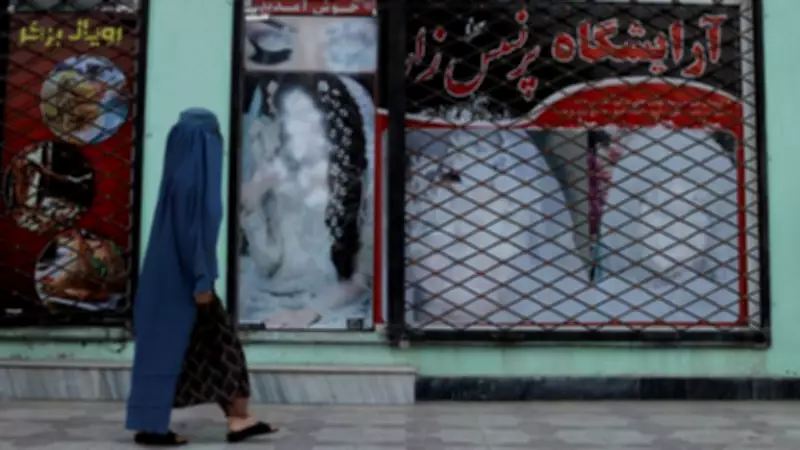
Afghan Women Face Daily Terror Under Taliban's 'Virtue' Enforcers
Since the Taliban regained control of Afghanistan in 2021, the fundamental rights of women and girls have been systematically dismantled through brutal enforcement measures. To commemorate International Women's Day, a courageous human rights defender has anonymously shared her terrifying personal account of life under the current regime.
A Terrifying Encounter at the Crossroads
"My hands were shaking uncontrollably, my entire body turned cold with fear," the defender recalls of a recent incident while traveling to a relative's funeral. Near a busy intersection, she witnessed Taliban members known as Muhtasibeen stopping local transportation vehicles and meticulously inspecting the women's sections.
These enforcers from the Ministry for the Promotion of Virtue and Prevention of Vice, distinguished by their white medical-style coats, were specifically targeting women not wearing burqas or chadaris. "When they spotted women without proper covering, they confiscated the vehicle keys and ordered everyone to disembark," she describes. "It was absolutely horrendous."

Despite wearing a hijab and winter coat, the absence of a burqa filled her with dread. "I remembered recent stories from Herat province where restrictions had dramatically intensified. Just weeks earlier, Taliban members in those same white coats had arrested women from crowded city areas merely for wearing Arabic-style hijabs."
Creative Survival in the Face of OppressionIn a moment of desperate inspiration, she recalled her husband's traditional Afghan winter scarf. "I quickly wrapped it around myself, hoping the Taliban member would mistake me for another man when he peered into our vehicle," she explains. The ruse worked, allowing them to pass safely, but the psychological impact remained profound.
"As a child, I associated white coats with doctors—symbols of healing and compassion. Never could I have imagined they would become instruments of terror, used to intimidate, beat, and harm innocent people," she reflects with palpable sorrow.
Systematic Erasure from Public Life
The defender argues this represents a calculated strategy to eliminate women from Afghanistan's public sphere. "Previously, security forces protected intersections during troubled times. Now, Taliban trucks and virtue ministry personnel occupy these spaces solely to enforce oppressive dress codes on women," she observes.
Recent transportation restrictions further illustrate this pattern. While authorities claim rickshaw bans address overcrowding, the defender believes the true objective is making movement increasingly difficult for women. She shares another woman's experience: after waiting endlessly at a bus stop, taxi drivers demanded exorbitant fares for short distances, ultimately forcing her to walk home exhausted and in tears.
"Being a woman in Afghanistan means enduring endless suffering," the woman reportedly said. Taxi drivers have confirmed receiving Taliban instructions to refuse service to women not wearing chadaris or burqas, effectively barring them from local transportation networks.
Quiet Acts of DefianceDespite overwhelming oppression, courageous resistance persists. Some women carry burqas without wearing them, donning the garments only when approaching Taliban checkpoints before removing them immediately afterward. "The Taliban witness this defiance but cannot prevent it," the defender notes. "It's a silent rebellion declaring: 'You may control our streets, but never our spirits.'"
International Abandonment and Isolation
While the Taliban exploit global distraction to tighten their grip, international attention has shifted dramatically. A recent White House communication highlighting America's foreign policy shift toward national interests makes no mention of Afghan women's suffering, signaling their diminished priority on the global stage.
"The message is painfully clear: we have been forgotten," the defender states. "Though Afghanistan may no longer serve Western geopolitical interests, these nations bear responsibility for shaping the history that now entraps us."

As the international community focuses on other global crises, the Taliban methodically erase women from public spaces, educational institutions, healthcare facilities, and transportation systems. "The world that once made promises now maintains a deafening silence," she observes.
A Plea for Global Solidarity"We continue to resist, but we do so in profound isolation," the defender concludes. "Will the international community finally hear Afghan women's voices and stand with us? I implore global leaders not to abandon women to the Taliban's climate of perpetual fear."